Colour and finish
Compare samples beside the house and surrounding materials. A small block sample can look different across an entire frontage, particularly next to a contrasting border.
DRIVEWAYS · PATHS · GARDEN PAVING
Shape a practical entrance or garden route with block paving designed around your property. Landscape Gardener of Kent installs block paving in Birchington-on-Sea for driveways, paths and patio areas, coordinating the pattern, borders and supporting construction with how the space will be used.
From replacing an uneven parking area to connecting a path and terrace, the project starts with the layout and ground conditions. Send photographs, approximate measurements and your postcode for a free, no-obligation quotation.
Blocks can connect the driveway, front door and garden, but those areas do not necessarily need the same construction. Parking and vehicle turning require a specification appropriate to their loading; a footpath or seating area has different priorities.
Mark where cars stop, where doors open and how people reach the house when vehicles are parked. For a garden area, allow for chairs, planting and access to a shed or side gate. A border can define each use without making the whole space feel disconnected.
Tell us which areas you want paved and which should stay planted. This helps establish dimensions and levels before choosing the block colour.
A compact entrance in Birchington and a wider frontage towards Minnis Bay can offer different layout possibilities. Assess the actual gate opening, pavement connection, garage and pedestrian route rather than choose a design from the town name alone.
In an exposed garden, consider how the paved route connects with shelter, fencing and retained planting. Check outdoor product suitability and surface texture, and keep the entrance practical in wet weather. Coastal location does not remove the need to assess drainage and ground support at each property.
Photographs from both ends of the proposed area help show corners, steps, covers and changes in level. If you plan to extend existing paving, identify the old and new areas separately.
Compare samples beside the house and surrounding materials. A small block sample can look different across an entire frontage, particularly next to a contrasting border.
Discuss a pattern suitable for the chosen units and intended use. Include the number of cuts, corners and the relationship to paths in the layout.
Agree where paving meets lawns, walls, gravel or retained surfaces. The edge detail contributes to both appearance and restraint.
A restrained combination of blocks and borders can be easier to coordinate than several competing colours. Choose the product and pattern together with the practical specification.
An attractive pattern cannot compensate for unsuitable support. Existing paving, soil and other material need assessment before agreeing excavation and the new construction. Show soft patches, sunken wheel tracks or areas that move underfoot.
The supporting layers, bedding, restraint and jointing should suit the selected system, ground conditions and anticipated use. There is no single depth that makes every driveway or path suitable. Agree the complete build-up rather than a quotation that only names the visible blocks.
Confirm what will be removed, what can be retained and how waste will leave the site. Restricted passages, garden steps and the unloading route can affect the work as much as the paved area.
Standard block paving should not automatically be described as permeable. A purpose-designed permeable system uses appropriate joints, bedding and supporting layers so rainwater can pass through and be managed below the surface.
The visible blocks are only part of that solution. Ground conditions, water storage or discharge arrangements and the manufacturer’s construction guidance need considering together. Read Marshalls’ permeable paving information for an example of how the supporting materials differ.
For conventional paving, plan the falls and a suitable route for runoff. Include thresholds, garage access and retained borders in the design; a drainage channel needs an appropriate destination for the water it collects.
A broad average does not establish the price for your Birchington property. The measured area, selected blocks, removal, ground conditions, access and drainage determine the scope. Decorative details and extensive cutting can also affect labour.
Ask quotations to separate the paving choice from the construction requirements. A block supply price excludes the work needed to turn those blocks into a finished driveway.
For a useful comparison, give each contractor the same measured brief and parking requirements. Request a free block paving quotation based on your actual entrance.
A rectangular area measuring 5m by 8m covers 40m². The dimensions help estimate the quantity of paving, but do not establish excavation, waste removal or drainage requirements.
If a hypothetical complete installation rate were £100 per m², 40m² would give an area-based subtotal of £4,000. This is a calculation example, not our tariff or a current market average. Check whether borders, drainage, access covers, VAT and other work are included before treating a rate as a total.
Measure paths and approaches separately from the main rectangle. Curves, steps and narrow strips can require extra detailing even where the total area remains 40m².
Block paving is itself a form of paving. If you mean blocks compared with larger patio slabs, there is no universal installed-price answer. Product prices, preparation, cutting, laying time and intended use change the comparison.
Compare equivalent areas and construction. A garden patio slab should not be assumed suitable for regular vehicle use, and a driveway specification should not be compared with a surface-only garden price.
Explore porcelain and natural stone patios in Birchington-on-Sea for seating areas, or all driveway surfaces when planning parking. The right comparison is between suitable complete installations.
There are more joints to care for than on a continuous surface. Debris and wind-blown seeds can accumulate, while conventional jointing sand may need replenishment following suitable cleaning. Permeable systems require their specified jointing material instead.
Settlement or spreading can occur where support or restraint is inadequate. Those problems call for assessment of the construction, rather than simply topping up joints. Older blocks can also be harder to match when extending or repairing a weathered area.
Individual units can be lifted where suitable, which provides a useful repair and access option. Reinstatement still needs the correct bedding, jointing and compaction for the selected system.
Start by showing the full paved area and close-ups of the defect. Is one section sunken, an edge moving, a block damaged or water collecting across a wider area? The cause affects whether a local repair is appropriate.
Lifting and relaying a section can be considered where its support and drainage can be corrected. Replacing a broken block alone will not resolve movement beneath it. More extensive failure or a changed parking layout may justify a larger replacement.
For an extension, discuss the appearance of new blocks beside older ones. A defined border or deliberately different adjoining section may work better than an uncertain colour match.
The programme depends on access, preparation, weather and the scope. Ask when vehicles or furniture can return, and arrange temporary parking and a route to the house during work.
For houses in England, front-garden paving can avoid planning permission when permeable or when runoff goes to a lawn or border to drain naturally. Traditional impermeable paving over 5m² needs permission without that drainage provision. Property type and restrictions can affect these allowances.
Check the Planning Portal guidance and Thanet District Council’s planning information. New or extended dropped kerbs and new access points require separate Kent County Council approval.
Remove leaves and debris, attend to surface growth and follow the paving supplier’s cleaning advice. Avoid cleaning methods that remove jointing material or damage the selected product.
Check joints and edges after cleaning. Conventional paving and permeable systems need different joint materials, so ask for the correct aftercare rather than applying the same sand treatment to every surface.
Keep drainage paths clear and report movement or new ponding. These can indicate a problem that routine washing cannot fix. Marshalls’ cleaning guidance provides useful product-care background.
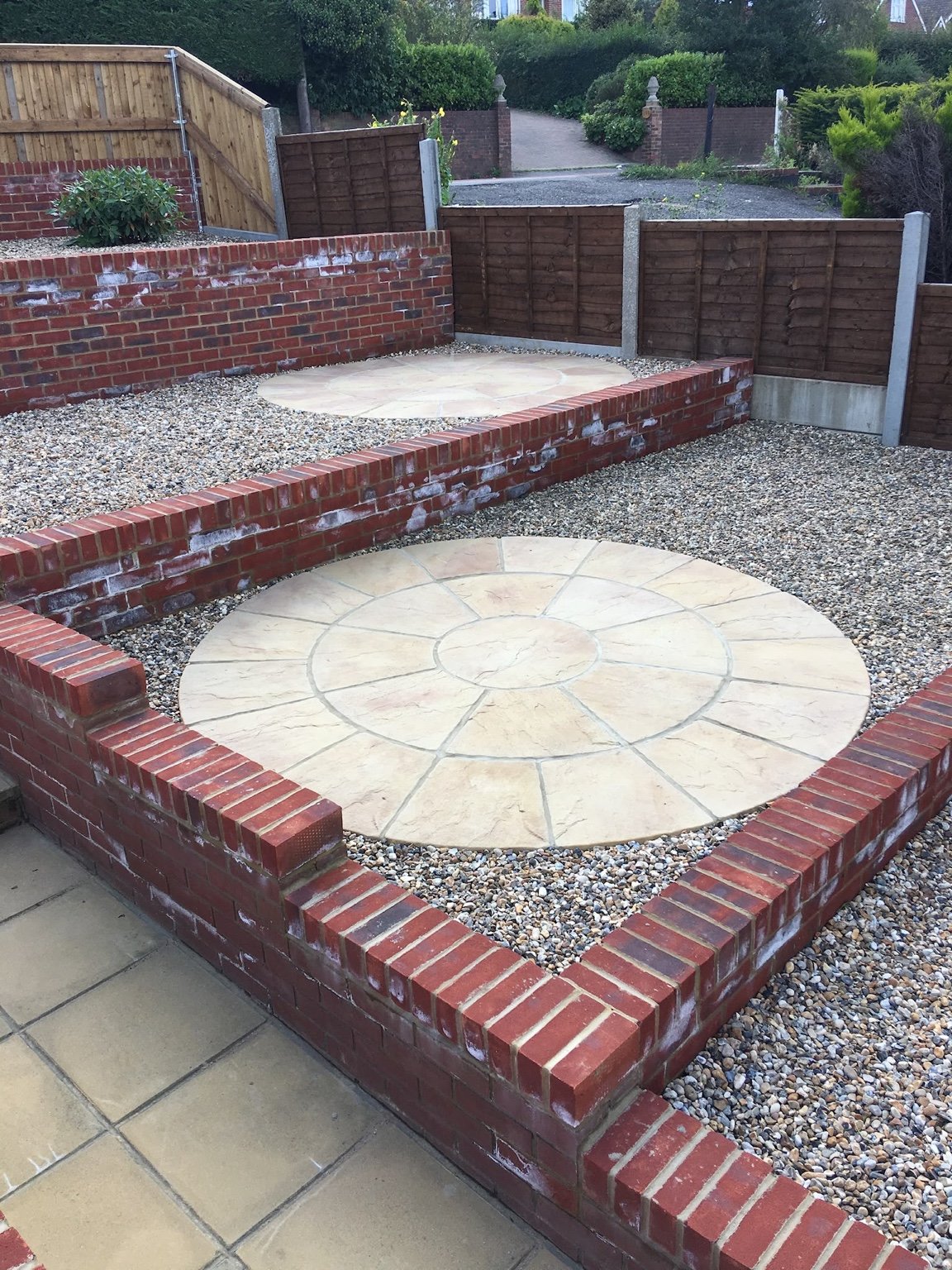
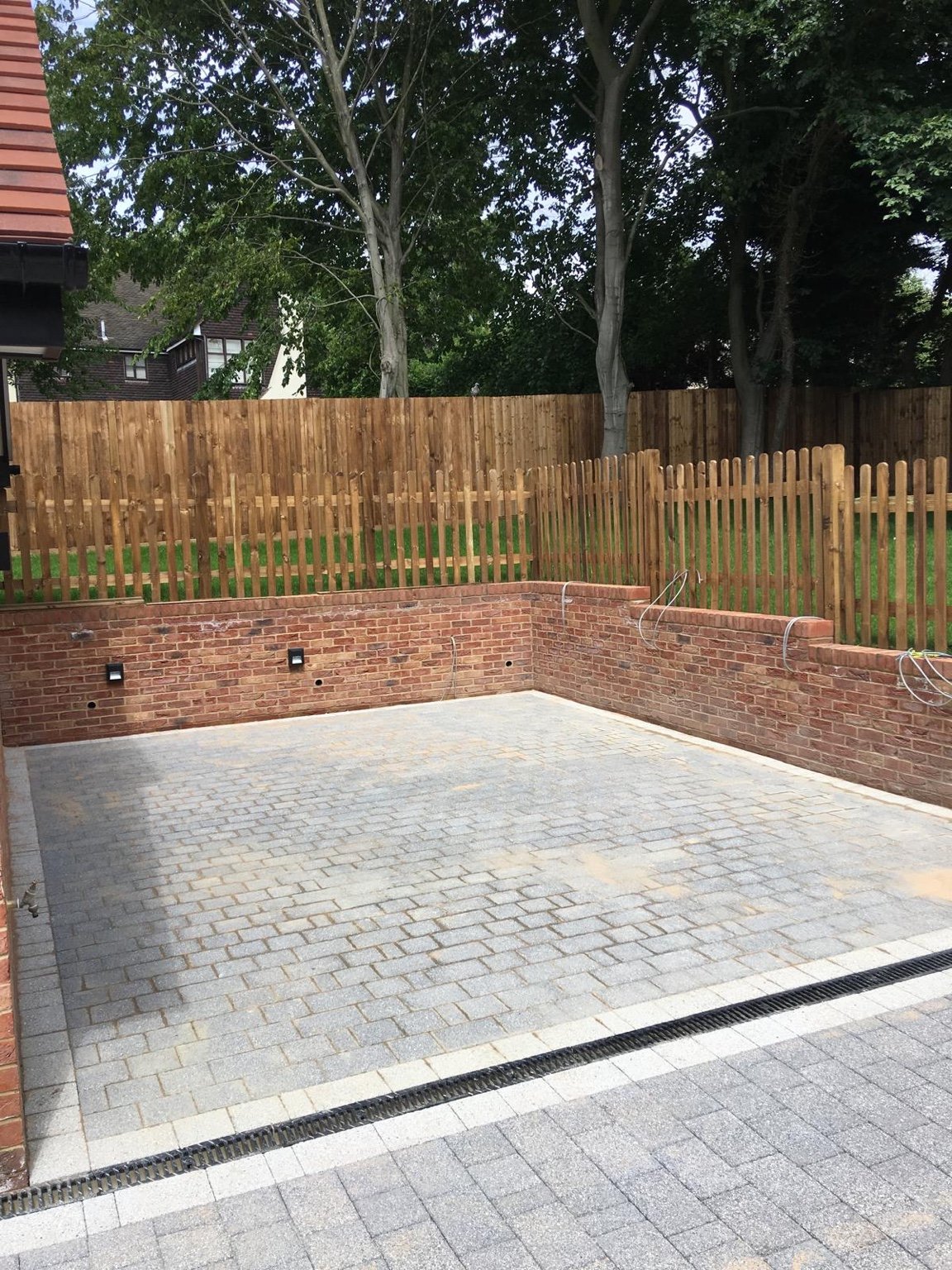
Our West Malling block paving and fencing project shows the relationship between a patterned garden surface, borders and boundary fencing. The photographs show genuine work in West Malling.
Use this example to discuss appearance and edge details. It is a garden patio example; your vehicle driveway needs its own assessment and construction specification.
Averages do not determine a site-specific price. Measure the area and compare the same removal, supporting layers, blocks, drainage, edges, labour and VAT treatment.
If comparing blocks with patio slabs, price suitable products and equivalent installation scopes. Preparation, cutting and intended use can change the total; patio paving should not automatically be specified for vehicles.
Joints need care, unsuitable support can lead to settlement, and weathered blocks can be difficult to match. Correct construction and system-specific maintenance matter.
A 5m by 8m area is 40m², but its cost depends on the product, preparation, access, drainage and details. Multiply only a clearly scoped installed rate by the area and confirm separately priced work.
We can assess a local repair. The cause of settlement and condition of the supporting layers need checking before relaying; replacing the visible blocks alone may not address the problem.
Ordinary block paving is not automatically permeable. A permeable system needs appropriate joints, bedding, supporting layers and an assessed water-management design.
Yes, suitable paving can define seating areas and connecting paths. Specify the product and construction for that use, and allow practical room for furniture and access.
Conventional sand-jointed paving may need replenishment in accordance with the supplier’s advice. Permeable systems use specified aggregate rather than ordinary jointing sand.
Assess the connection, levels, support, drainage and material match. Road-access alterations can require approval, so include the full proposed layout in your enquiry.
Send your postcode, dimensions, photographs, intended use and preferred blocks. Include the entrance, access route, retained features and any sunken or wet areas.
MORE IN BIRCHINGTON-ON-SEA
Explore the other work available in Birchington-on-Sea.
Compare resin-bound surfacing, tarmac driveways and gravel driveways. For a wider garden project, see landscaping in Birchington-on-Sea.
OUR WORK · KENT
Chislehurst
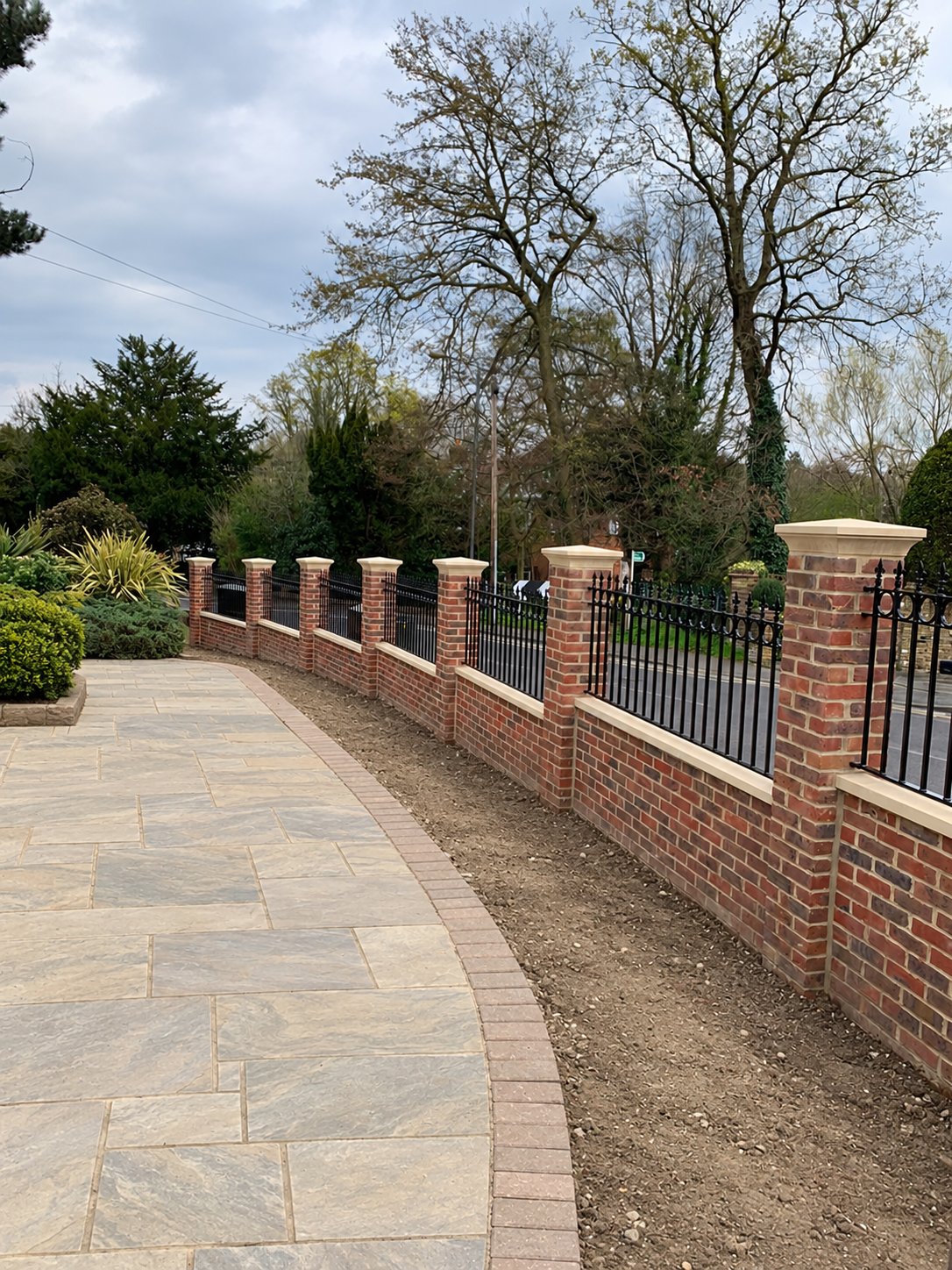
A brick boundary with pale stone coping and pier caps, finished with decorative railing panels.
View Chislehurst projectSt Margaret’s Bay
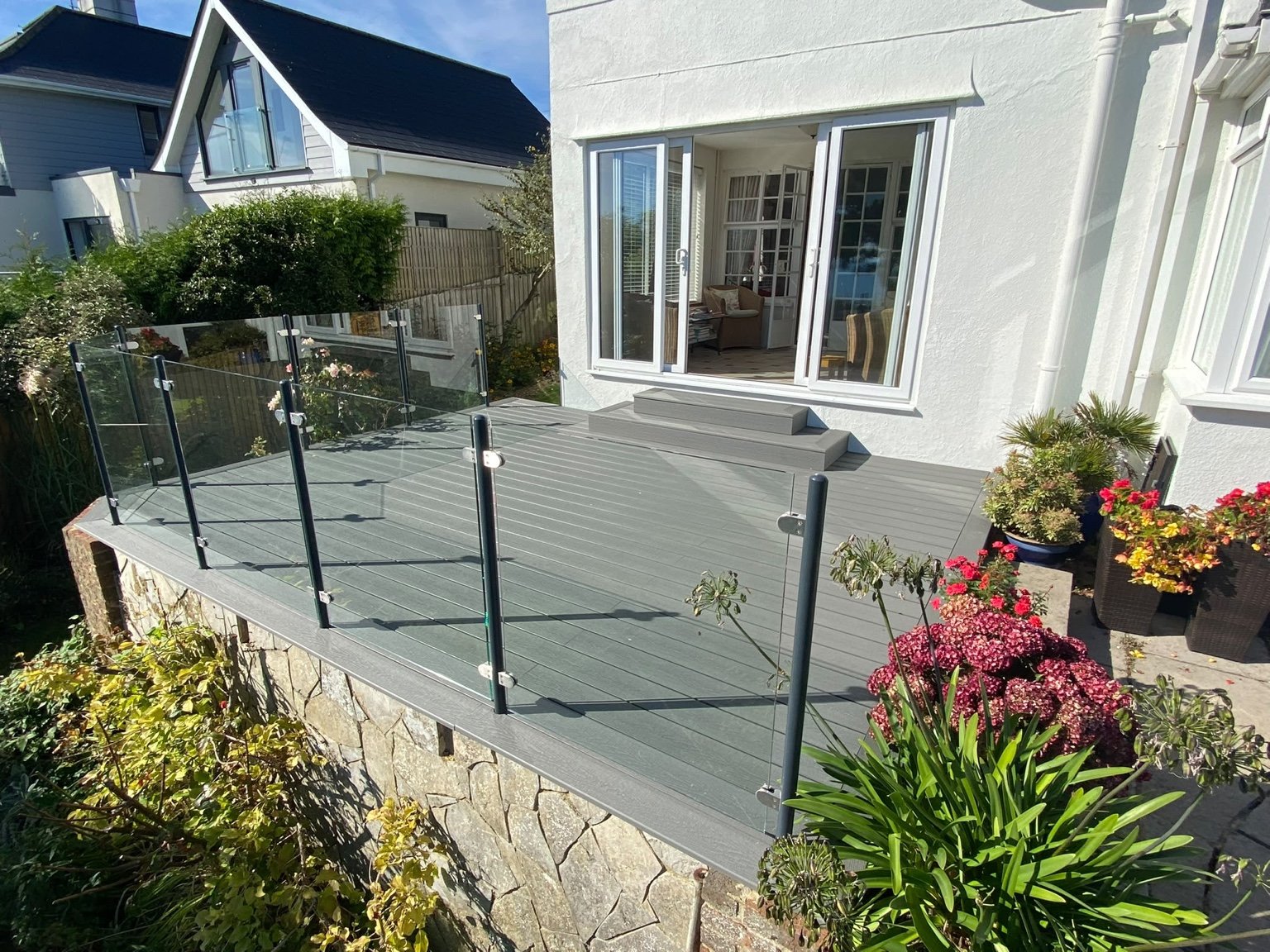
Grey composite decking, glass panels, powder-coated steel posts and matching steps.
View St Margaret’s Bay projectFolkestone
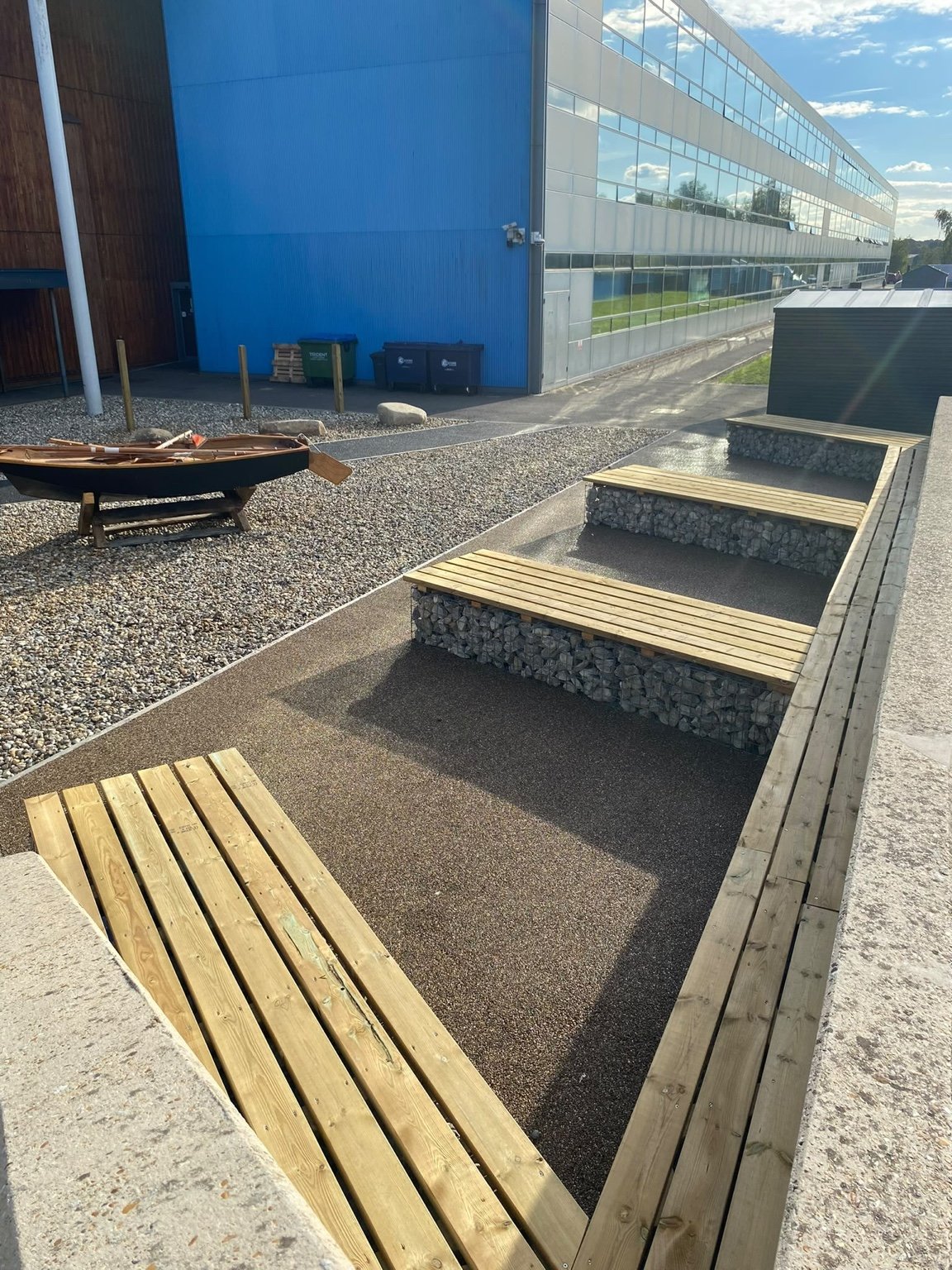
Timber-topped gabion benches, resin-bonded surfacing, shingle and a boat feature at the academy entrance.
View Folkestone projectCanterbury
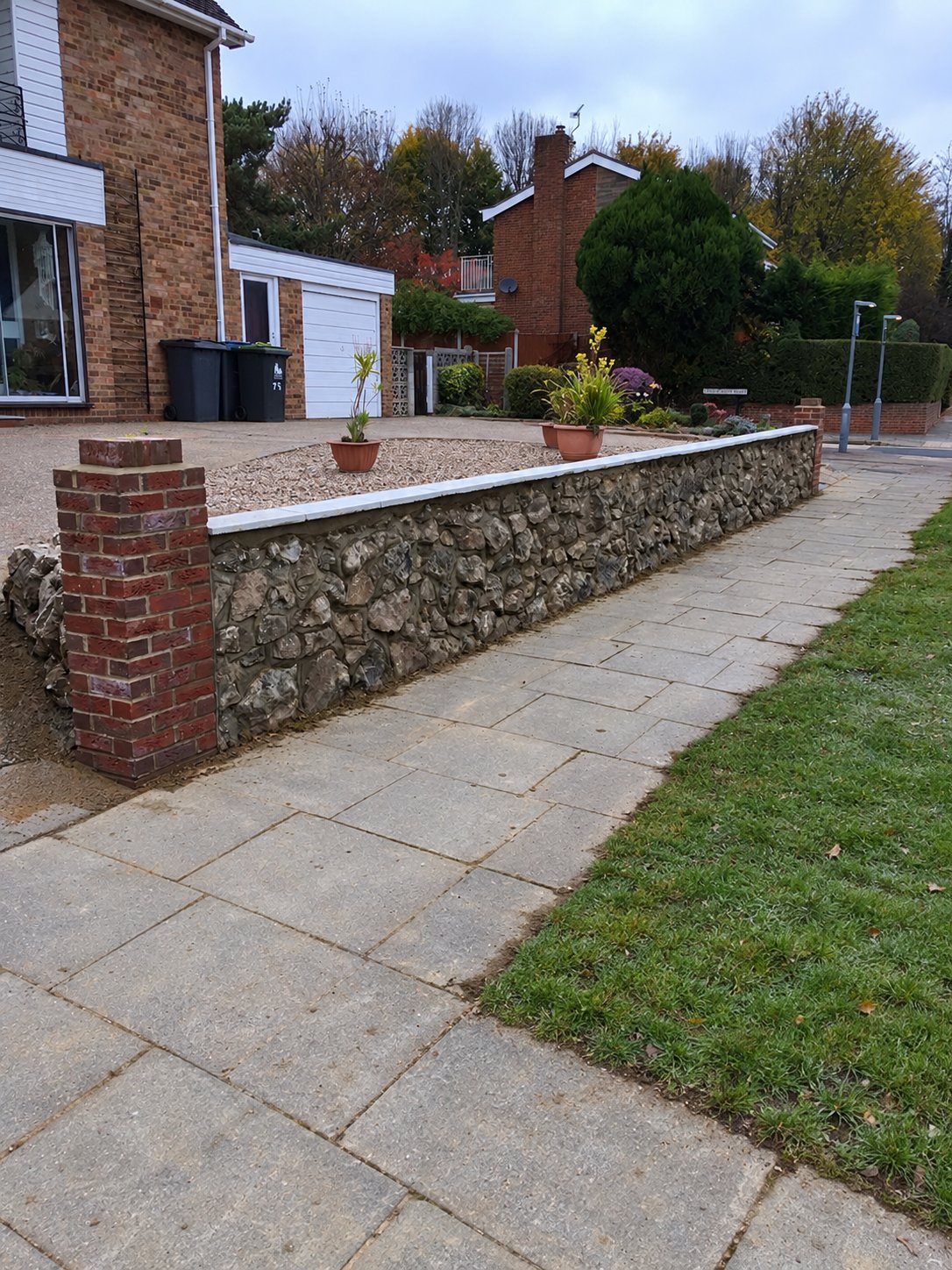
The stones from a customer’s late husband’s rockery kept and reused in a new front wall.
View Canterbury projectCanterbury
Retaining walls, shingle infill and riven buff slab circles across connected garden levels.
View Canterbury projectAshford
Before, during and after a timber decking replacement, from the old deck to the finished terrace.
View Ashford projectBorough Green
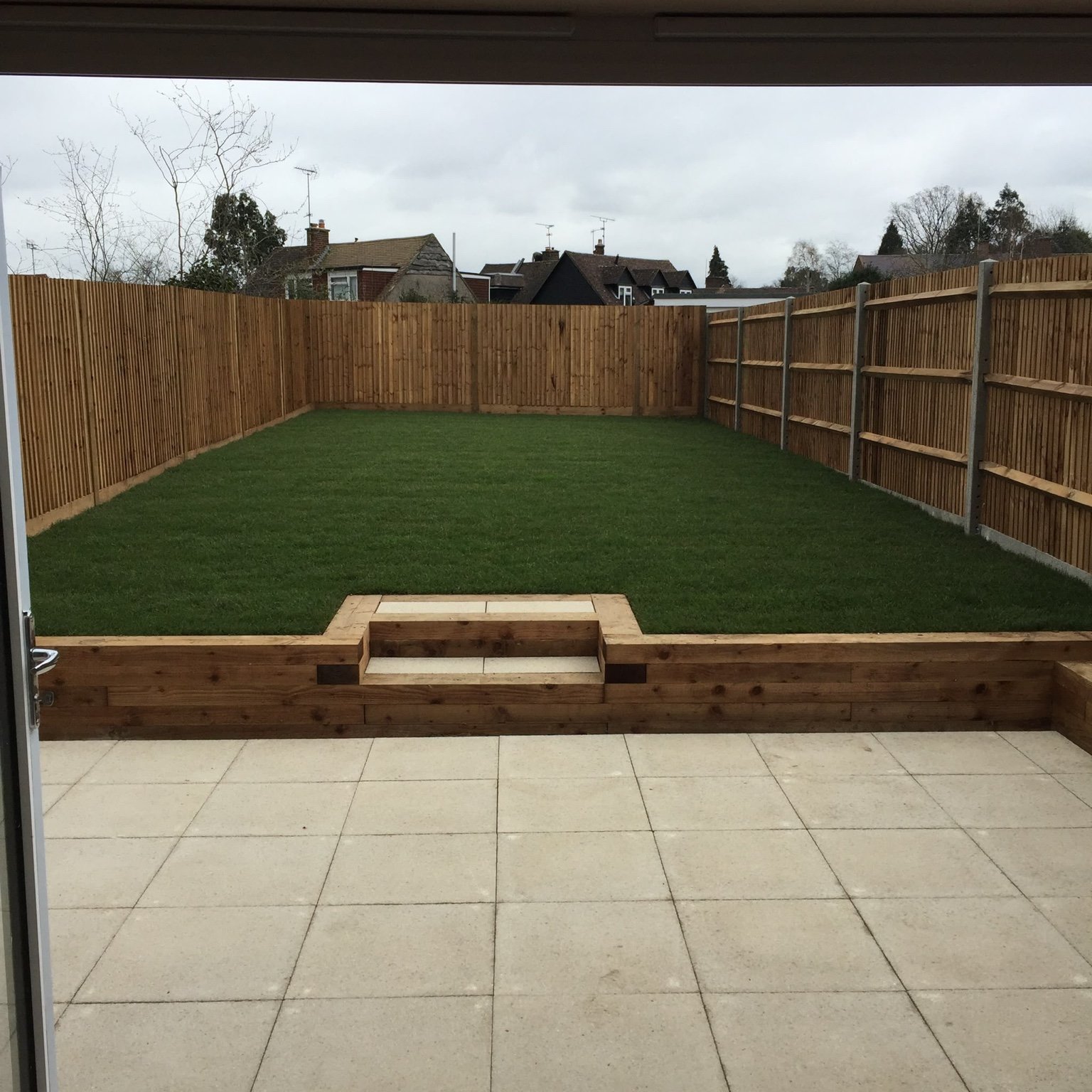
1800mm closeboard fencing, softwood sleeper planters, a 450mm buff slab patio and new turf.
View Borough Green projectCanterbury
Porcelain paving, artificial grass and a custom steel-frame pergola with polycarbonate roof.
View Canterbury projectStrood
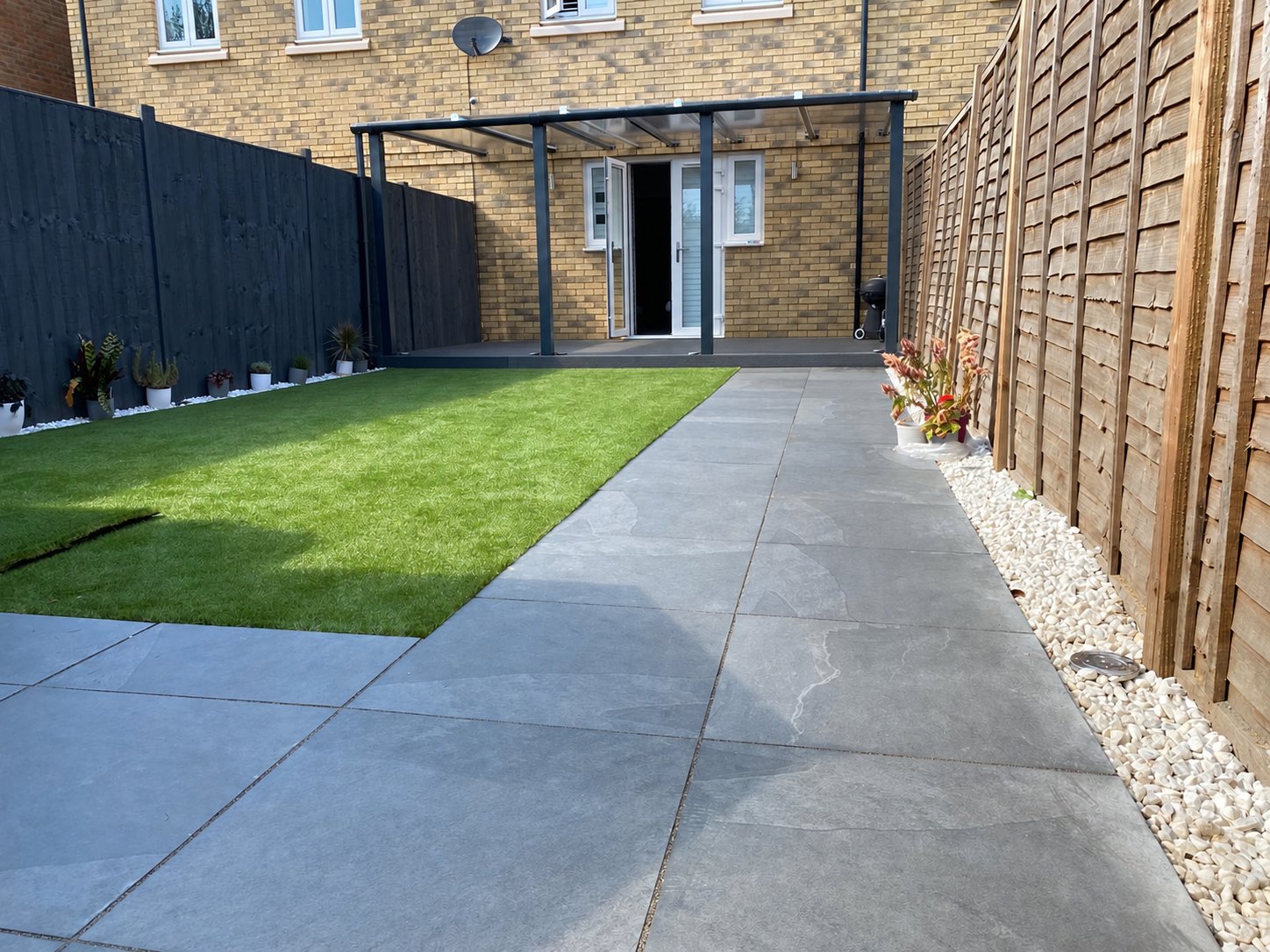
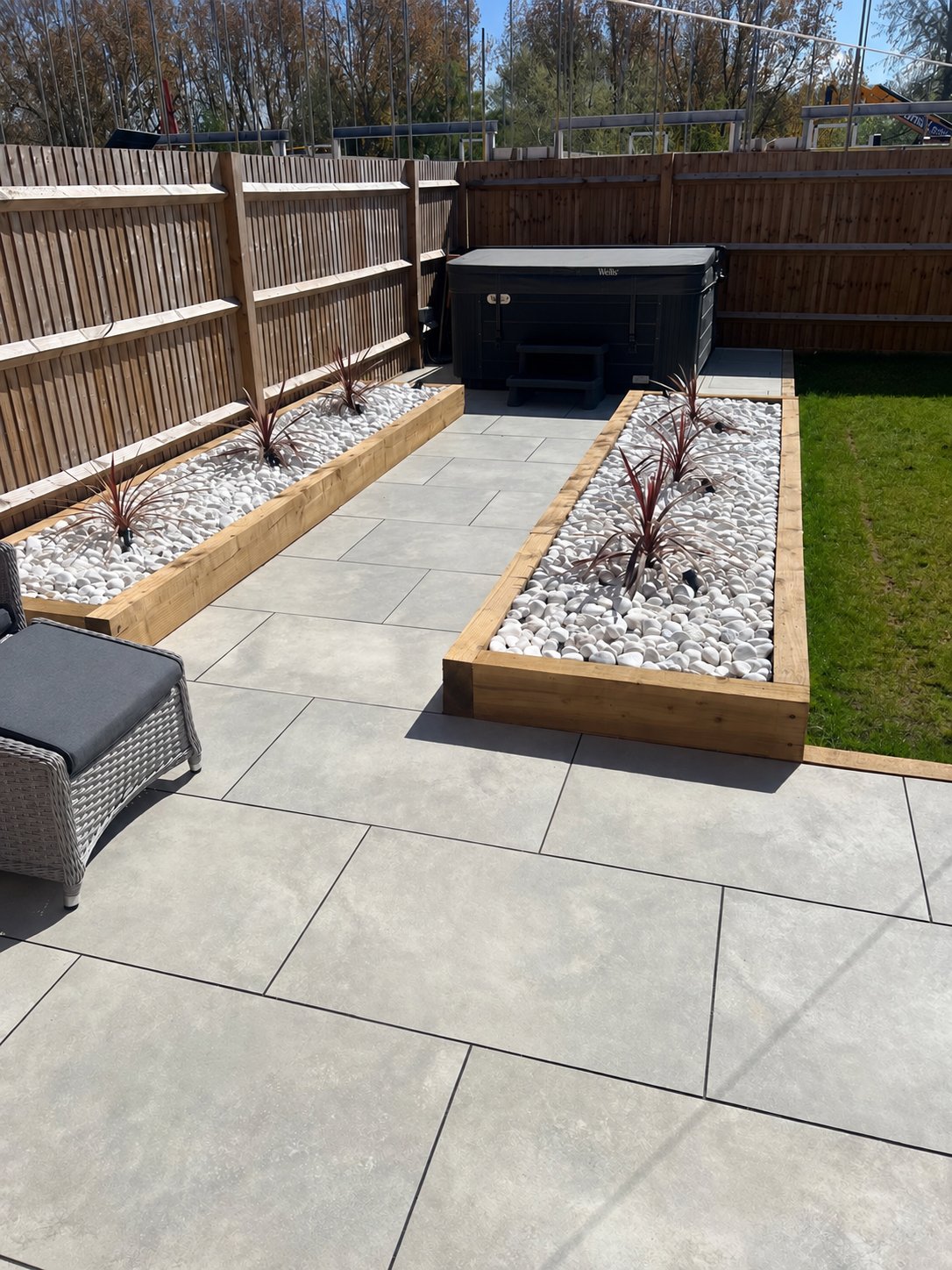
Grey porcelain paving framed by timber sleeper planters, white decorative stones and planting.
View Strood projectWest Malling
Block paving, porcelain patio, brick retaining walls and two styles of timber fencing.
View West Malling projectAshford
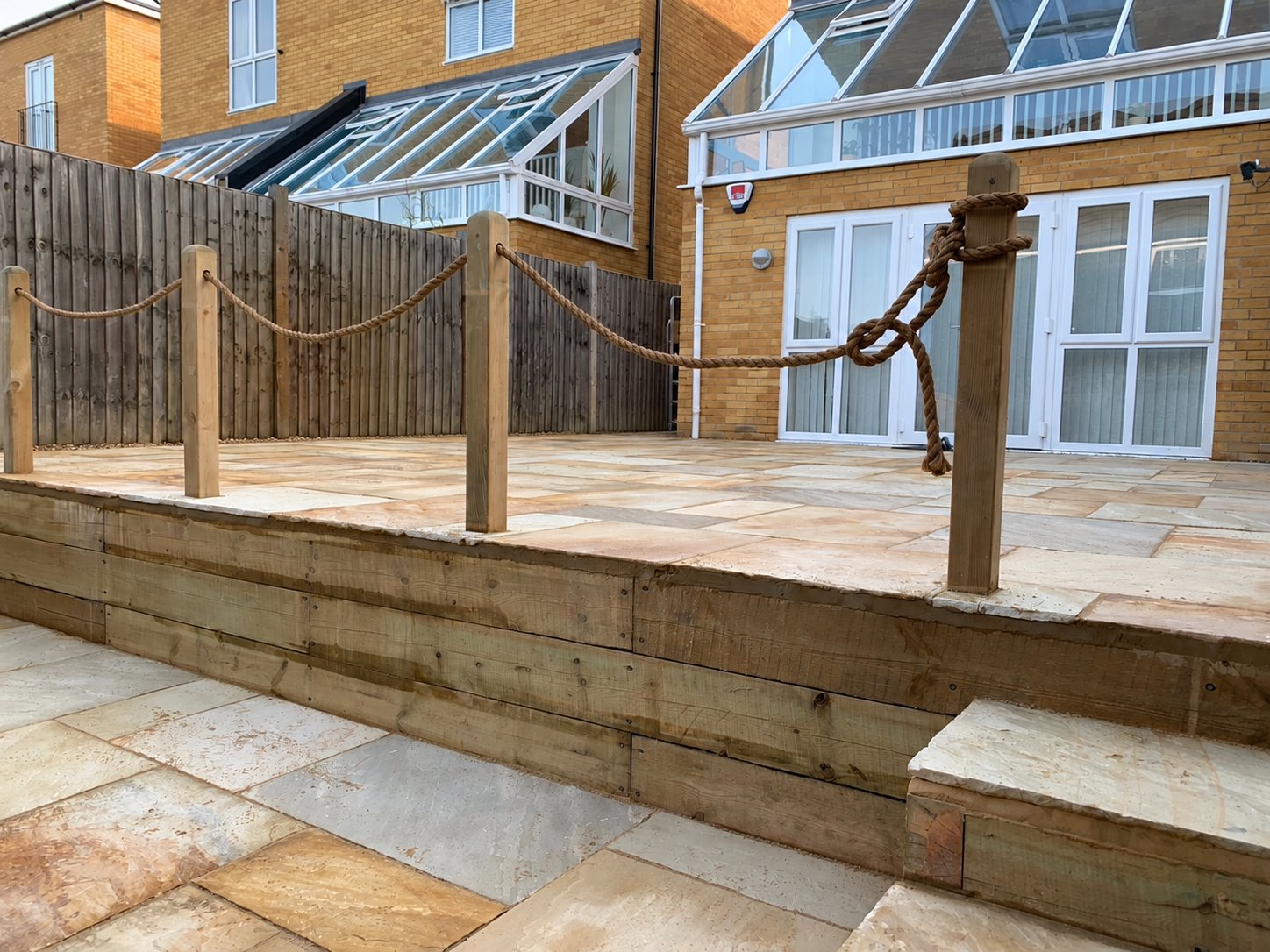
Sandstone paving across two levels, with timber sleeper retaining walls.
View Ashford projectDeal
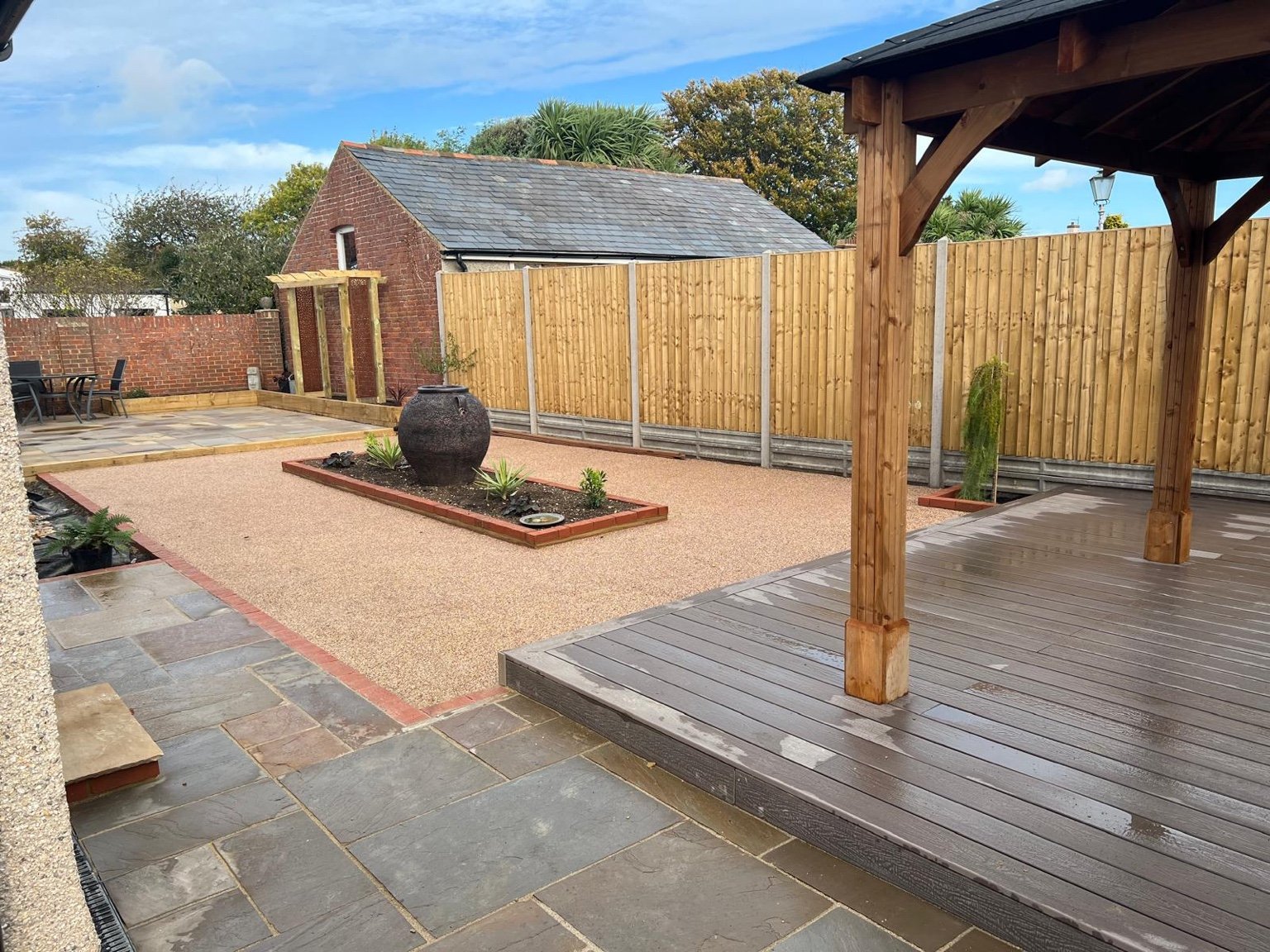
A sandstone patio, ash-coloured composite decking, pitched-roof pergola and sleeper planters.
View Deal projectSevenoaks
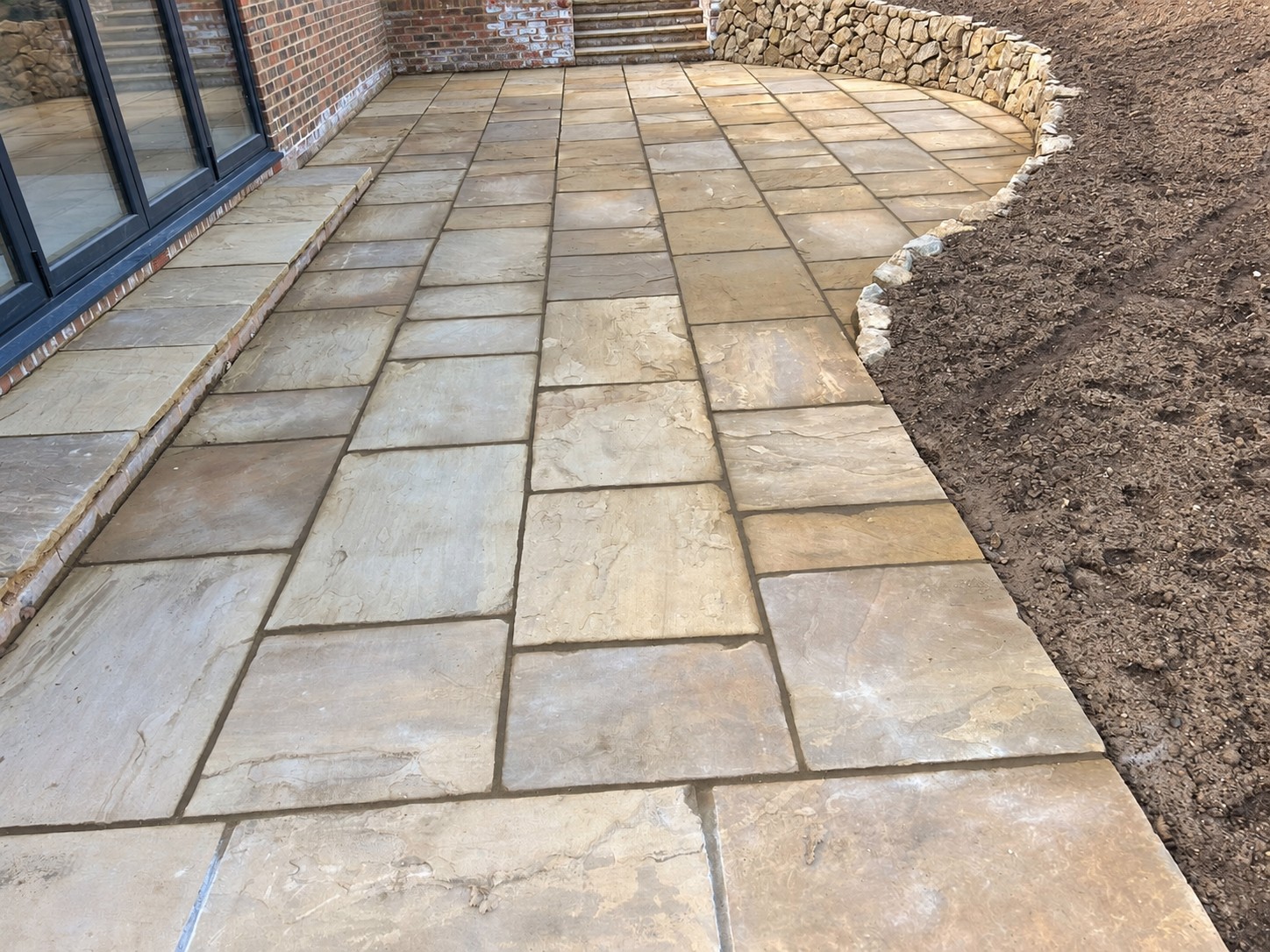
75mm thick York stone paving, curved paths, brick walls and Kentish ragstone walls.
View Sevenoaks projectHerne Bay
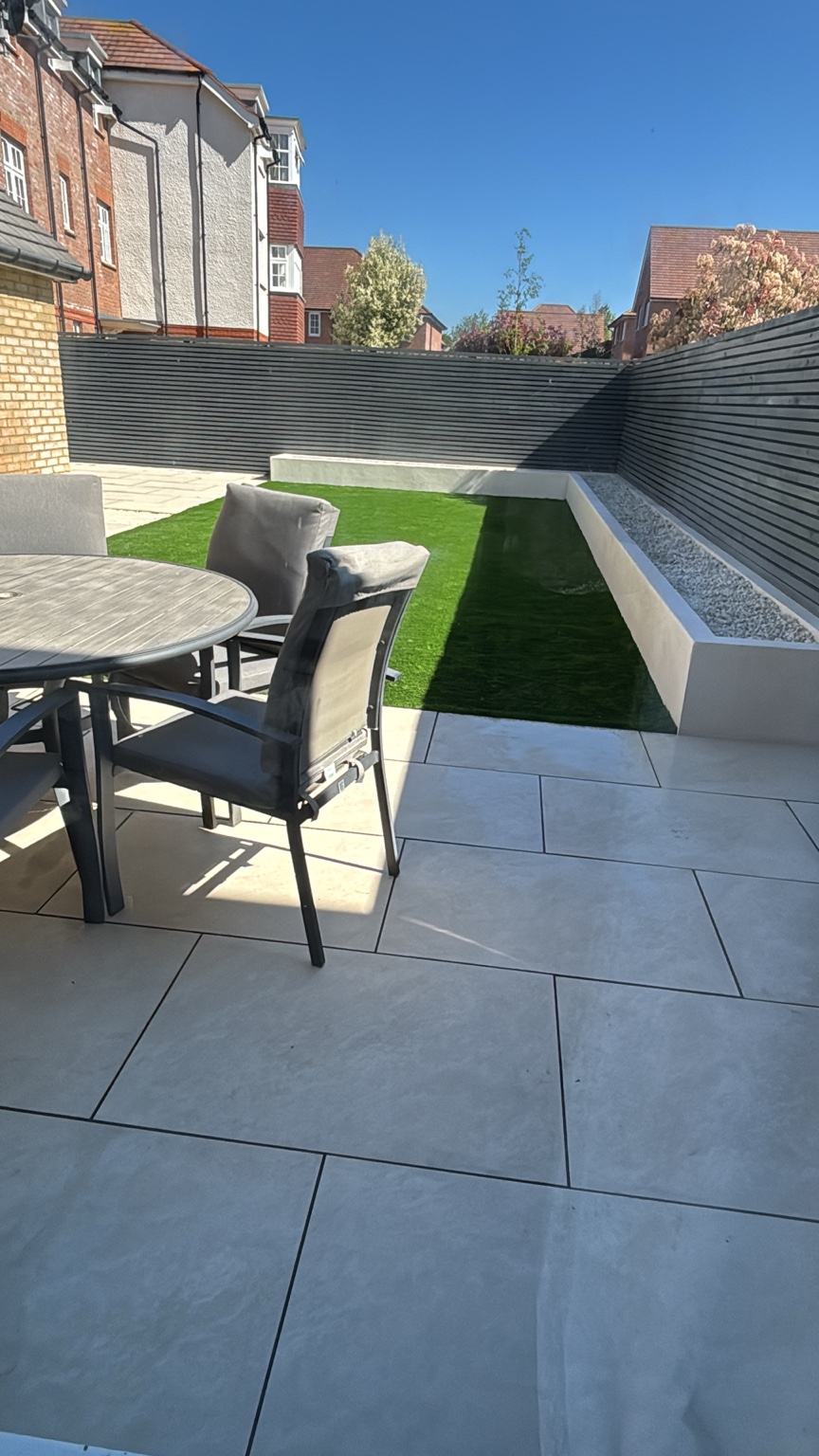
Porcelain patio, raised bed, artificial grass and slatted fencing. See the garden before and after.
View Herne Bay projectSittingbourne
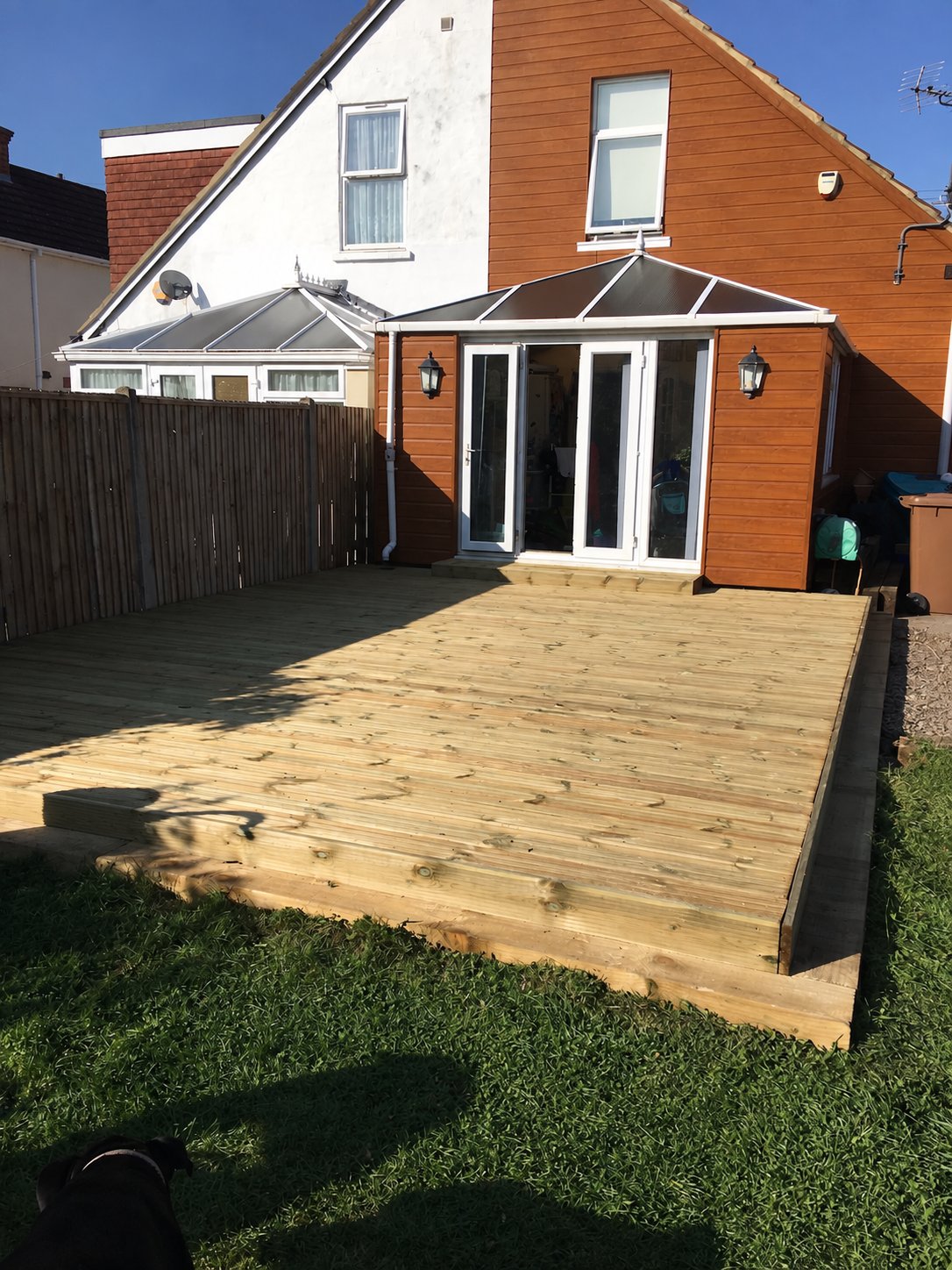
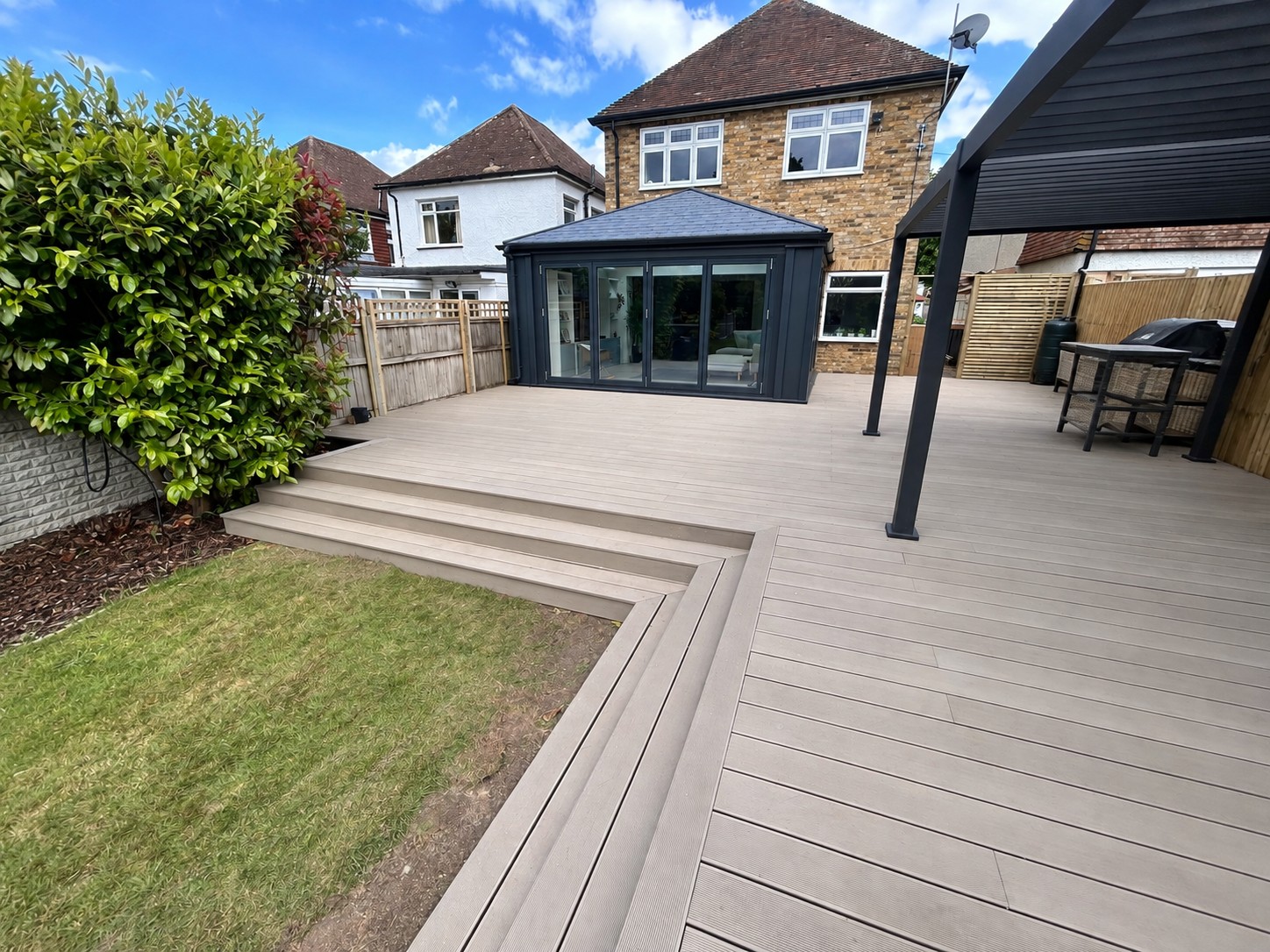
A broad decking terrace with defined board lines and steps connecting the house to the lawn.
View Sittingbourne projectDeal
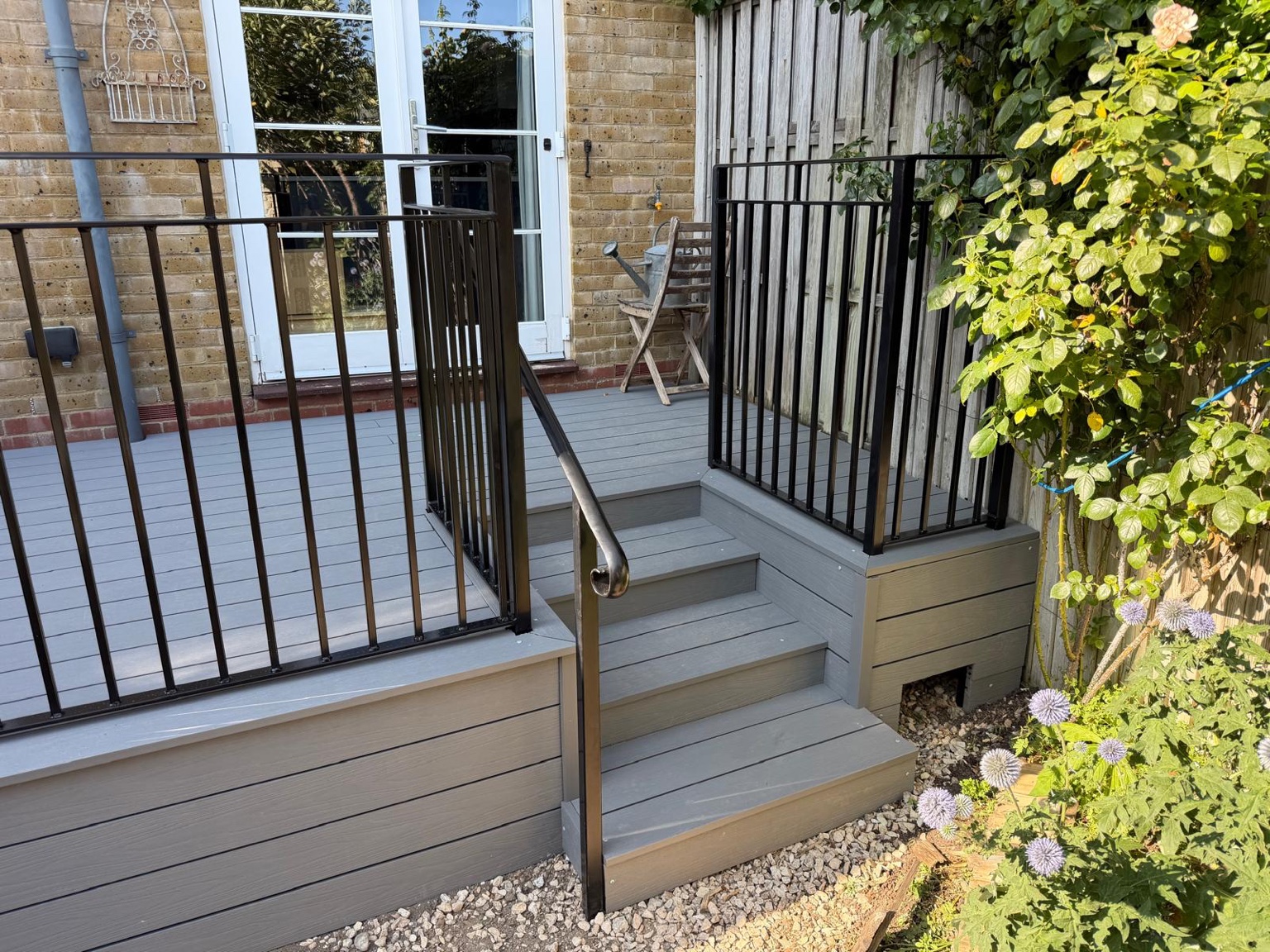
Raised grey decking with black railings, inset steps and a matching handrail.
View Deal projectCOMPLETED PROJECT · WEST MALLING
Block paving, porcelain patio, brick retaining walls and two styles of timber fencing.
This completed West Malling project illustrates the work shown in the photographs. We can discuss the requirements of your own Birchington-on-Sea property.
View this project →PLAN YOUR BIRCHINGTON PAVING
Send photographs, approximate dimensions and your preferred finish for a free, no-obligation quotation.