Chislehurst
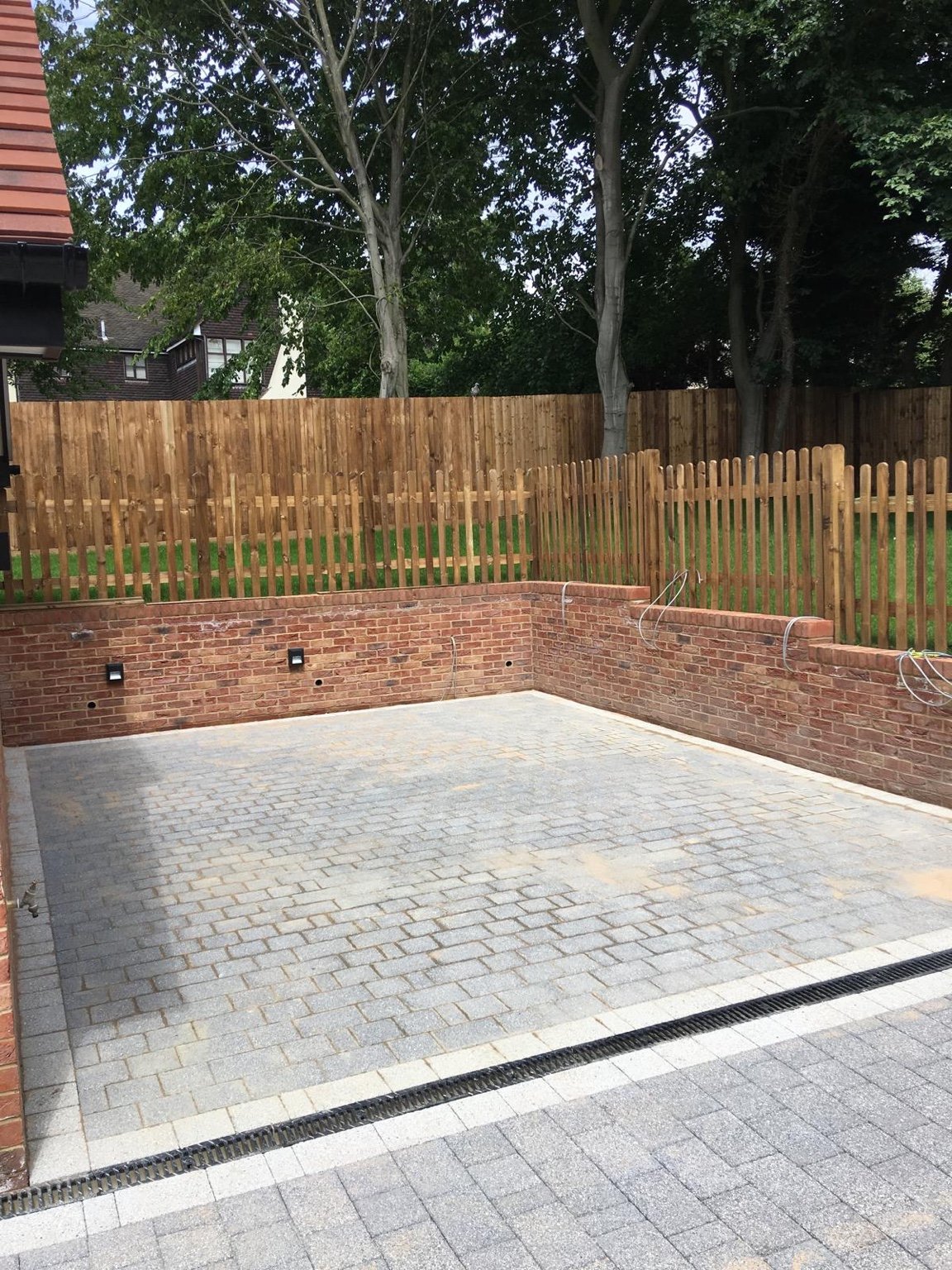
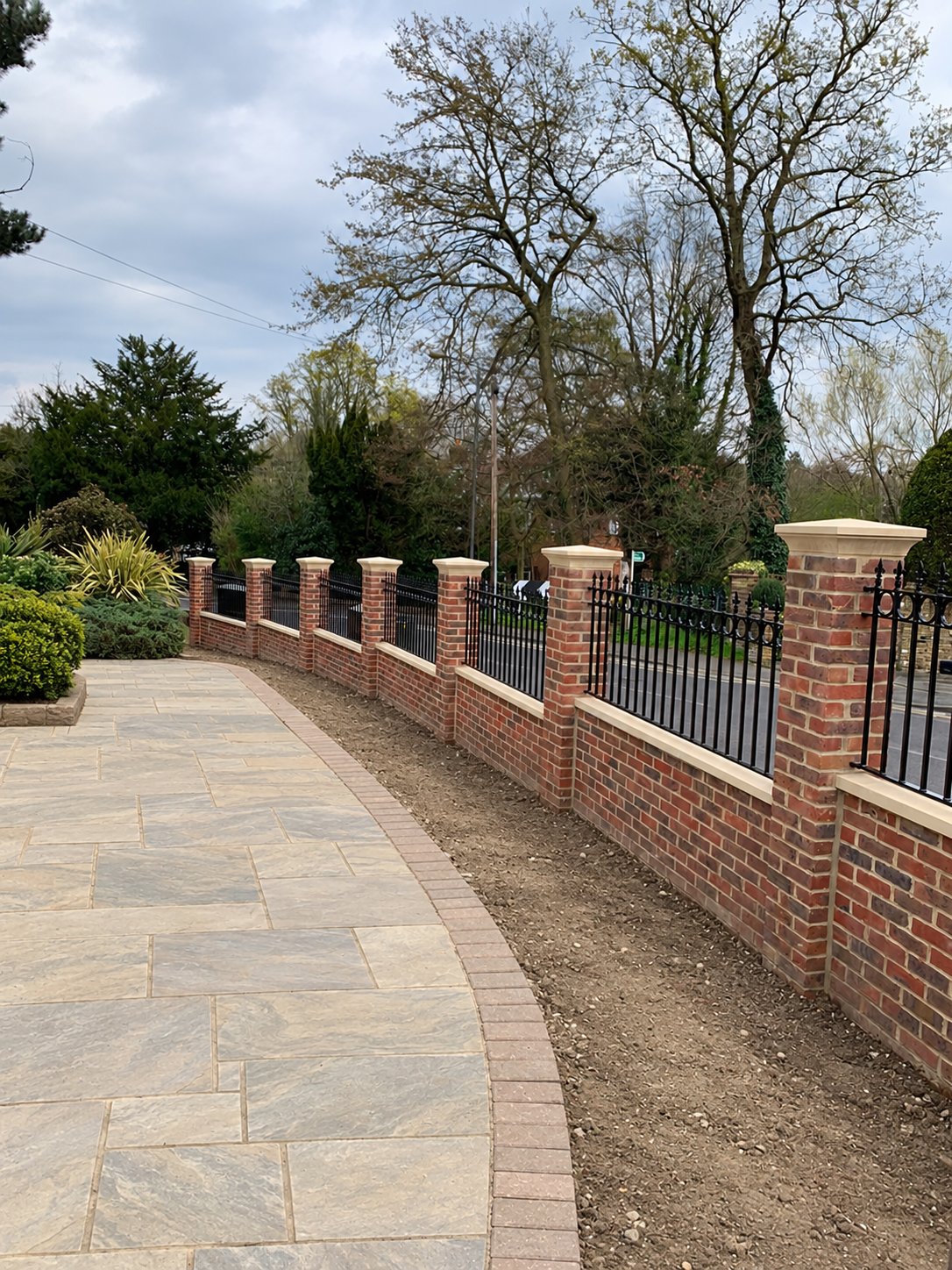
Brick piers, stone coping and railings
A brick boundary with pale stone coping and pier caps, finished with decorative railing panels.
View Chislehurst projectDEAL · EAST KENT
Loose stone can create a practical entrance with a choice of aggregate colours and a different feel from a continuous paved surface. Landscape Gardener of Kent discusses gravel driveways in Deal, including excavation, supporting layers, containment, slope and future top-ups.
Think about daily walking routes, wheels, pushchairs and the way cars turn. Loose gravel moves, especially where tyres repeatedly steer or brake. A firmer path to the front door may be useful within the layout.
A sloping entrance needs particular assessment of migration and containment. Stabilisation grids may be suitable in some designs, but they are not a universal solution to every gradient.
Compare tarmac or resin-bound surfacing if a continuous surface would better match the site and users.
Compare aggregate samples for size, shape, durability and suitability for vehicle use. Smaller stone can migrate or be carried by tyres; larger pieces can feel less comfortable underfoot.
Nominal 20mm angular aggregate is often considered for drives, but size alone does not establish the best product. Confirm the proposed material and any grid requirements for your parking arrangement.
Colour can change between dry and wet samples. Check a useful quantity near the property rather than decide from a small catalogue photograph.
Decorative gravel is not a substitute for a load-bearing base. Remove unsuitable ground and specify supporting layers for the site and vehicle loading.
A suitable geotextile may have a separation role where required by the construction. Its type and position should be defined; it does not stop all weeds arriving from above.
Edges help contain the stone and form junctions with paths or the entrance. The intended depth and aggregate quantity need to suit the chosen product rather than simply fill the area with a thick loose layer.
Water passing through loose aggregate still needs an appropriate route through or away from the underlying layers. Assess soil, ground levels and persistent wet areas before relying on permeability.
Front-garden driveway planning depends on the proposal and drainage arrangements. Use the Planning Portal guidance and check additional restrictions where relevant.
Containment at the entrance also matters: explain how stone is kept within the site and away from neighbouring paths or the highway.
The price of one tonne varies with aggregate, supplier, delivery and order size. Coverage depends on the installed depth and the supplier’s material data, so a tonne cannot be converted into one fixed driveway area.
A full installation also includes clearance, excavation, supporting materials, edges, labour and waste removal. A top-up onto a sound existing drive is a different scope.
For quotations, measure the area and describe whether existing stone will remain. Ask for quantities and delivery included in the complete proposal.
Rake or redistribute displaced stone as needed, remove debris and control weeds using appropriate methods. The surface can need replenishment over time as material is displaced or lost.
If hollows recur, investigate the support rather than repeatedly add decorative stone. Drainage issues also need resolving below or around the finish.
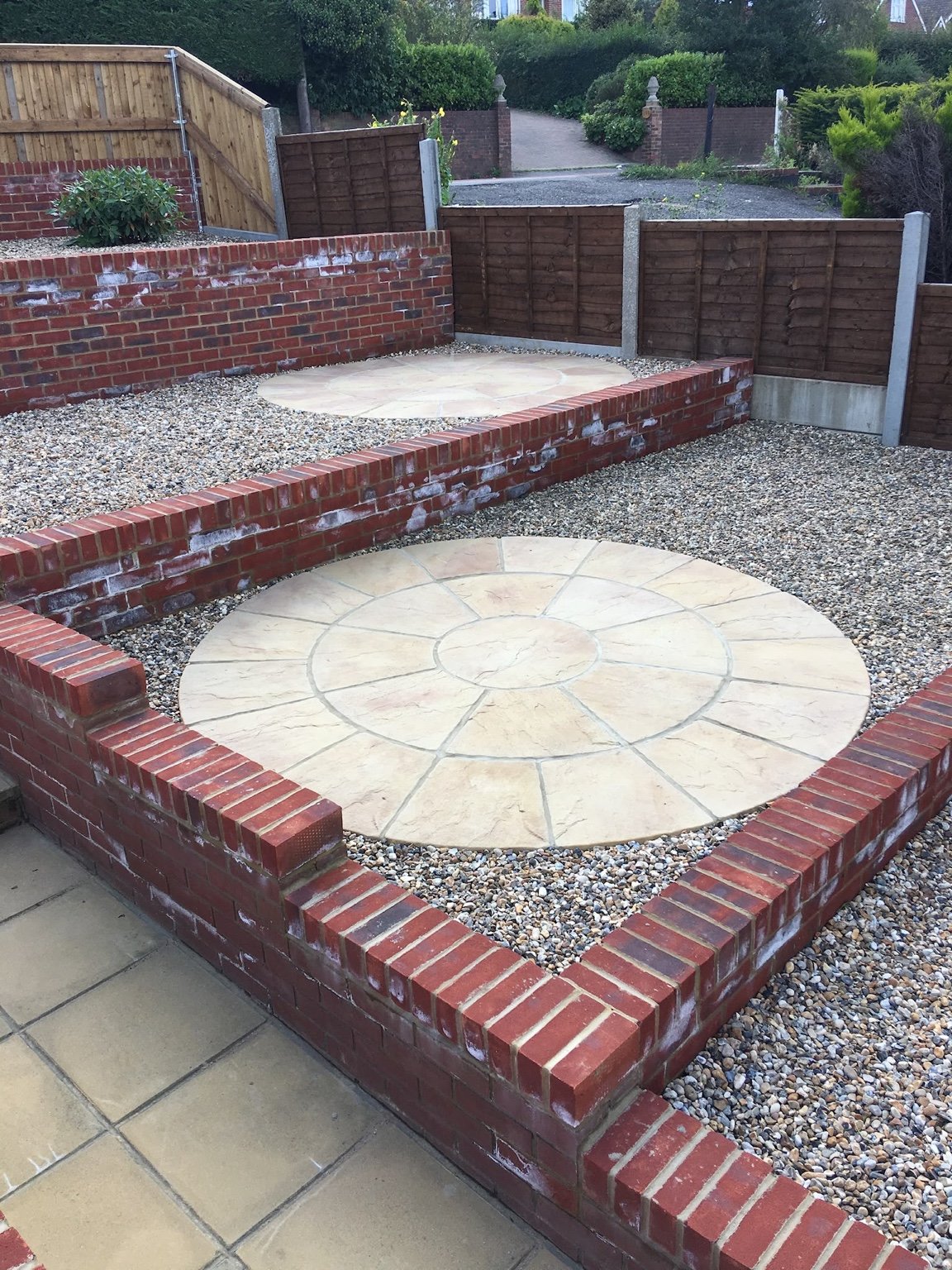
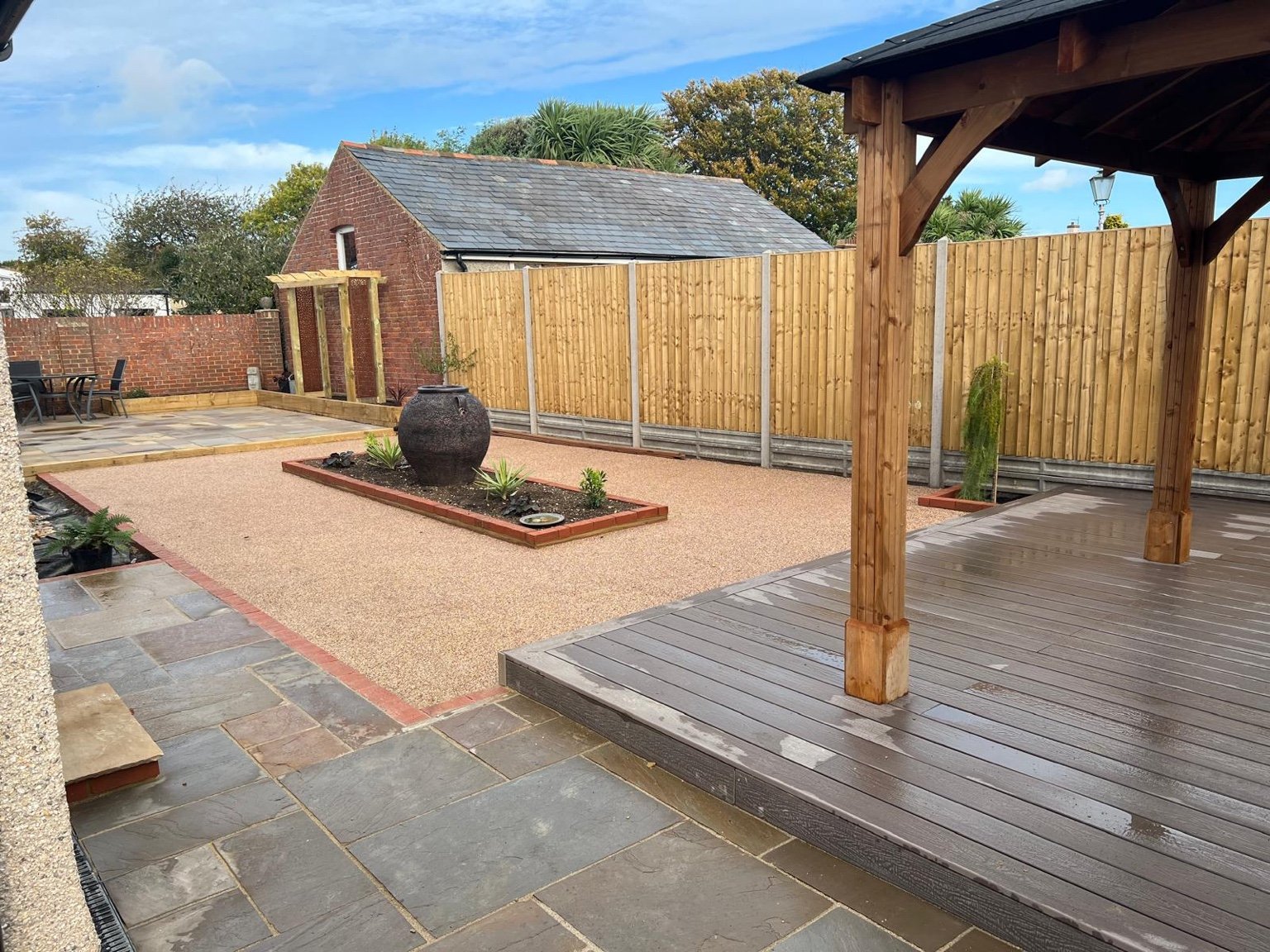
Our Canterbury tiered-garden photographs show shingle alongside brick walls and paving. They are garden examples, not vehicle driveways in Deal.
Discuss driveways in Deal, resin driveways in Deal, tarmac driveways in Deal. Agree levels, access and the order of work together where the project includes several improvements.
Planning Portal: paving your front garden explains the English planning requirements. Check the proposal and any property restrictions before work.
Stone movement, maintenance and the feel underfoot can be drawbacks. Slopes, frequent steering and wheeled access need considering.
Request a current delivered price for the specified aggregate. Supply price does not include the driveway’s construction.
Nominal 20mm angular stone is often considered, but compare product suitability, movement, walking comfort and the actual layout.
A suitable supporting construction, with any specified separation fabric and edges. Decorative gravel alone over soil is not a driveway base.
Where the support and drainage remain suitable. Recurring hollows or wet areas need assessment before adding stone.
It may serve a defined construction role, but seeds can still germinate in surface debris.
Assess the gradient and containment. Grids or another surface may be more suitable for the site.
Area, postcode, photographs, slope, access and whether you need a full build or replenishment.
OUR WORK · KENT
Chislehurst
A brick boundary with pale stone coping and pier caps, finished with decorative railing panels.
View Chislehurst projectSt Margaret’s Bay
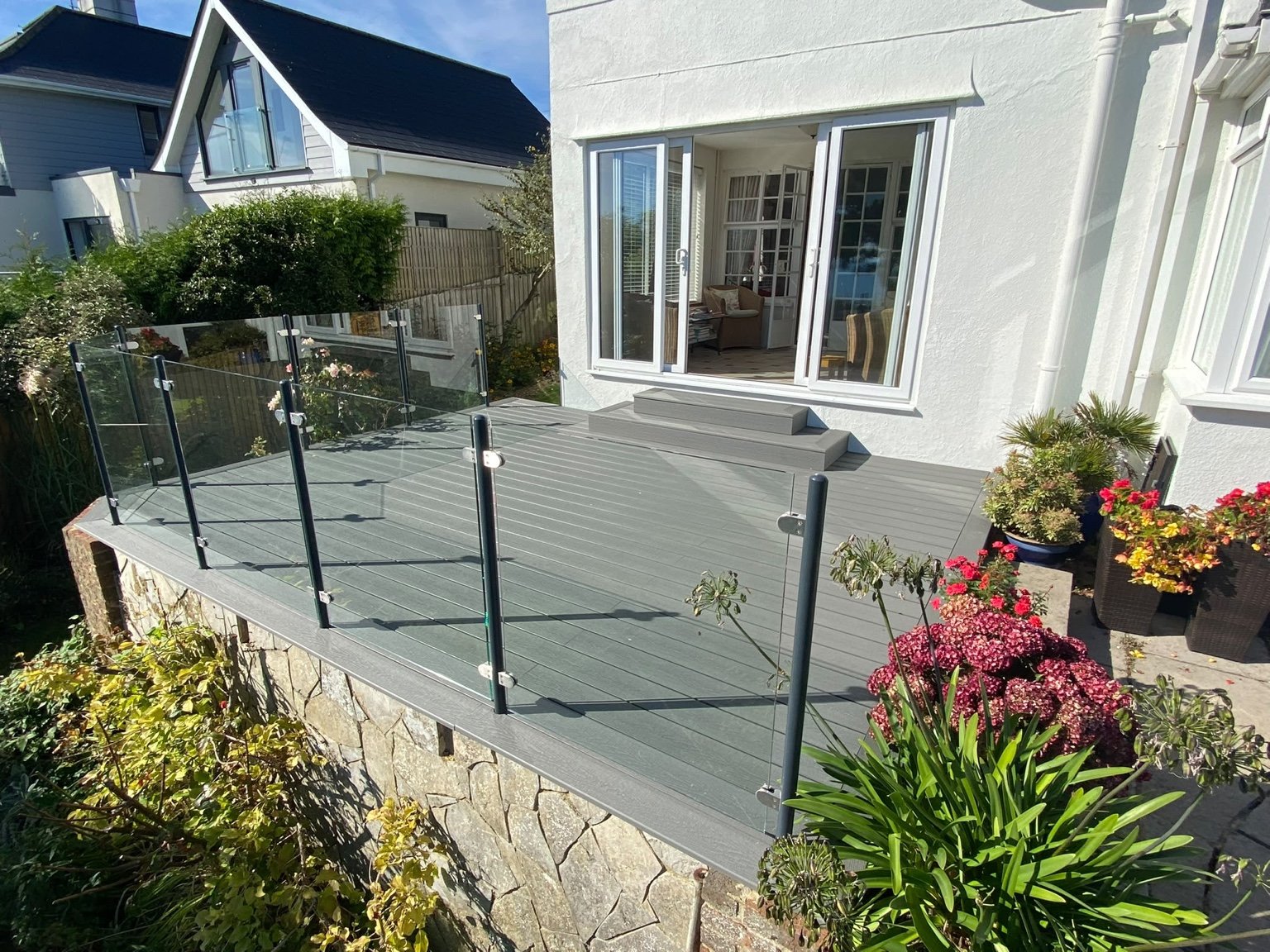
Grey composite decking, glass panels, powder-coated steel posts and matching steps.
View St Margaret’s Bay projectFolkestone
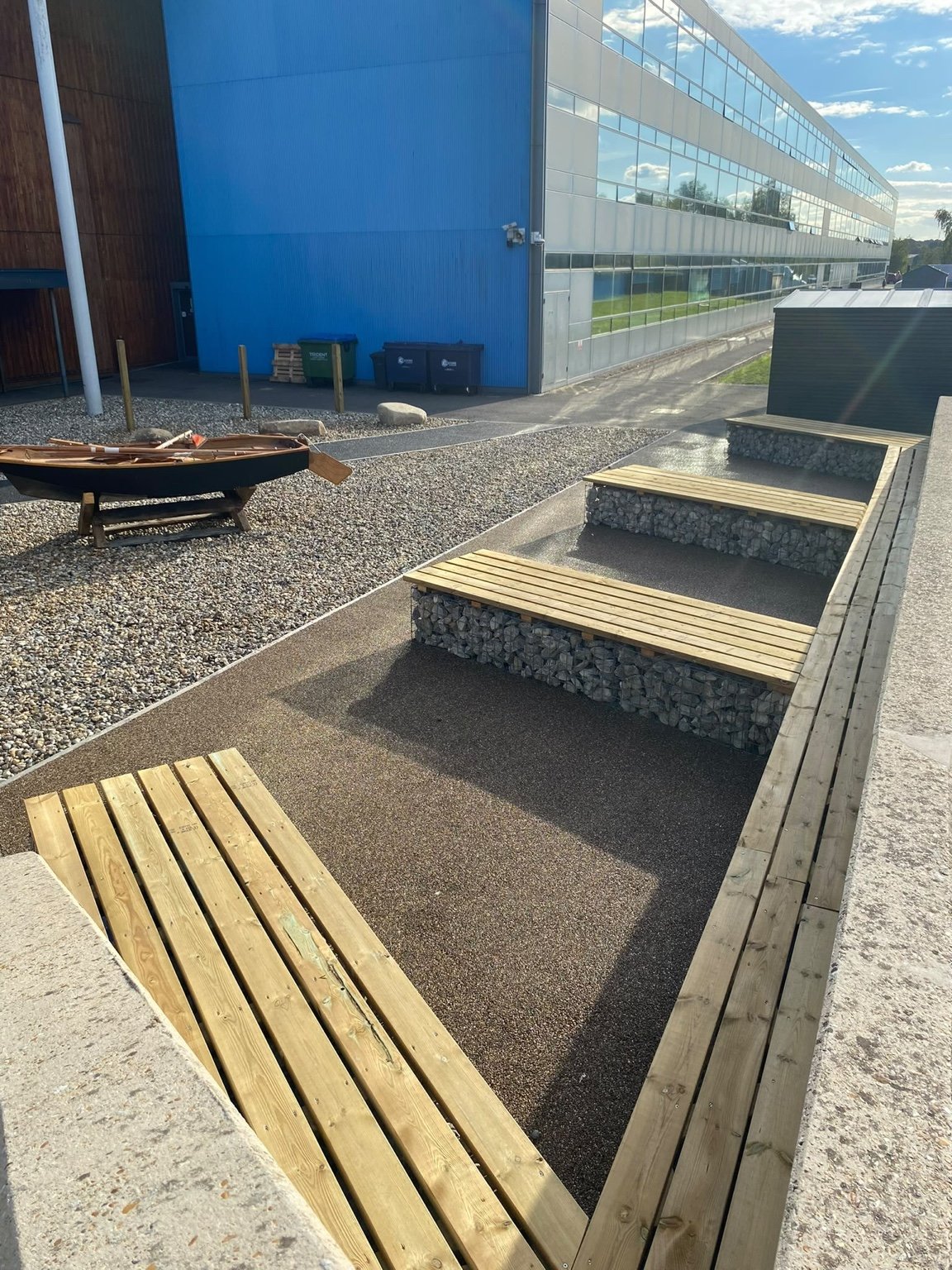
Timber-topped gabion benches, resin-bonded surfacing, shingle and a boat feature at the academy entrance.
View Folkestone projectCanterbury
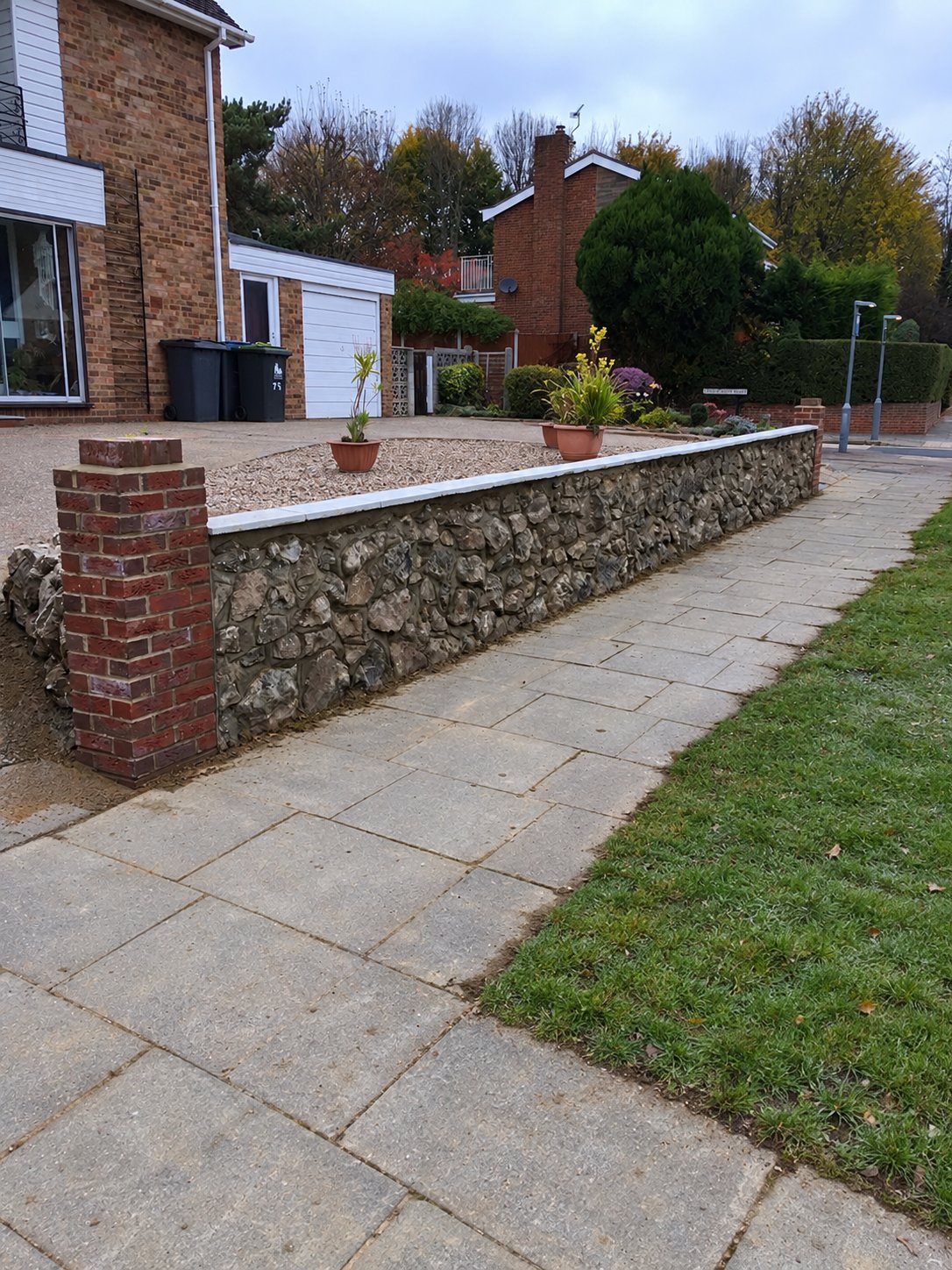
The stones from a customer’s late husband’s rockery kept and reused in a new front wall.
View Canterbury projectCanterbury
Retaining walls, shingle infill and riven buff slab circles across connected garden levels.
View Canterbury projectAshford
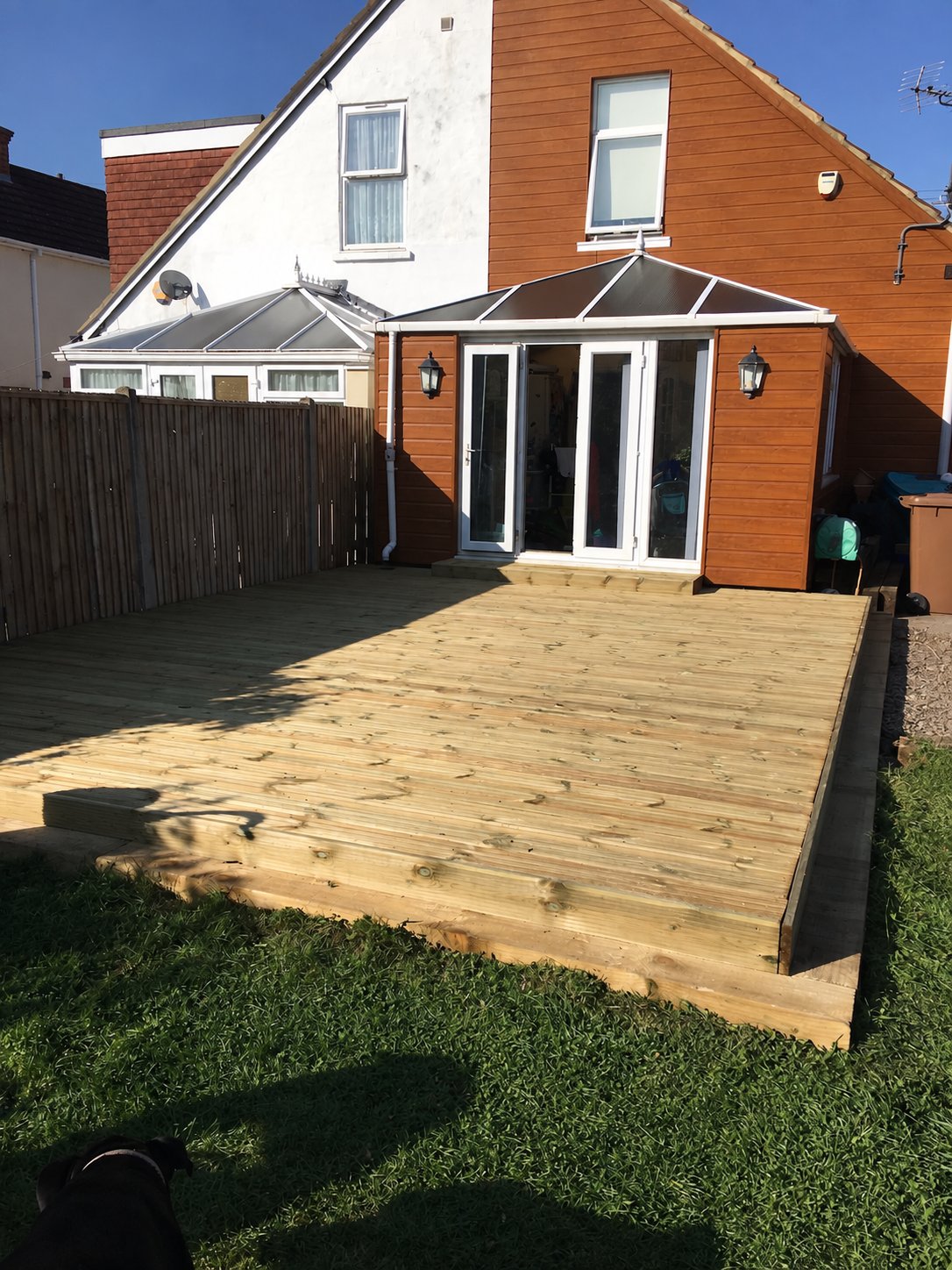
Before, during and after a timber decking replacement, from the old deck to the finished terrace.
View Ashford projectBorough Green
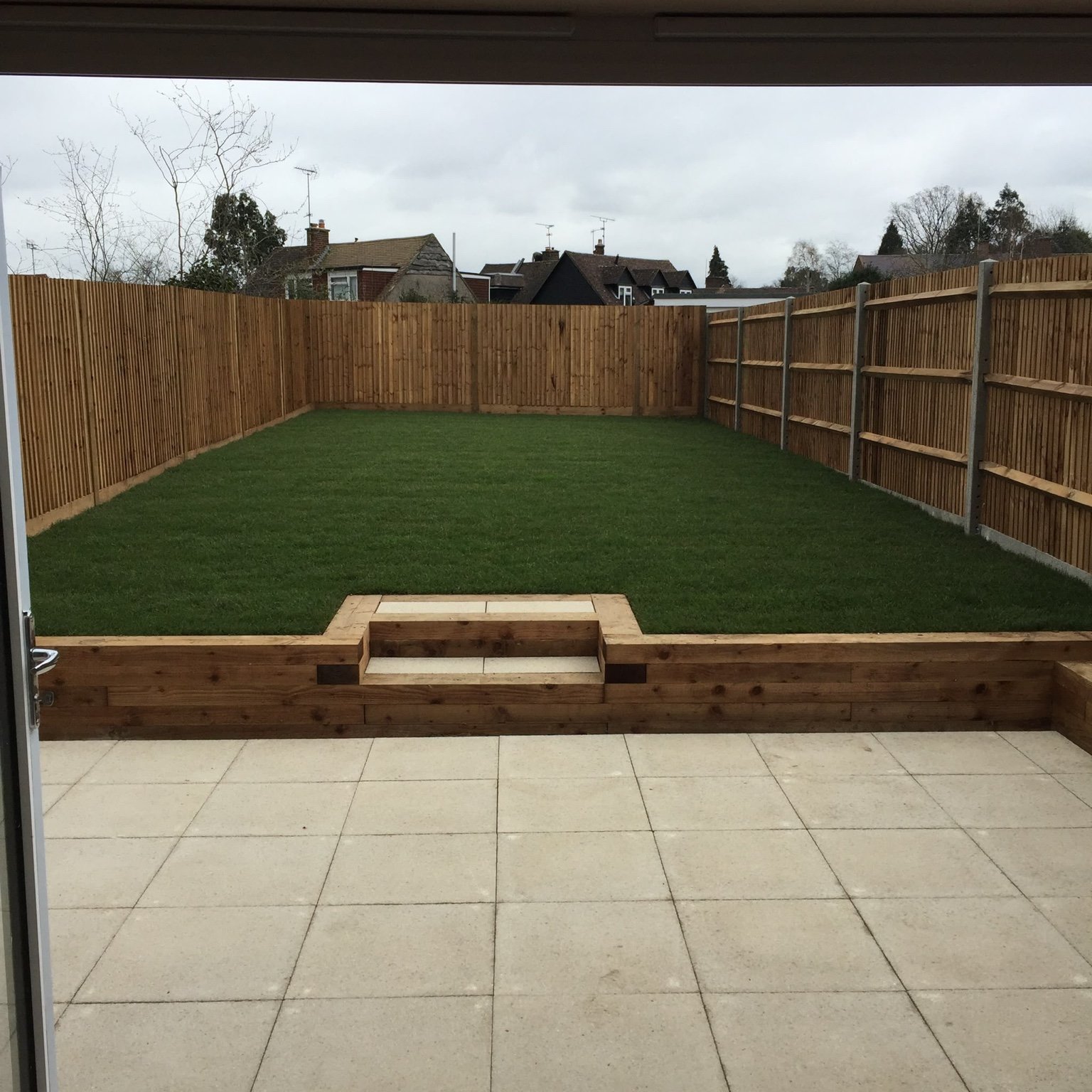
1800mm closeboard fencing, softwood sleeper planters, a 450mm buff slab patio and new turf.
View Borough Green projectCanterbury
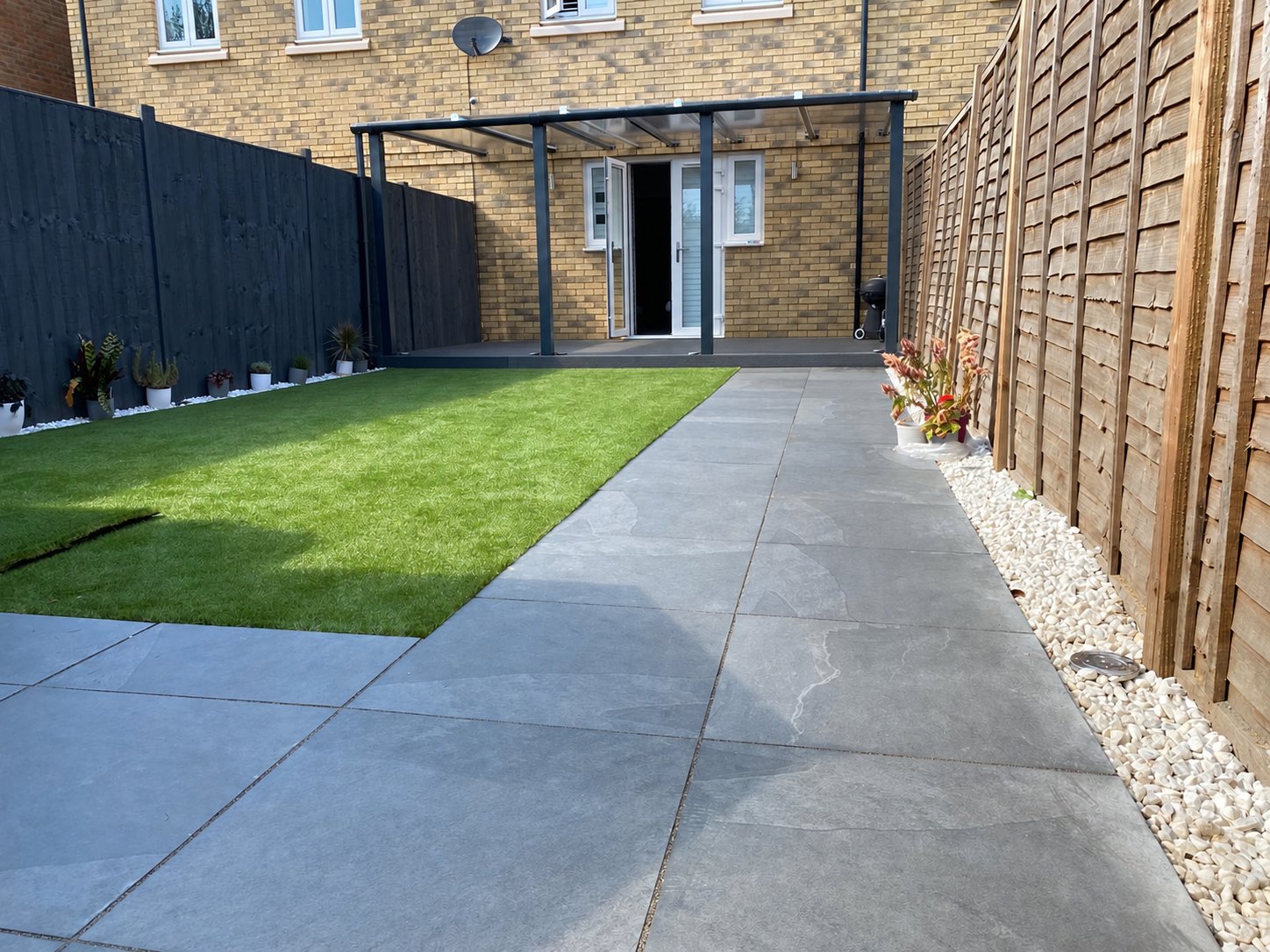
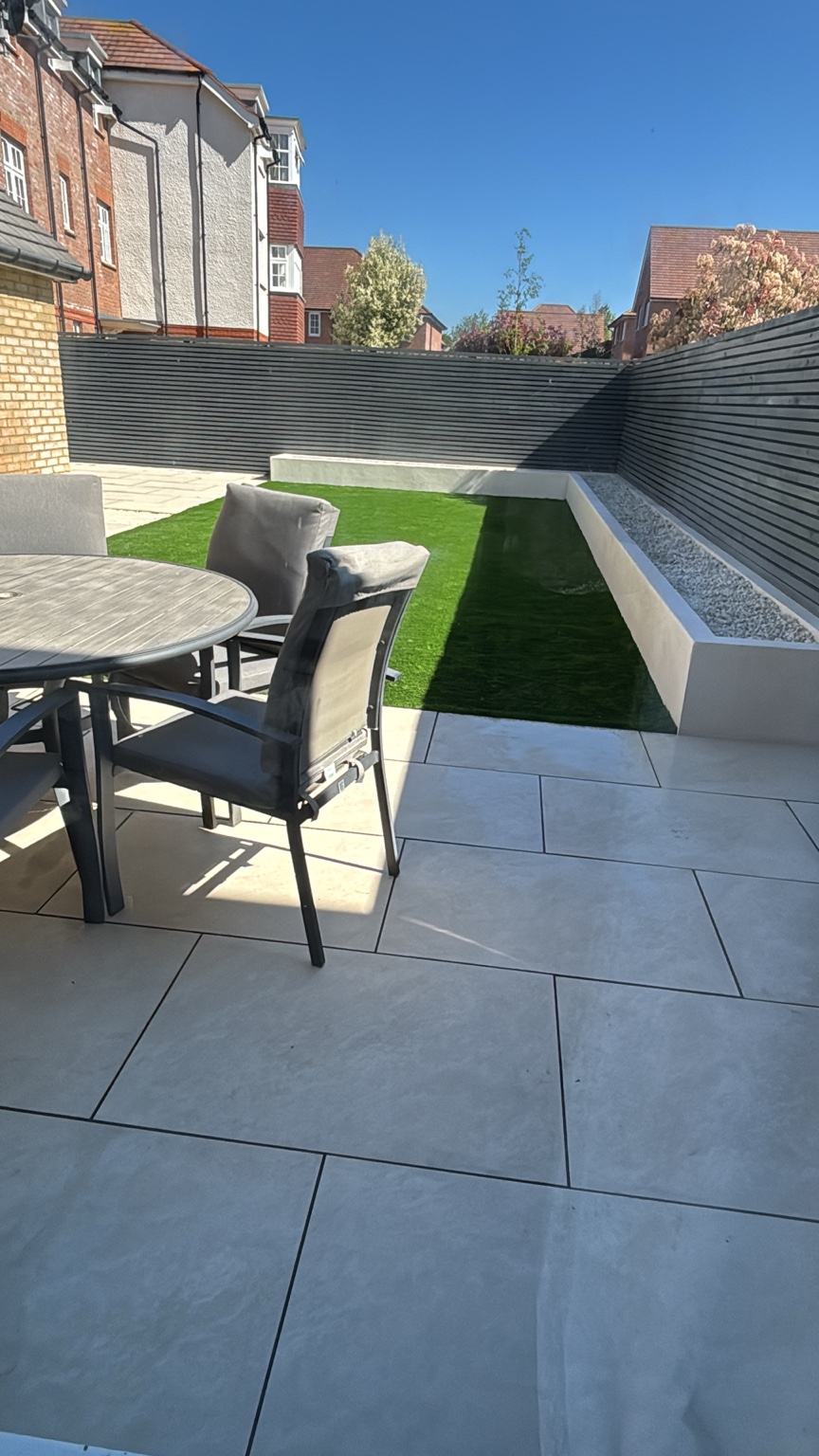
Porcelain paving, artificial grass and a custom steel-frame pergola with polycarbonate roof.
View Canterbury projectStrood
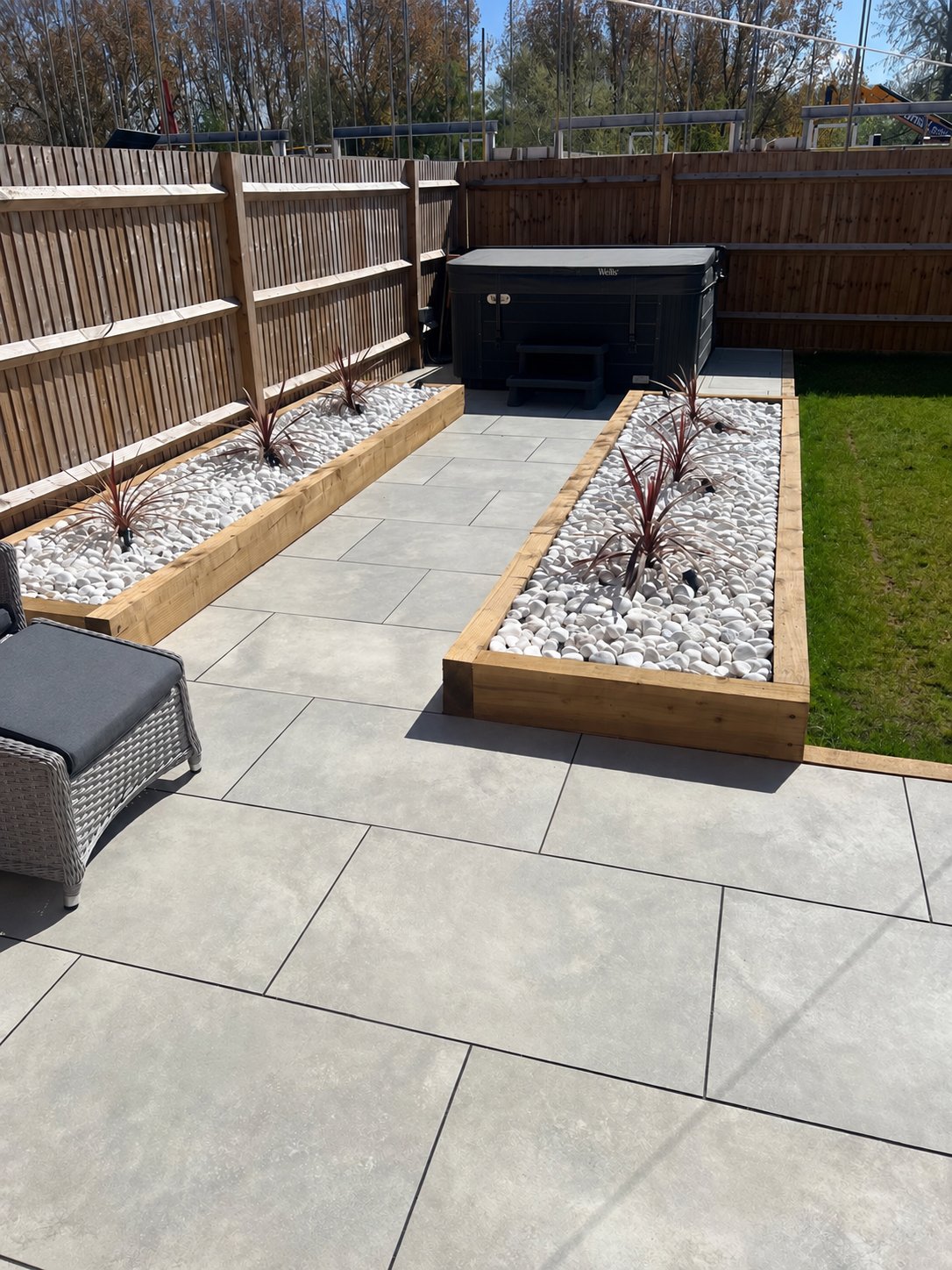
Grey porcelain paving framed by timber sleeper planters, white decorative stones and planting.
View Strood projectWest Malling
Block paving, porcelain patio, brick retaining walls and two styles of timber fencing.
View West Malling projectAshford
Sandstone paving across two levels, with timber sleeper retaining walls.
View Ashford projectDeal
A sandstone patio, ash-coloured composite decking, pitched-roof pergola and sleeper planters.
View Deal projectSevenoaks
75mm thick York stone paving, curved paths, brick walls and Kentish ragstone walls.
View Sevenoaks projectHerne Bay
Porcelain patio, raised bed, artificial grass and slatted fencing. See the garden before and after.
View Herne Bay projectSittingbourne
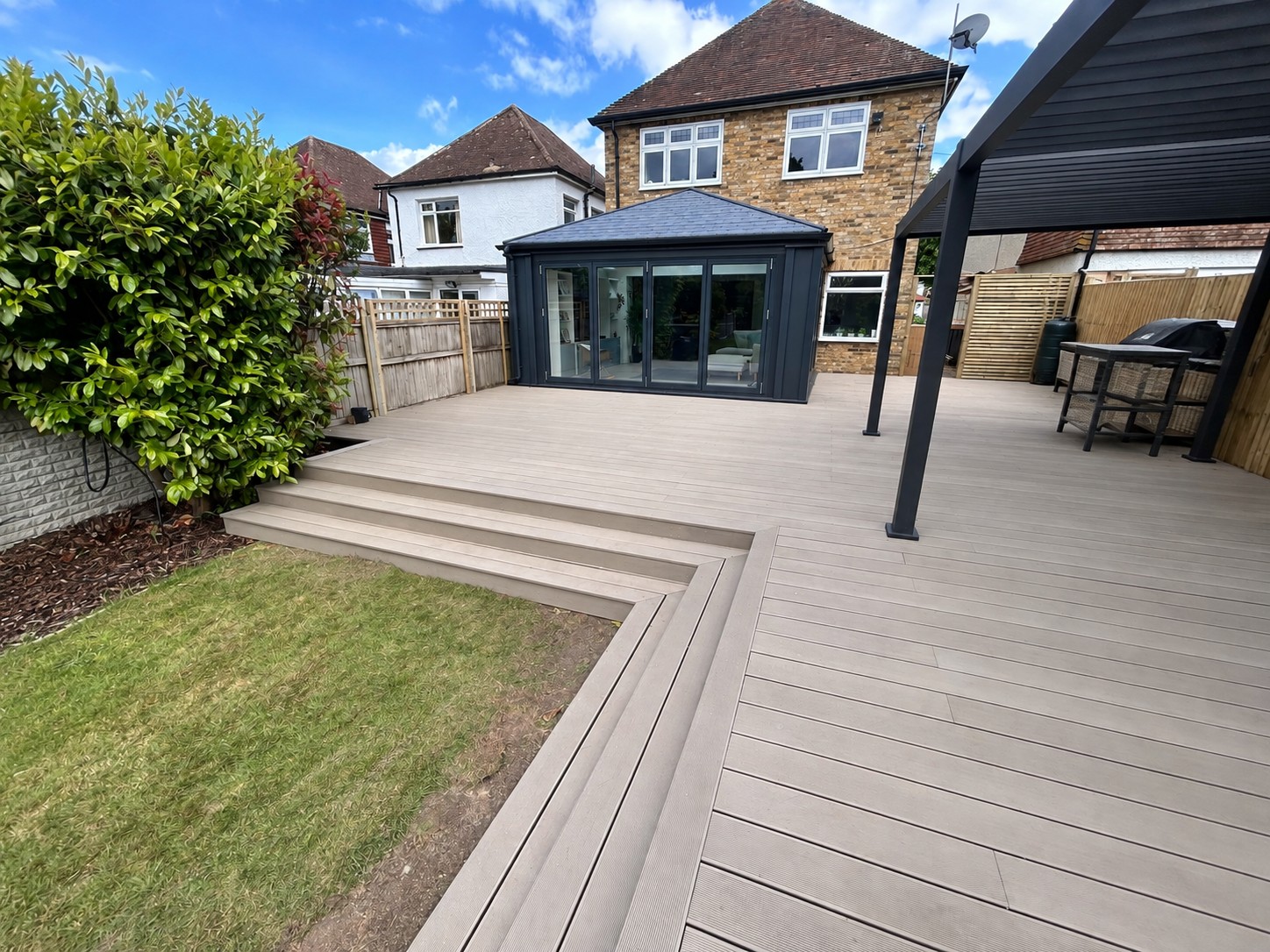
A broad decking terrace with defined board lines and steps connecting the house to the lawn.
View Sittingbourne projectDeal
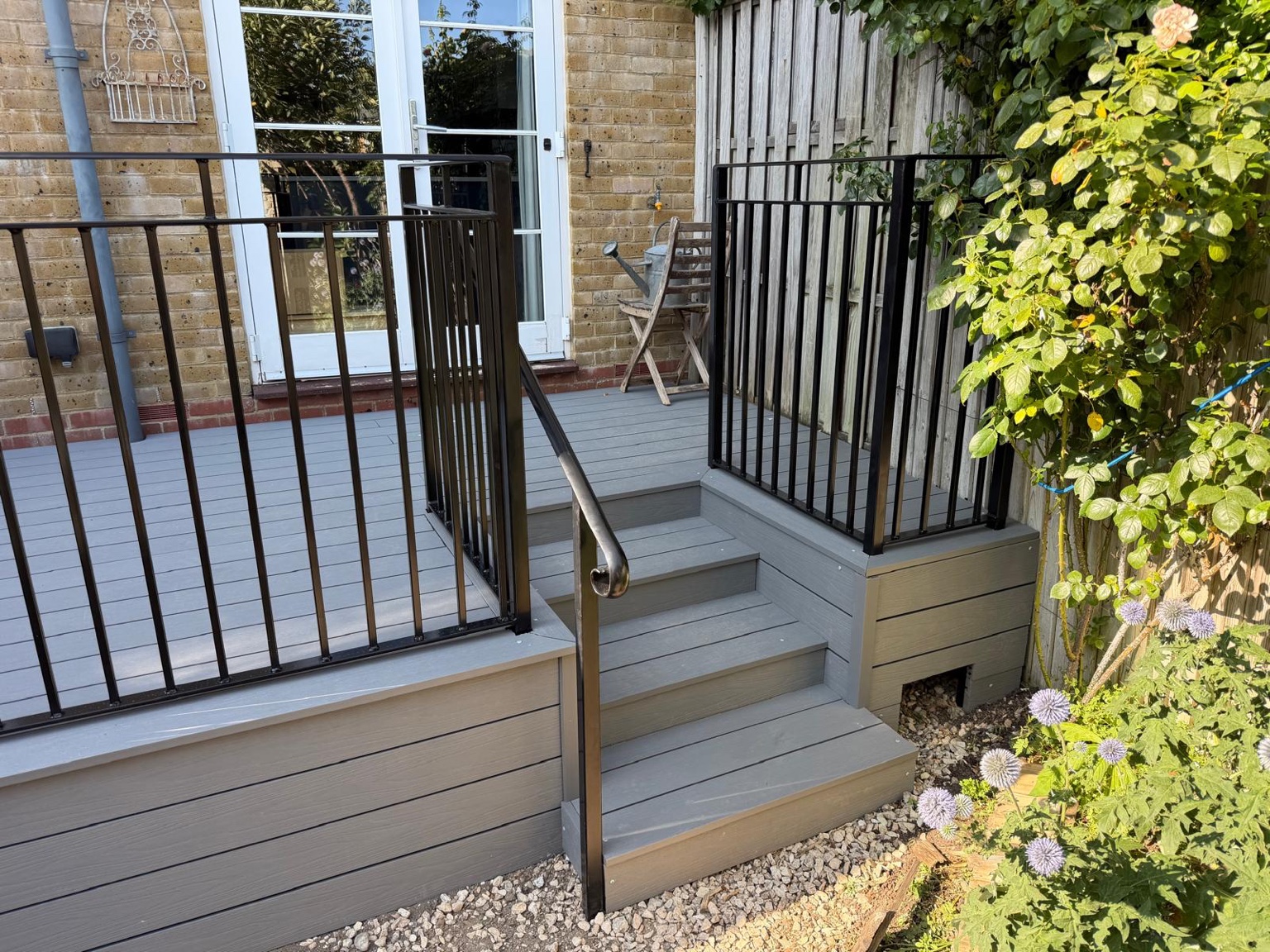
Raised grey decking with black railings, inset steps and a matching handrail.
View Deal projectCalculate the decorative quantity from the measured area and the agreed depth for the selected stone or grid. Convert volume to weight using supplier data for that material. Check the stated weight of bags and whether delivery is included; a bulk bag is not automatically one tonne.
The supporting aggregate and decorative stone perform different roles and need separate quantities in the proposal. Record the stone name and grading for future top-ups. Where an existing drive is being refreshed, clarify whether old stone is redistributed, supplemented or removed, and which base or edge repairs are included.
Use the same agreed scope when comparing proposals. Confirm the materials and work below the visible finish, together with any retained construction. Ask how exclusions or provisional work will be handled and keep the written specification with the quotation.
Photographs, dimensions and access details help define the work. They can start the discussion, with a visit or further assessment where needed. A quoted total is useful when it is clear what the finished result includes.
Agree the programme after the scope and materials are confirmed. Include delivery arrangements, protection of retained features and any periods when the area cannot be used. At handover, confirm how the completed work should be used and cared for, and retain the relevant product details.
YOUR DEAL PROJECT
Include your postcode, approximate dimensions and access details for a free, no-obligation quotation.