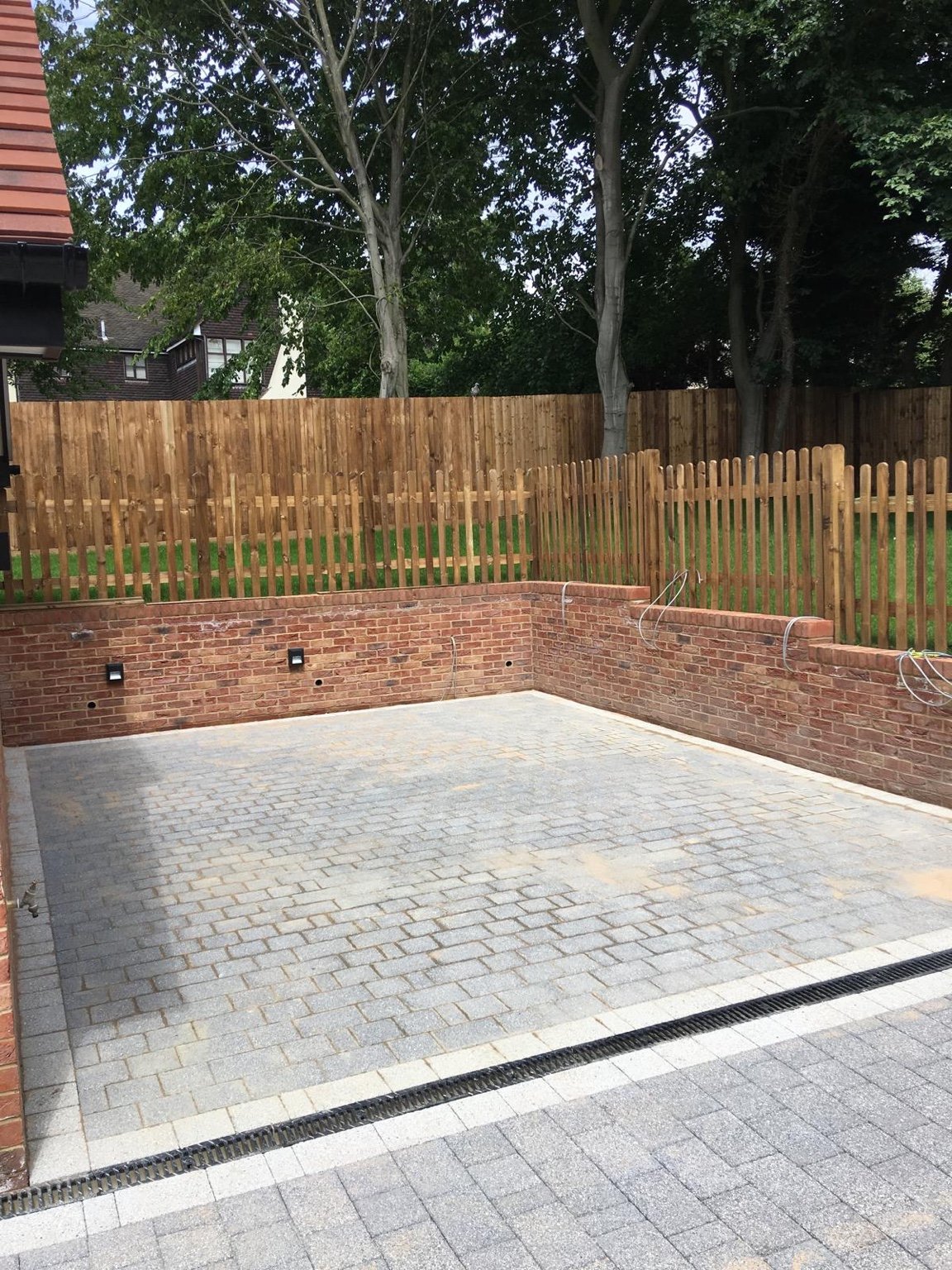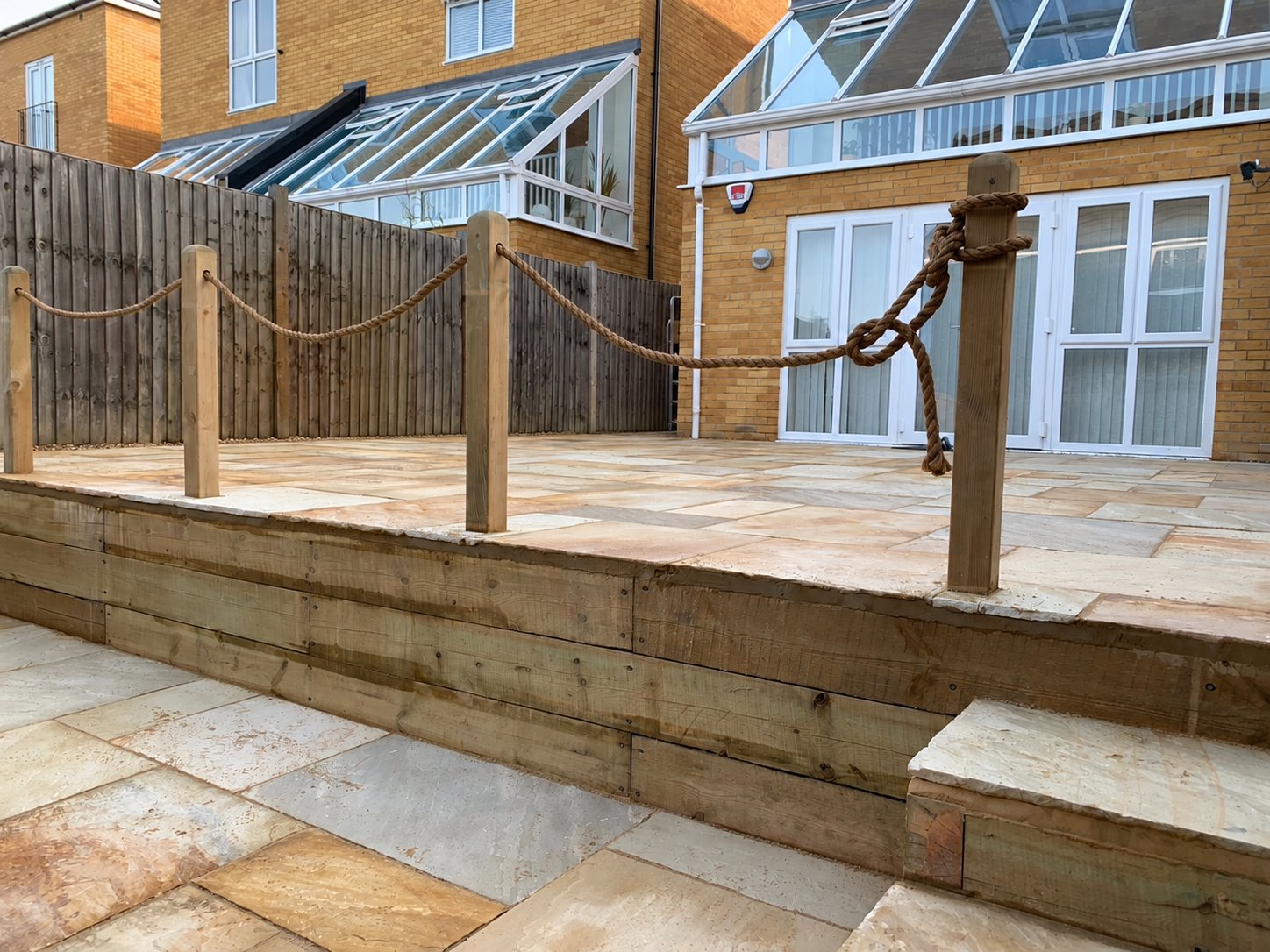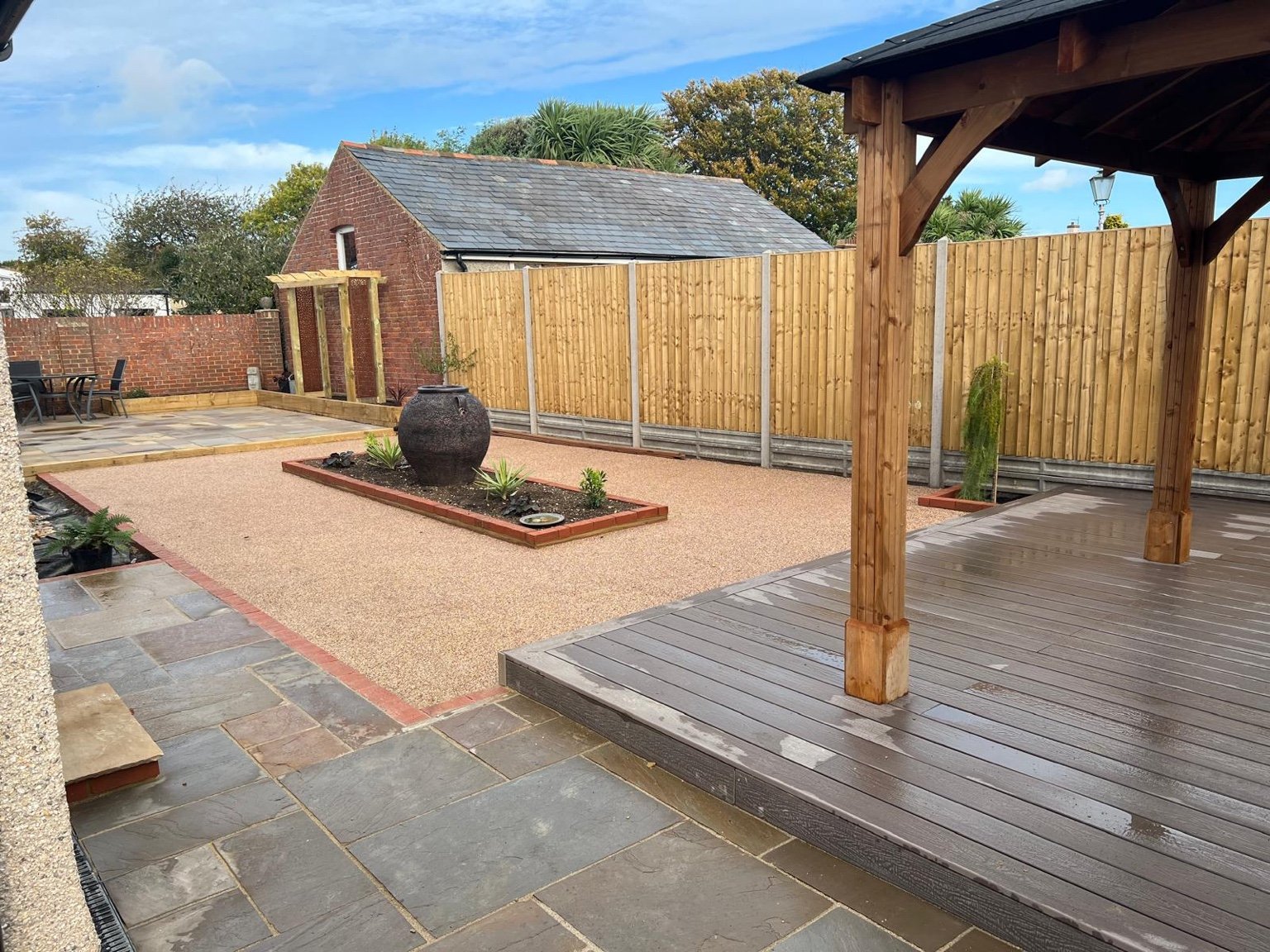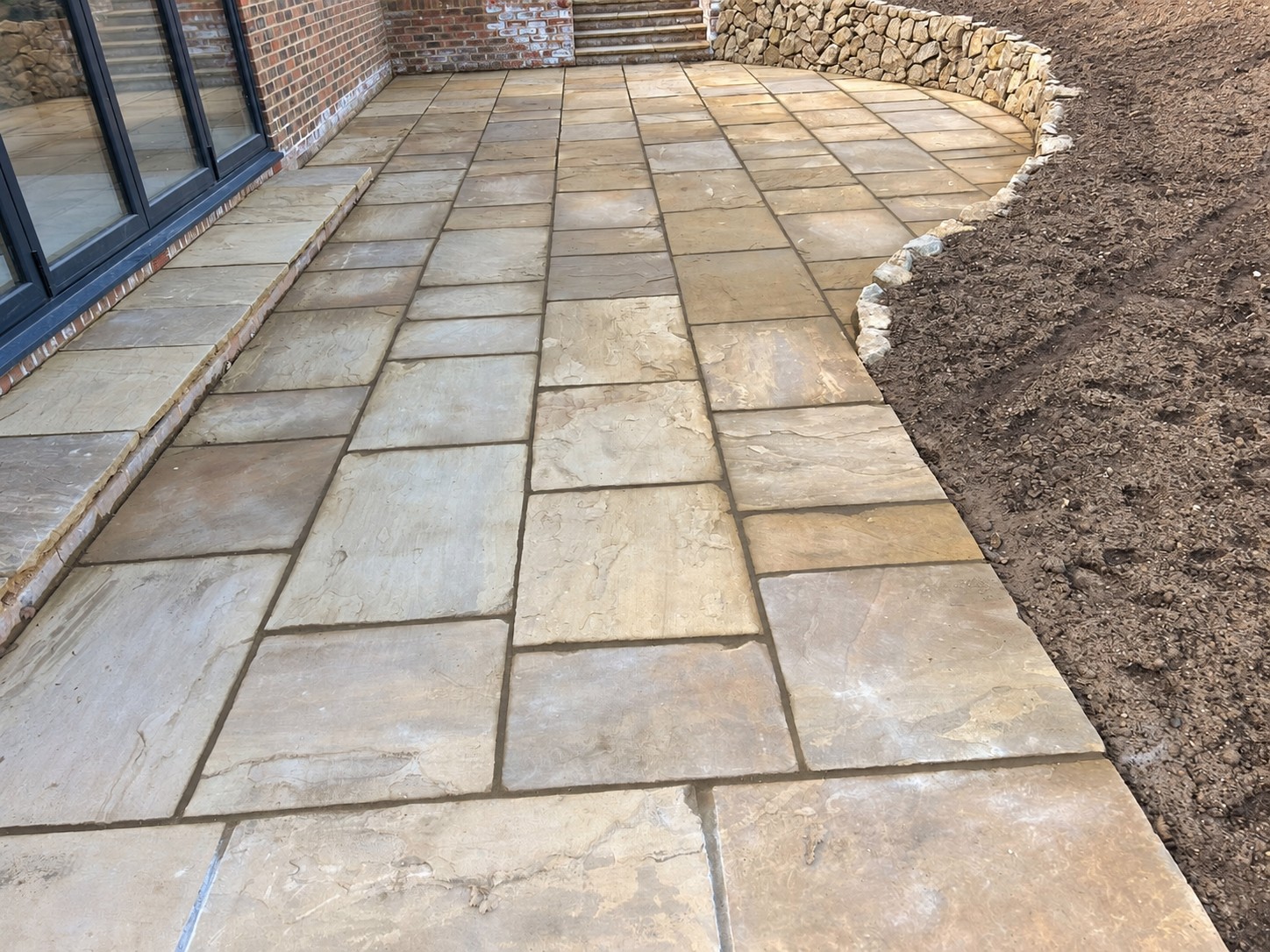
Chislehurst
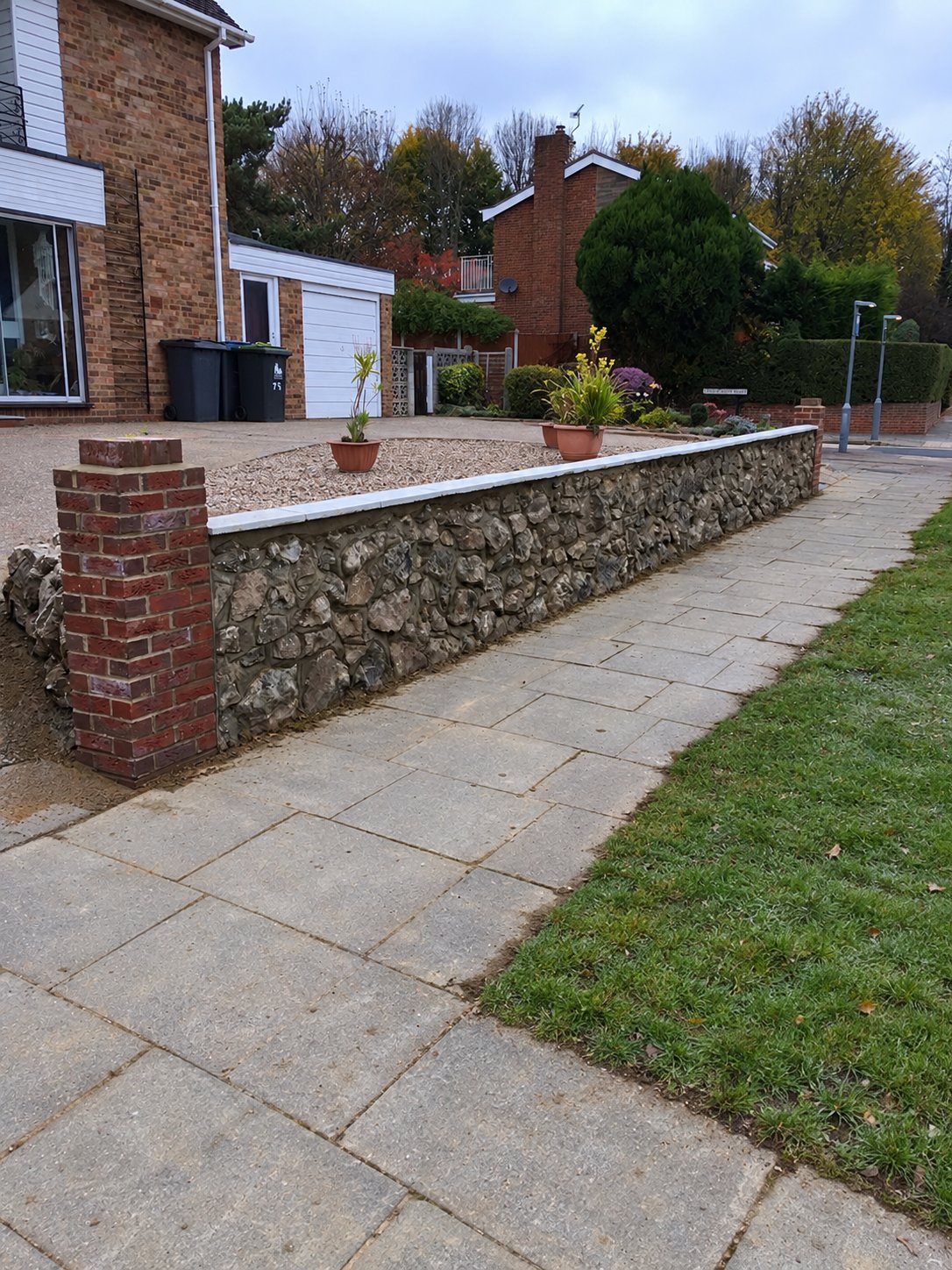
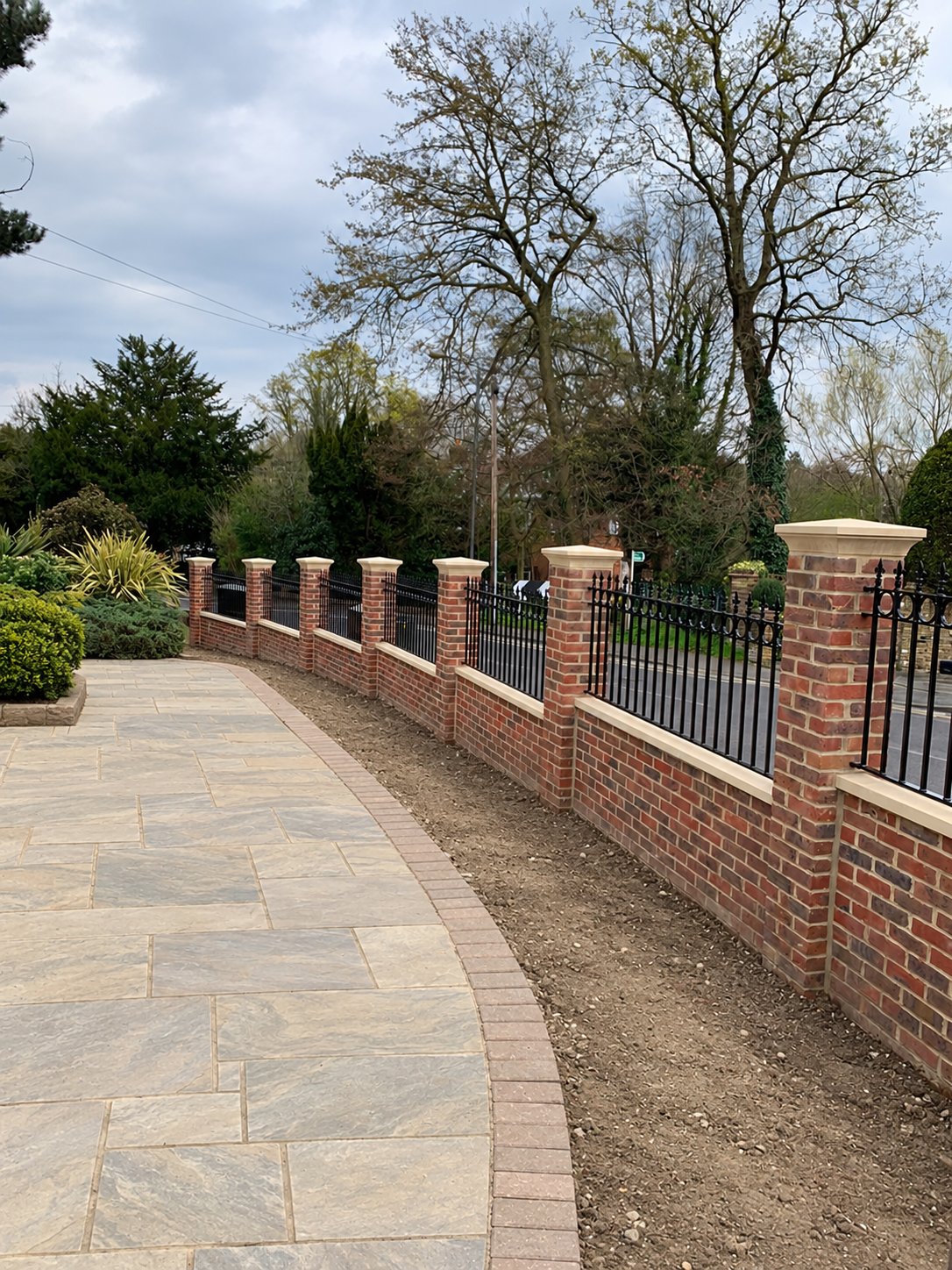
Brick piers, stone coping and railings
A brick boundary with pale stone coping and pier caps, finished with decorative railing panels.
View Chislehurst projectGRAVEL & SHINGLE INSTALLATION · RAMSGATE
Landscape Gardener of Kent installs and improves gravel driveways in Ramsgate. Choose a stone finish for a new parking area, widen an entrance or refresh an existing drive. We plan the support beneath the gravel, its containment and drainage alongside everyday access to the house.
Whether you need a new entrance or help with an existing gravel drive, send your postcode, photographs and approximate dimensions for a free, no-obligation quote. Include the slope, vehicle turning areas and any recurring ruts or puddles.
Start with the entrance gradient, turning movements and route to the front door. Photograph vehicles parked normally, show where doors open and measure between gate posts or retained walls. Loose gravel moves under use, so the layout needs to account for where stone may collect or migrate.
Include your Ramsgate postcode, the unloading point and the narrowest route to the work. Mark a proposed extension separately from retained gravel. Show any ruts, soft spots and puddles after rain; another layer of stone is not automatically the right remedy.
For bins, pushchairs or mobility aids, consider a separate firm walking route or an appropriate stabilised system. Tell us about heavier vehicles and shared access so the supporting construction and surface choice reflect how the drive is used.
Gravel and shingle are loose aggregate finishes. They differ from resin-bound surfacing, where aggregate is mixed with binder. Confirm the system before comparing appearance, price or maintenance.
Explain the intended vehicle use and show the existing ground. Include removal, suitable support, levels, drainage and containment in the price; decorative stone is only the visible finish.
Measure the new section separately and show its connection to retained paving or gravel. Agree the support and finished height on both sides of the junction.
Photograph thin areas, ruts, edges and exposed grid cells. Confirm whether existing construction is sound before treating the work as redistribution and a top-up.
Show the path used for bins, pushchairs or mobility aids. A firm route can be priced with the parking area so its levels and edges connect deliberately.
A layer of decorative stone over soil is not a complete vehicle driveway. The ground conditions and expected loading determine the excavation, supporting layers and compaction needed beneath the finish.
Ask what a proposed membrane is intended to do and where it belongs in the construction. It may separate or filter layers; it does not replace adequate support, and surface debris can still provide a place for weeds to establish.
Compare samples against your house, walls and adjoining paving. Stone shape, size and suitability for vehicle use matter alongside colour. Angular chippings can interlock better than smooth, rounded pebbles, but the chosen aggregate must suit the proposed surface system.
If grids are specified, ask which aggregate sizes and shapes their manufacturer permits. Avoid choosing a decorative garden stone solely by its appearance and assuming it is suitable for driveway loading or grid fill.
Plan the amount of surface stone around the construction specification. Adding a deeper loose layer does not correct a weak base and can make movement under tyres and feet more difficult to manage.
A nominal size alone does not establish whether a stone is suitable for parking. Compare the aggregate’s shape, durability and stated uses, as well as its appearance. Some suppliers recommend their 20mm range for driveways while reserving particular 10mm products for paths or borders; other products have different guidance.
Smaller pieces can be picked up by tyre treads, while larger stones give a coarser surface underfoot. Ask to see samples and discuss where vehicles turn and people walk. If a gravel grid is proposed, use the size and shape permitted by that product’s specification rather than selecting 10mm or 20mm independently.
Include the named aggregate and grading in the quotation. This makes the comparison clearer than descriptions such as decorative stone, and helps when compatible stone is needed for later replenishment.
Show every edge of the proposed gravel area: pavement, lawn, beds, walls and adjoining paths. Agree restraint and the entrance transition before ordering stone. The threshold should work with vehicle access and help control loose aggregate near the pavement.
Include garage doors, gate clearances and steps when setting the finished height. Retained edging needs assessment too. A border is part of the construction, with suitable support, rather than a decorative strip added after spreading gravel.
Our Ramsgate block paving service can be discussed for a firm path or entrance detail alongside the gravel. Put both areas in the enquiry so their levels and junctions are planned together.
The surface stone can be redistributed and replenished. Expect some movement where vehicles turn and regular attention to coverage and edges.
Compatible cellular grids hold aggregate within the surface and can reduce displacement. They need a suitable base, specified fill and ongoing care.
A grid is not a substitute for sound supporting construction. Its suitability depends on the product, loading, gradient and vehicle movements. Sloping entrances need assessment against the selected manufacturer’s limits.
Discuss the difference between stabilised gravel and resin driveway surfacing before ordering. A gravel grid retains stone within cells; it does not bind the aggregate together with resin.
A sloping entrance needs assessment of the gradient, vehicle stopping and turning points, edge restraint and proposed aggregate. A cellular grid can reduce stone displacement within its specified limits, but a product name alone does not establish suitability for every slope or load.
The CORE DRIVE manufacturer guidance distinguishes grid choices and discusses traction on gradients. Ask the installer to identify the proposed system and explain its permitted loading and gradient. This reference does not mean every grid has the same capabilities, or that a grid replaces a suitable base.
Water can pass through a gravel layer, but the layers beneath and the ground determine whether it can drain away. Gravel placed over retained concrete or dense asphalt does not make that underlying surface permeable.
Agree the finished levels and how rainwater will be managed at the house, pavement and adjoining areas. Include any required drainage work in the quote instead of assuming gravel alone will resolve existing puddles.
Read our Ramsgate driveway guide for front-garden paving permissions and the separate requirements for a new or altered dropped kerb.
For a house front garden in England, Planning Portal guidance generally allows permeable driveways, or runoff directed to a lawn or border to drain naturally, without a planning application. An impermeable area larger than five square metres without that drainage provision requires permission.
Check that the whole construction drains as intended. Exceptions include flats and restricted permitted development rights. Consult Planning Portal’s front-garden guidance and Thanet District Council for your Ramsgate property. Vehicle crossings have separate requirements; see our driveway guide.
For your Ramsgate quotation, distinguish a top-up of existing stone from a new parking area or full replacement. The complete price depends on the measured area and the condition of the site. Refreshing stone on a sound existing driveway involves different work from excavating a new parking area or replacing failing construction.
Compare written quotations that identify:
Buying a bulk bag or loose delivery from an aggregate supplier covers stone, rather than a finished parking area. Ask how the measured area, specified depth and any grid fill determine the quantity needed. Include delivery access, spreading, excavation and disposal in the comparison. A refresh of existing gravel and the construction of a new driveway should be quoted as different scopes.
Assess the retained base, borders and any grids. Identify the compatible stone, preparation, redistribution and quantity to add. Confirm whether local repairs or drainage work are needed before treating the job as a simple top-up.
Include clearance, excavation, disposal, suitable support, drainage, borders and the selected finish. State whether grids, paved entrance details and a walking route are included. Delivery and equipment access can affect the work as well as the area.
Measure the parking area and any connecting approach separately. Compare like-for-like scopes and ask for VAT and exclusions to be clear. A low price for stone delivery does not describe an installed driveway.
Quantity depends on the area, the agreed finish depth and any grid system. As a calculation example, a 5m by 8m parking area is 40m². At an illustrative depth of 50mm, its surface layer would occupy 2m³: 40 × 0.05. This is a volume example, not a recommended depth for every driveway.
Convert volume to a delivery weight using the chosen aggregate supplier’s bulk density and confirm allowances with the installer. Grid fill and cover requirements must follow the selected product. Supporting aggregates are separate quantities. Record the stone name and grading so later replenishment can be compatible with the original finish.
The delivered price depends on the named aggregate, grading, quantity, supplier and delivery address. Ask for a current quotation to your Ramsgate postcode and confirm whether VAT and delivery are included. A bulk bag is not necessarily one tonne: check its stated weight before comparing bag and loose-load prices.
Compare the same stone specification and supplied weight. Convert a bag price to a tonne basis only when its weight is known; for example, divide the bag price by its weight in tonnes. That gives a material-price comparison, not an installation cost.
For your driveway quotation, keep the surface stone, supporting aggregates, edging, grids, labour and disposal distinct. Ask whether the delivery vehicle can reach the proposed unloading point, and how material will move from there to the work.
Gravel can be a lower-cost option for some projects, but compare the whole installation. Groundwork, edge restraints, drainage and grids can change the difference between a gravel driveway and paved alternatives.
Consider upkeep with the initial price: loose stone needs redistribution and may need replenishing, while other surfaces have their own care and repair requirements. Compare block paving and tarmac driveway options for the same area, access and vehicle use.
Show where the stone has thinned, where tyres form tracks and where material collects. Include the condition of borders and any exposed or broken grid cells. If you know the existing grid product and stone grading, share those details before replacement fill is chosen.
Sound construction may need redistribution and compatible replenishment. Recurring ruts or standing water need their cause assessed; repeatedly adding stone can hide a support or drainage problem. Ask the quote to separate surface upkeep from opening up and repairing failed sections.
Stone can spread onto paths, shift under tyres and collect at turning points. Loose gravel needs regular attention, and slopes can increase migration. Small wheels and mobility aids may find the surface difficult without an appropriate design.
Gravel is not maintenance-free. Remove leaves and debris, deal with weeds and redistribute displaced aggregate. Keep loose stone off the pavement and neighbouring paths. Where grids are used, maintain the manufacturer’s required covering.
Recurring ruts, soft spots or water collecting warrant investigation. Repeatedly adding stone may disguise the symptom without correcting the support or drainage beneath it.
Specify preparation for the actual ground and vehicle use: clearance, excavation, compacted supporting layers, edges and drainage. Any membrane or stabilisation grid needs a defined purpose and suitable specification. Decorative gravel placed directly on soil is not a complete vehicle driveway.
Loose stone can move under vehicles, migrate onto paths and need redistribution or topping up. Weeds and debris still need attention. Consider the gradient and access for small wheels or mobility aids before choosing the finish.
Area, site condition, access, removal, supporting layers, stone, edging, drainage and any grids determine the quote. A surface refresh and a complete installation involve different work. Compare measured quotes with all required construction included.
It can be, but the complete scope determines the difference. Compare the same area and loading, including groundwork, drainage, borders and any stabilisation system. Account for ongoing stone redistribution and replenishment as well.
Request a current delivered price for the named aggregate and grading to your postcode. Confirm the actual supplied weight, VAT and delivery: bulk bags are not necessarily one tonne. Stone supply is only part of the installed driveway price.
Check the named aggregate’s driveway suitability and any grid manufacturer’s permitted fill. Some suppliers recommend particular 20mm products for parking and smaller products for paths. Stone shape, durability, tyre movement and pedestrian access matter alongside size.
The slope, containment, aggregate and vehicle movements need assessment. A compatible stabilisation grid may help within its product-specific limits. Ask how the proposed construction suits your entrance before choosing gravel.
Permeable construction or suitable natural drainage can generally avoid a planning application for a house front garden. Exceptions apply. Check Planning Portal guidance and restrictions with Thanet District Council. Gravel over an impermeable base does not automatically qualify; vehicle-crossing approval is separate.
COMPARE THE OPTIONS
Explore the other three surfaces before choosing a finish.
See our Ramsgate landscaping services to coordinate paths, planting and boundaries with the driveway. If the project includes a new patio, share the complete brief so access and finished levels can be considered together.
OUR WORK · KENT
Chislehurst
A brick boundary with pale stone coping and pier caps, finished with decorative railing panels.
View Chislehurst projectSt Margaret’s Bay
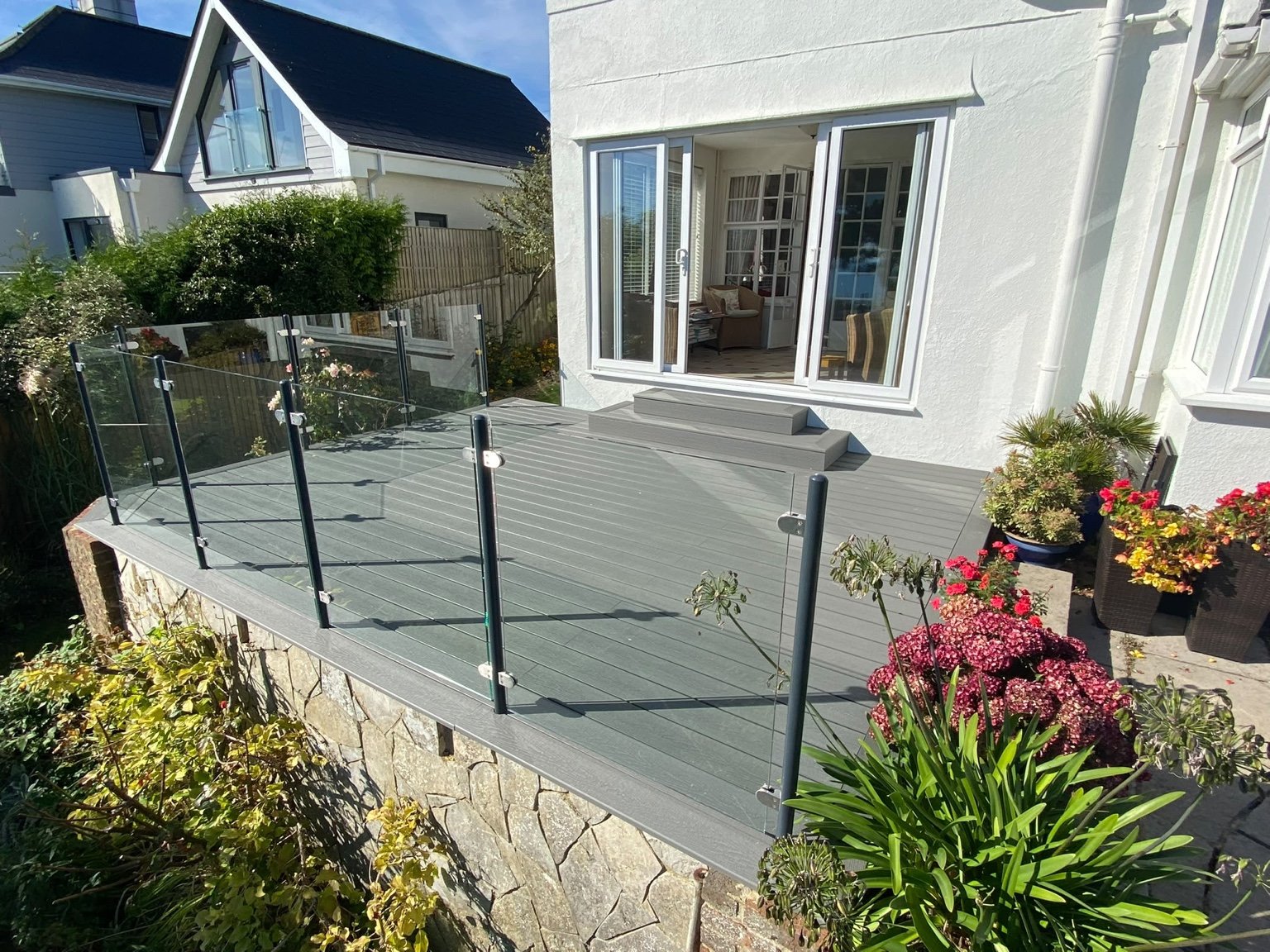
Grey composite decking, glass panels, powder-coated steel posts and matching steps.
View St Margaret’s Bay projectFolkestone
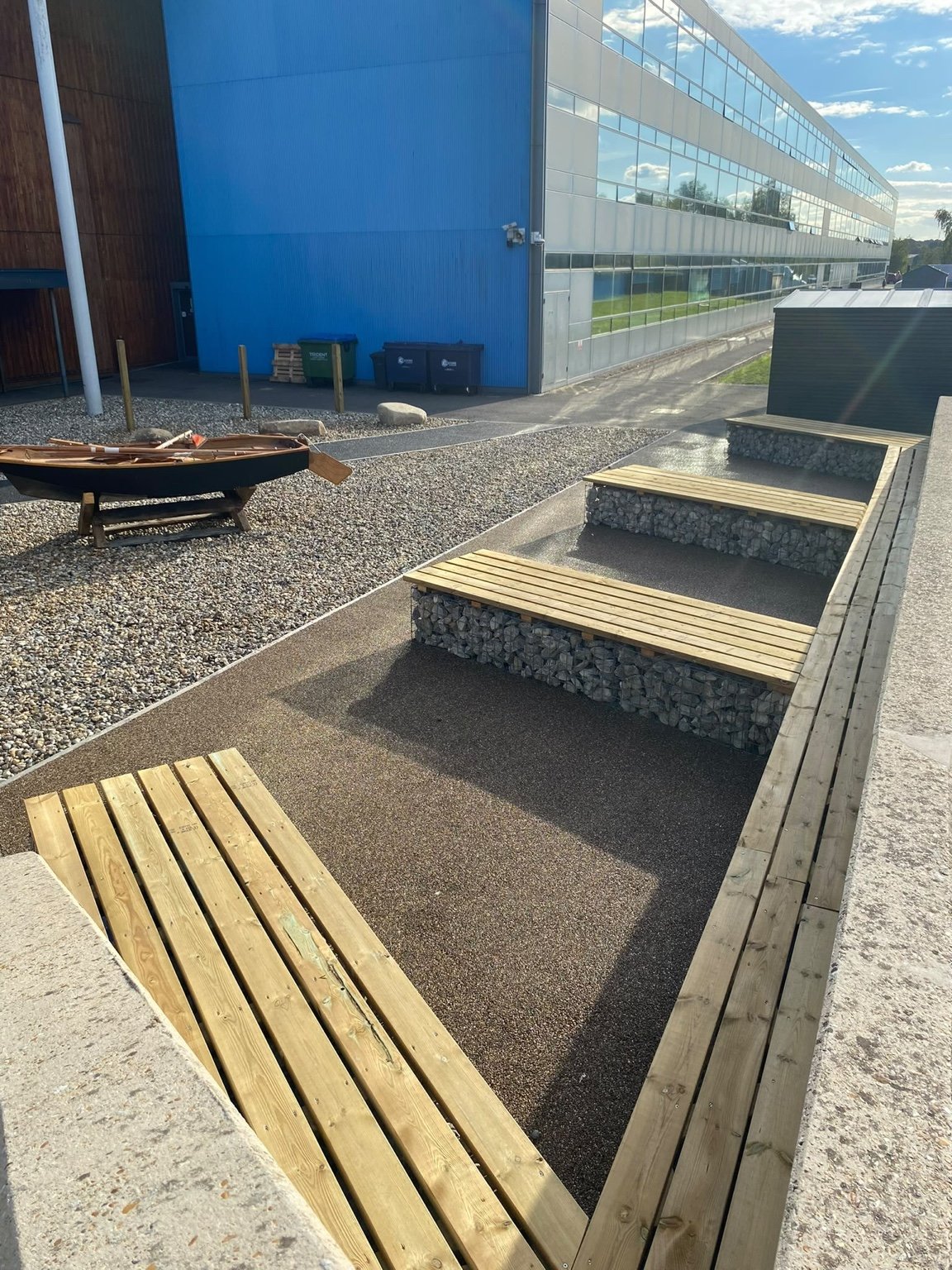
Timber-topped gabion benches, resin-bonded surfacing, shingle and a boat feature at the academy entrance.
View Folkestone projectCanterbury
The stones from a customer’s late husband’s rockery kept and reused in a new front wall.
View Canterbury projectCanterbury
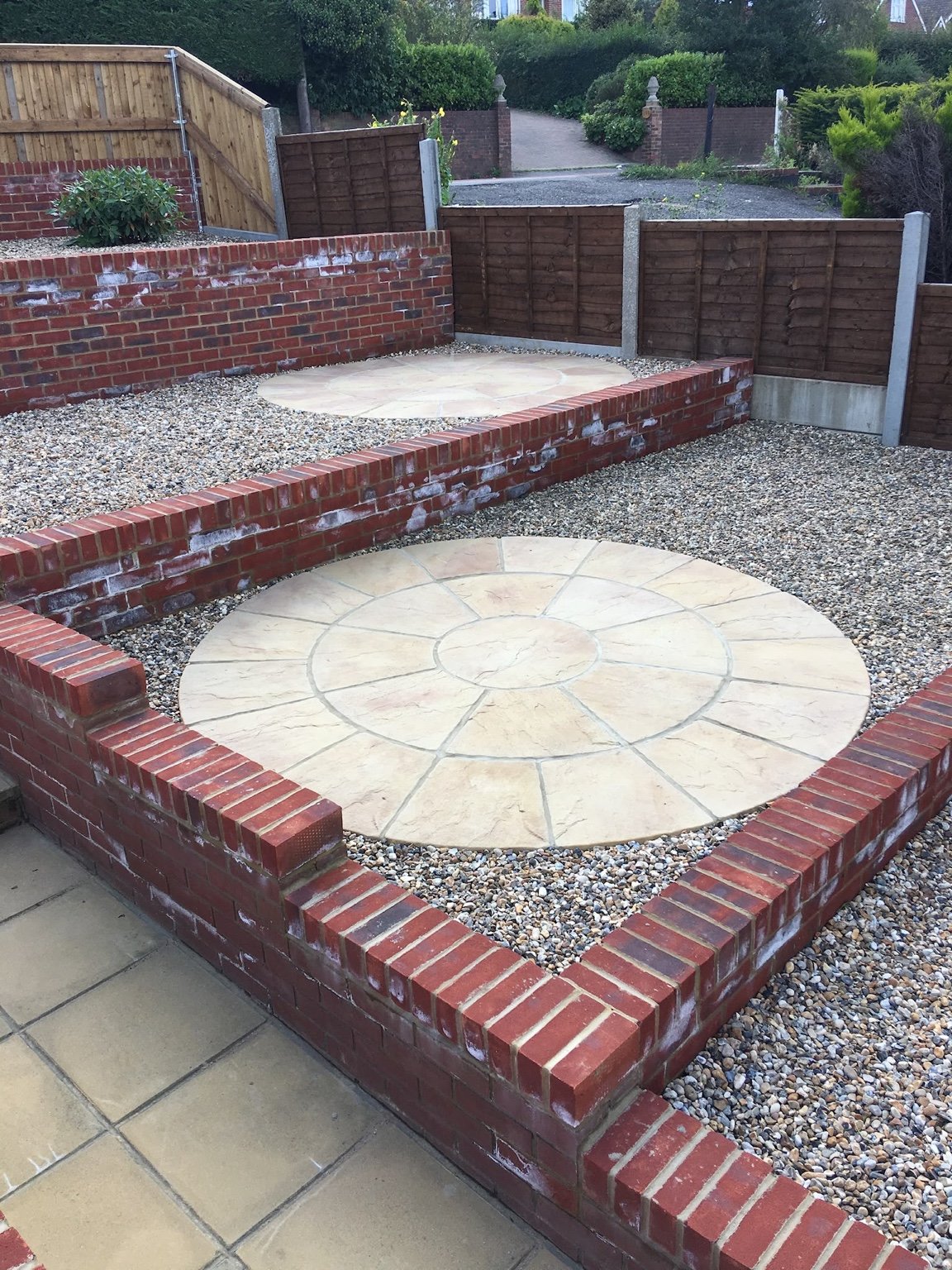
Retaining walls, shingle infill and riven buff slab circles across connected garden levels.
View Canterbury projectAshford
Before, during and after a timber decking replacement, from the old deck to the finished terrace.
View Ashford projectBorough Green
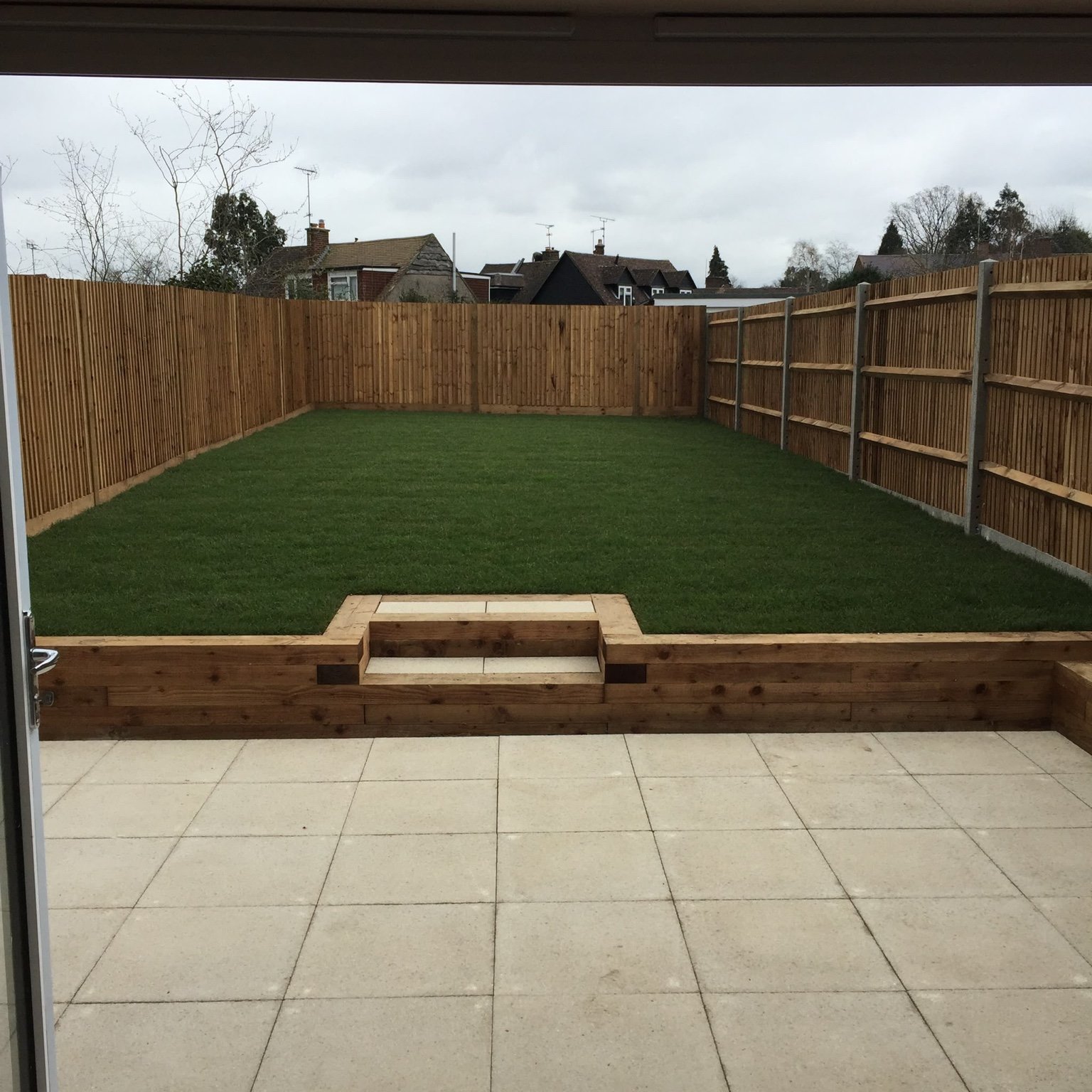
1800mm closeboard fencing, softwood sleeper planters, a 450mm buff slab patio and new turf.
View Borough Green projectCanterbury
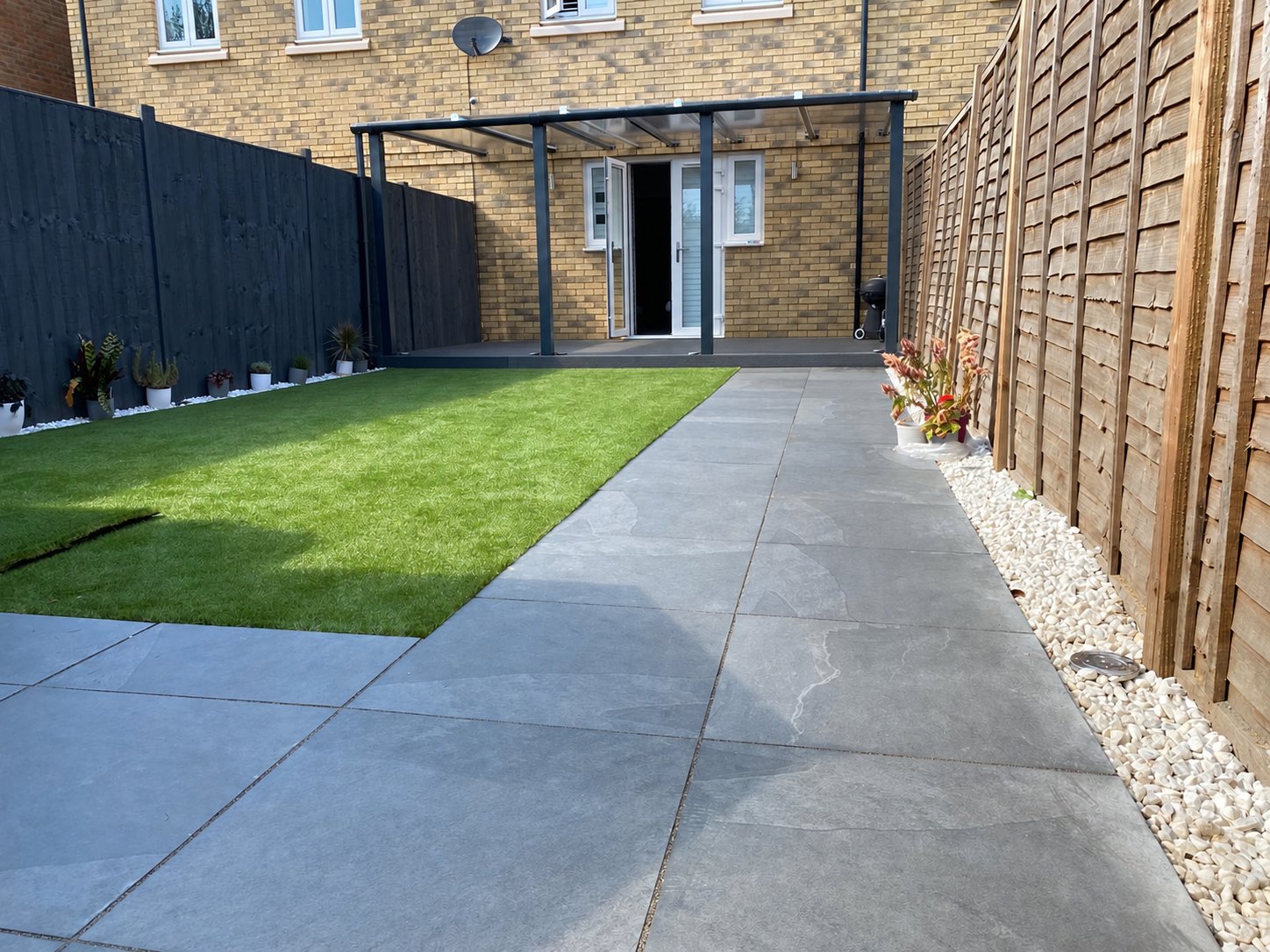
Porcelain paving, artificial grass and a custom steel-frame pergola with polycarbonate roof.
View Canterbury projectStrood
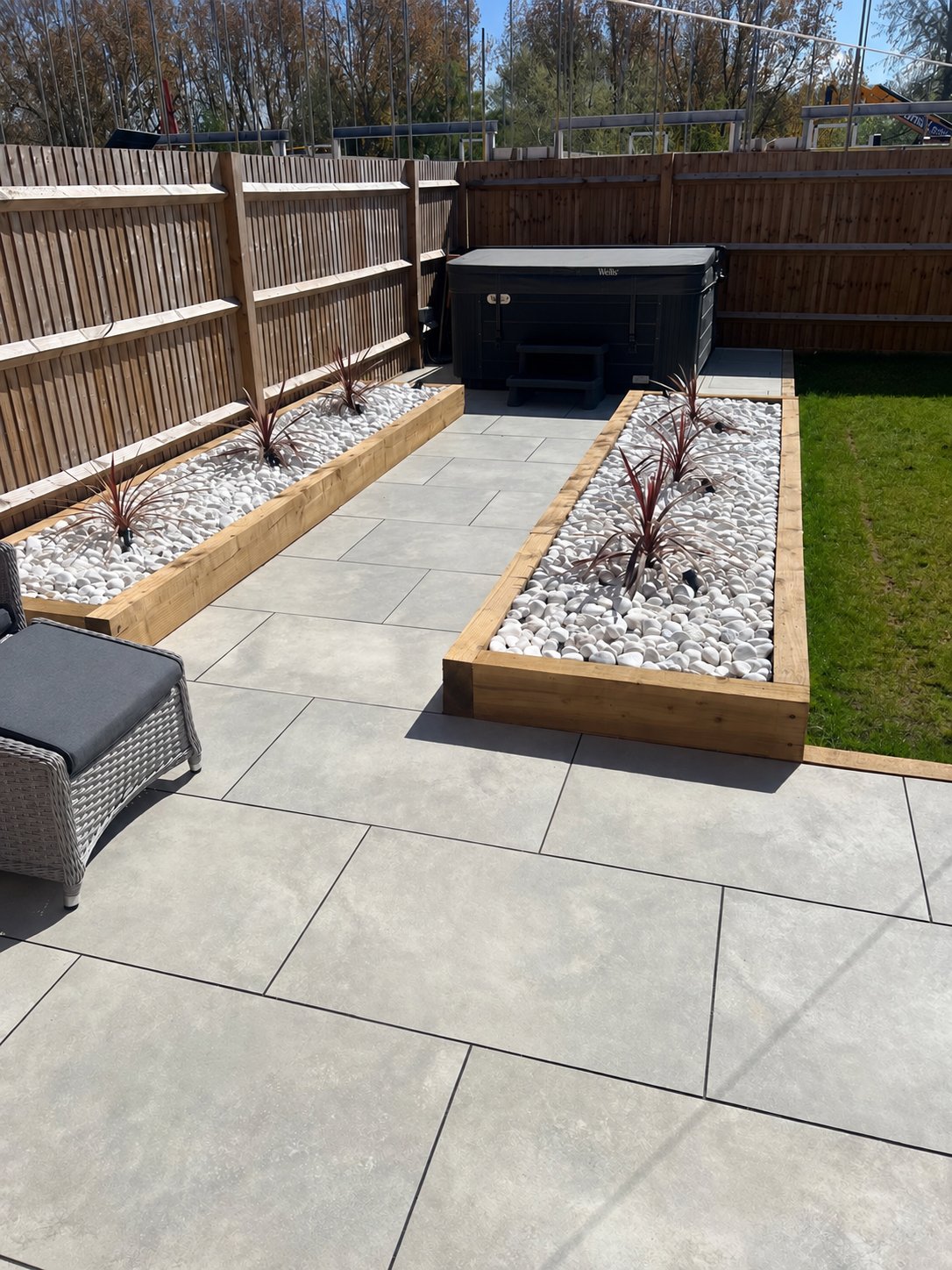
Grey porcelain paving framed by timber sleeper planters, white decorative stones and planting.
View Strood projectWest Malling
Block paving, porcelain patio, brick retaining walls and two styles of timber fencing.
View West Malling projectAshford
Sandstone paving across two levels, with timber sleeper retaining walls.
View Ashford projectDeal
A sandstone patio, ash-coloured composite decking, pitched-roof pergola and sleeper planters.
View Deal projectSevenoaks
75mm thick York stone paving, curved paths, brick walls and Kentish ragstone walls.
View Sevenoaks projectHerne Bay
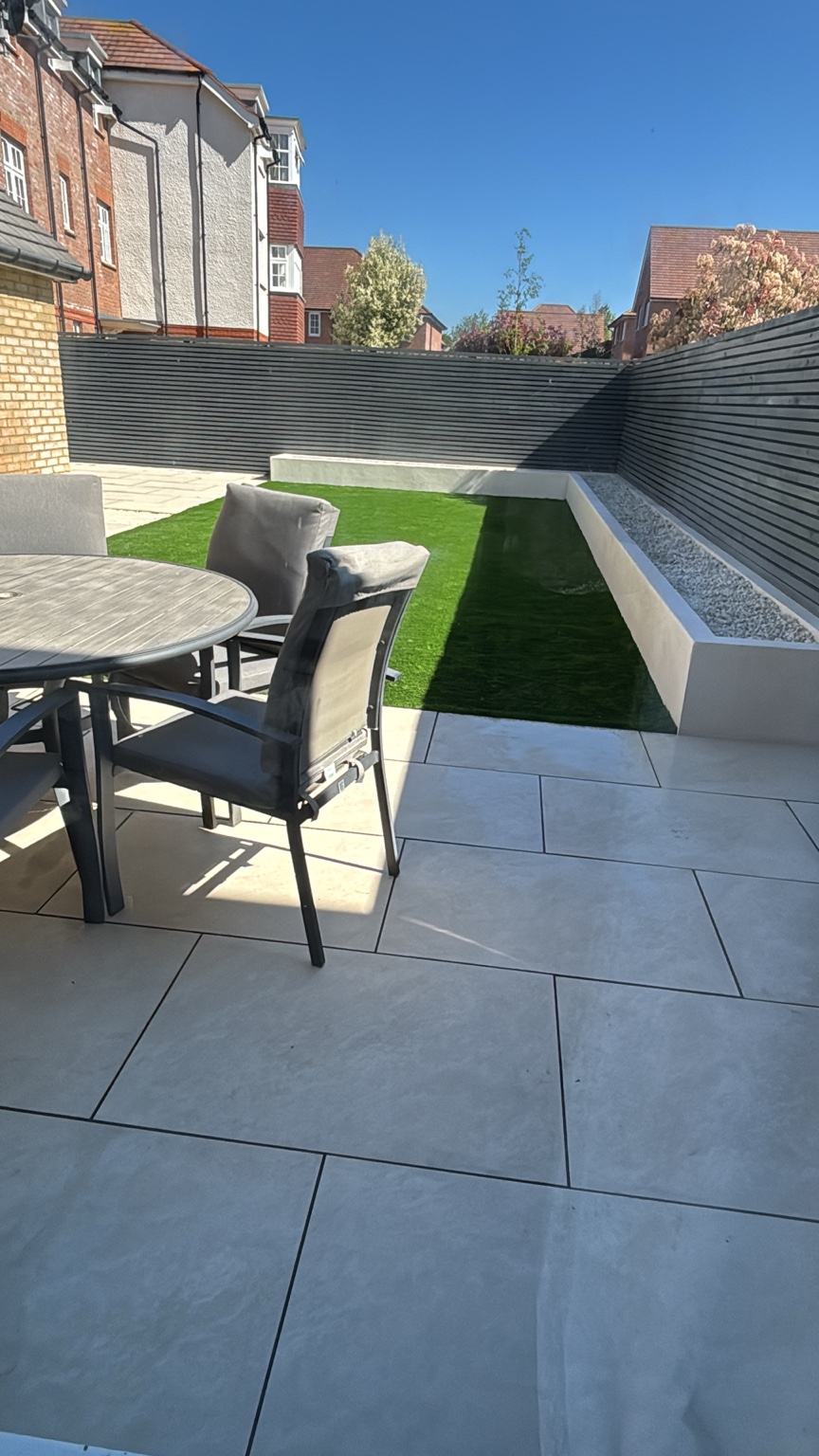
Porcelain patio, raised bed, artificial grass and slatted fencing. See the garden before and after.
View Herne Bay projectSittingbourne
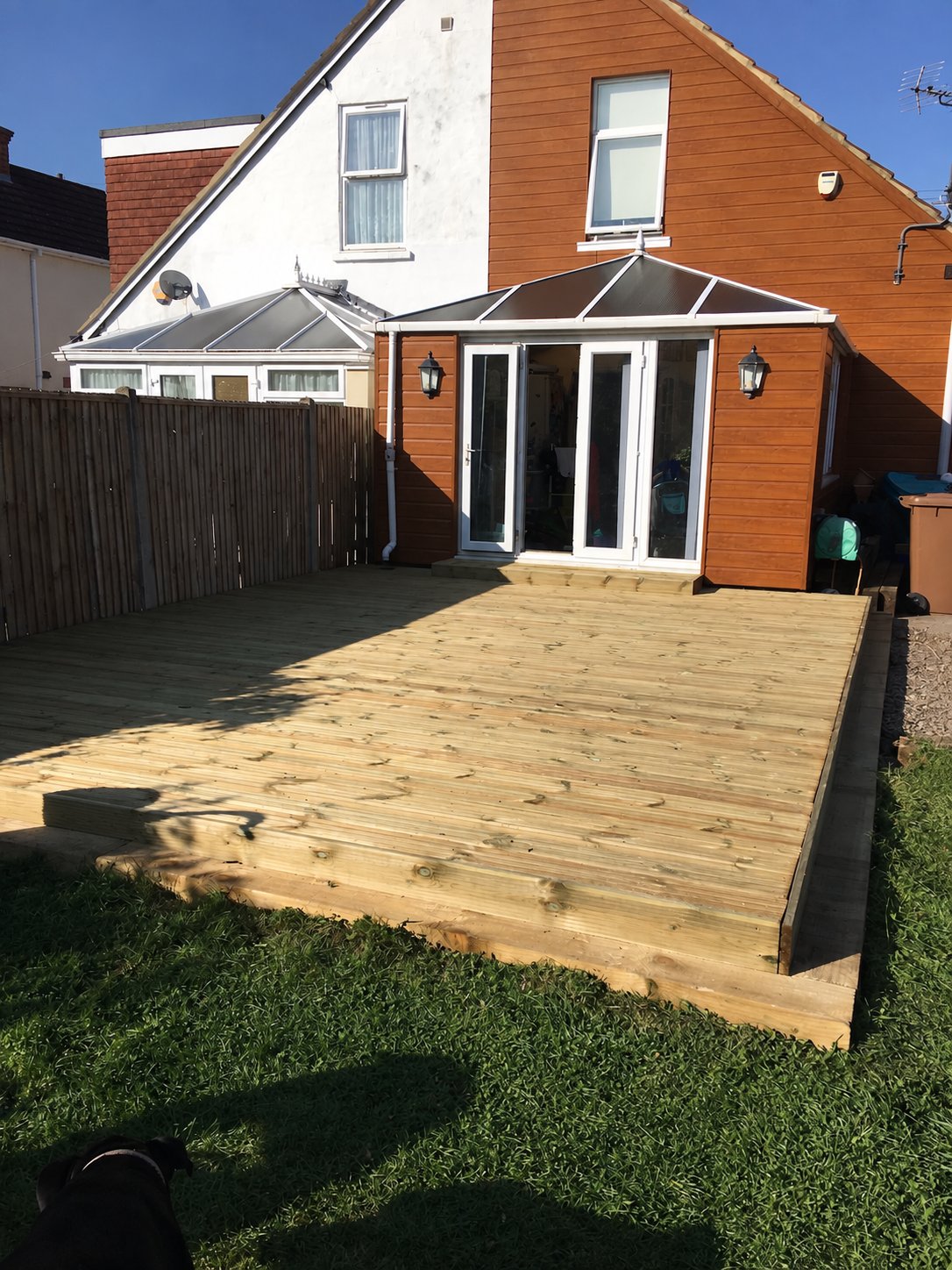
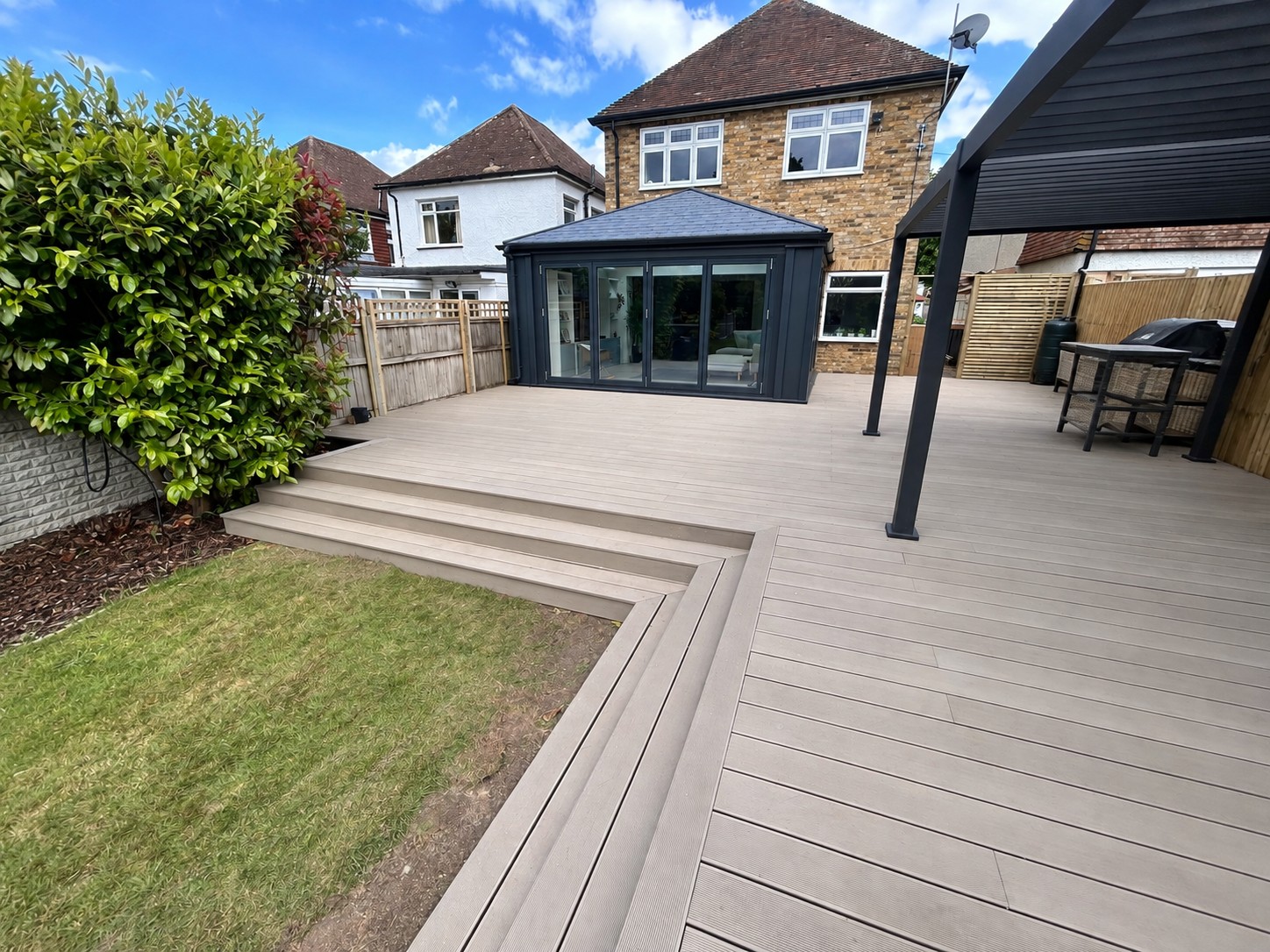
A broad decking terrace with defined board lines and steps connecting the house to the lawn.
View Sittingbourne projectDeal
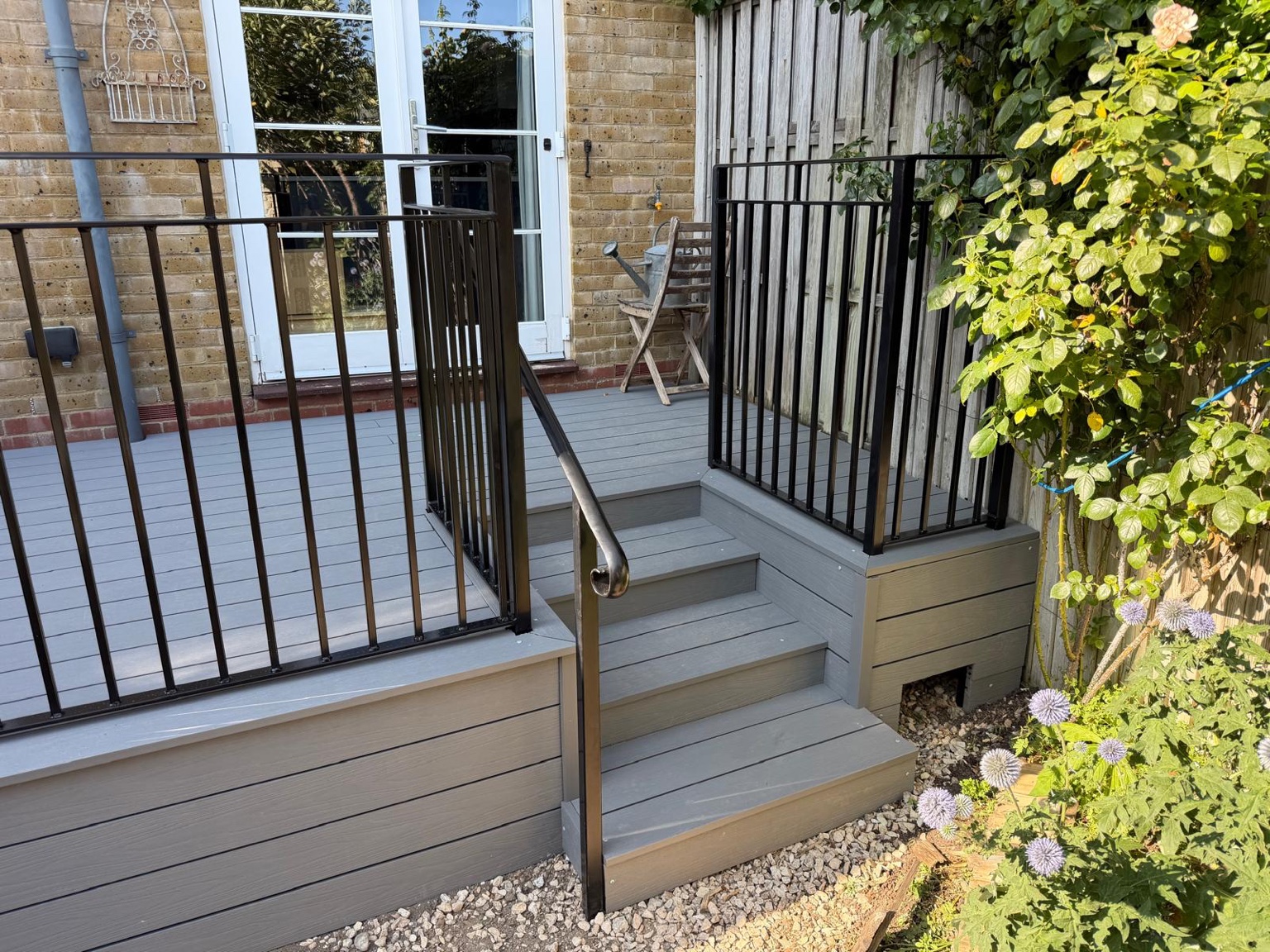
Raised grey decking with black railings, inset steps and a matching handrail.
View Deal projectYOUR RAMSGATE GRAVEL DRIVEWAY
Send photographs, your postcode and approximate dimensions. Include any slopes, turning areas and recurring drainage or rutting problems.