Chislehurst
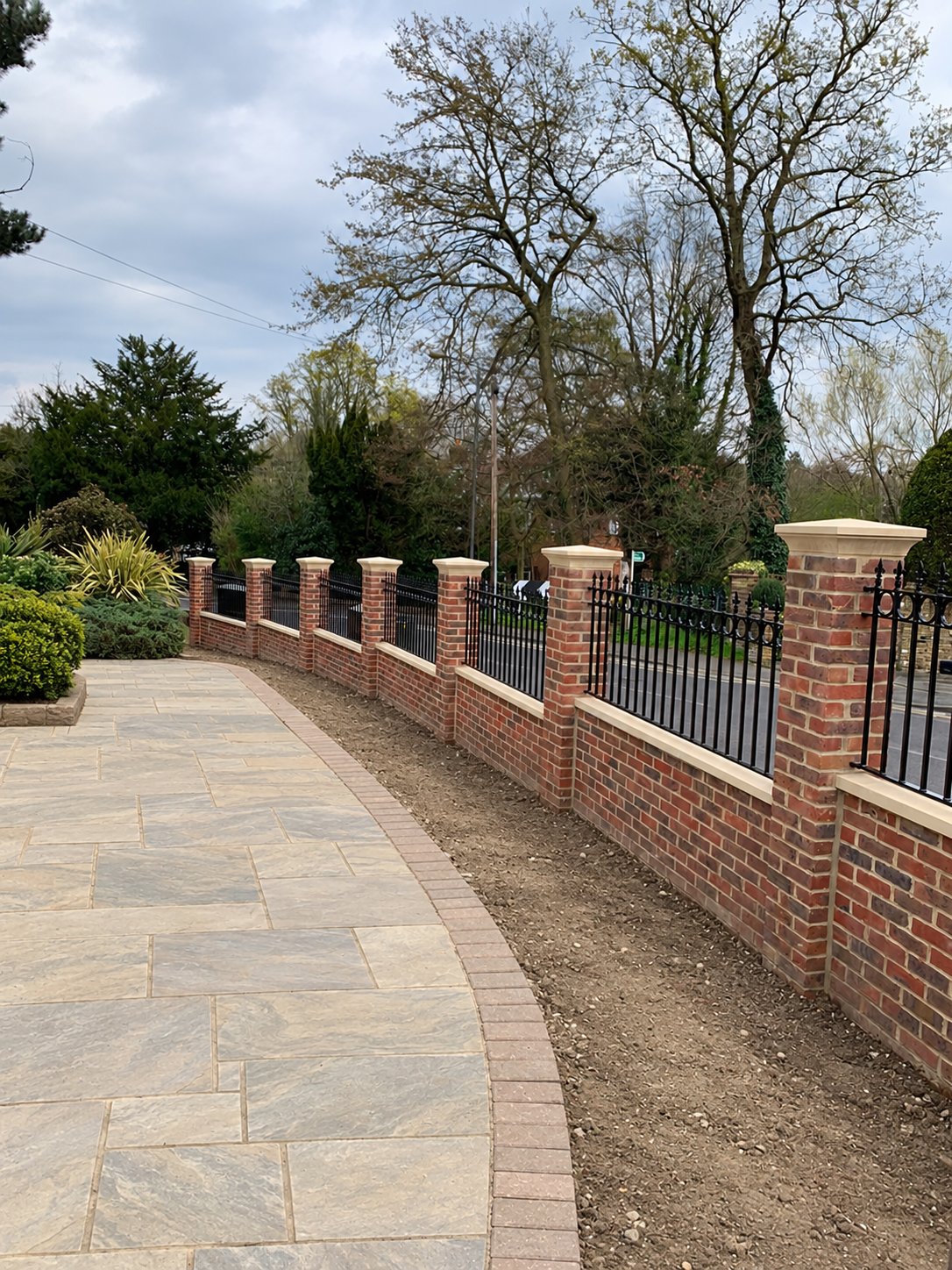
Brick piers, stone coping and railings
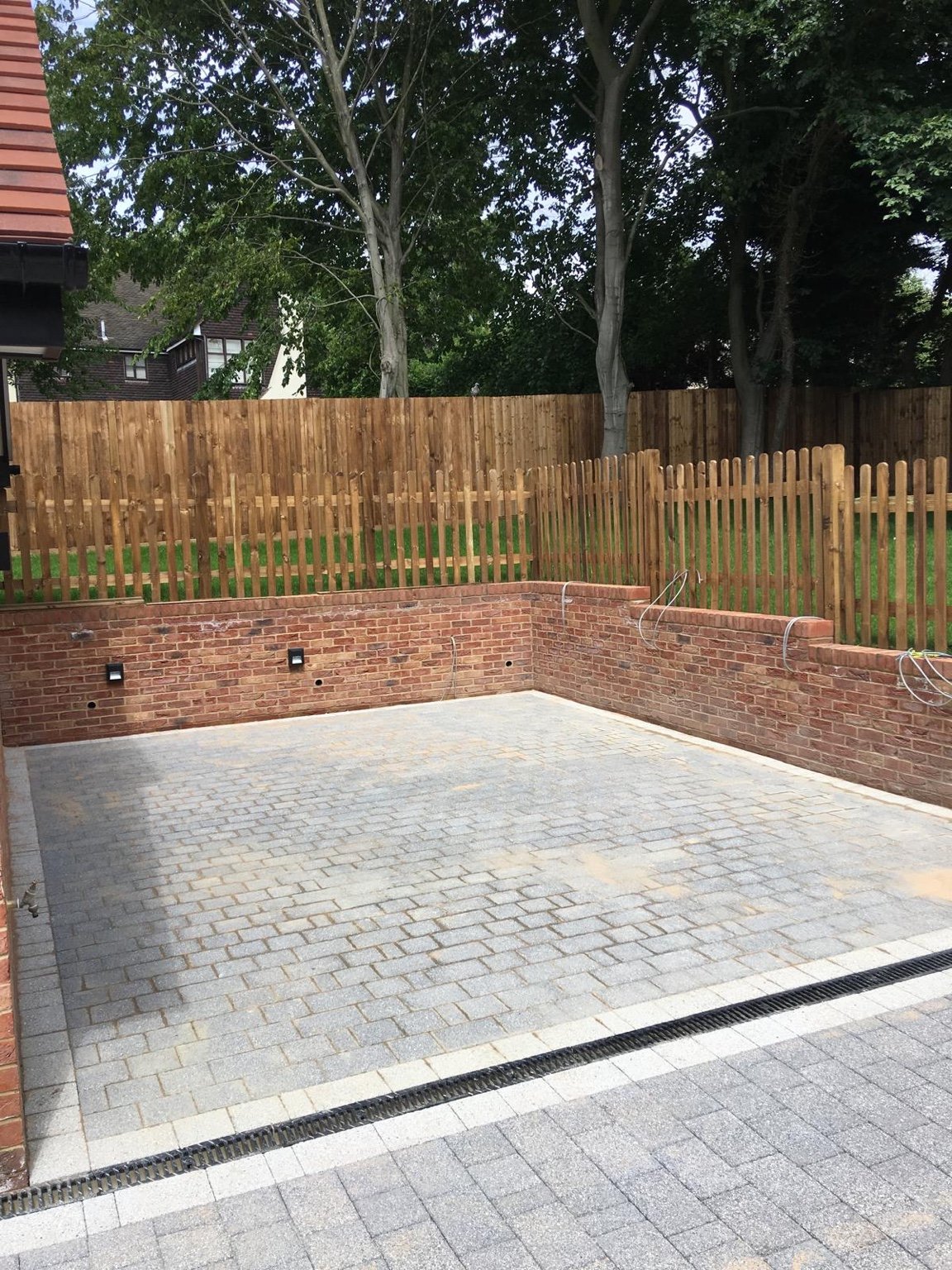
A brick boundary with pale stone coping and pier caps, finished with decorative railing panels.
View Chislehurst projectNEW ROMNEY · KENT
Consider asphalt for parking with suitable edges, support and water management. We discuss new tarmac driveway construction, resurfacing and repairs in New Romney after assessing the existing surface and proposed vehicle use.
Photographs should show the whole drive and close views of cracks, potholes, ponding and edge damage. The visible defect may relate to support or water below the surface. A covering layer is not automatically a repair for its cause.
Distinguish local repairs, resurfacing and a new construction. Ask what is retained and how the finished height meets doors, covers, gates and adjoining paving. Those junctions can affect whether an overlay is practical.
The intended traffic and loading inform the asphalt specification. Preparation, layers, compaction and edge support should be included in the proposal. A dark smooth finish does not describe all the work beneath it.
Show the pedestrian route and parking movements. Include borders, thresholds and any connected path. The driveway needs to function as an entrance with comfortable transitions, rather than an isolated surfaced area.
Ordinary tarmac should not be assumed to let water through. Discuss falls and a suitable destination for runoff, or a specifically designed porous system where appropriate. Supporting layers and ground remain part of the design.
Check the official English front-garden conditions and any restrictions at your property. Entrance crossings and boundary alterations can need separate agreement. Decide these matters before the installation starts.
Compare tarmac with blocks or other finishes using the same area, preparation and drainage brief. The quote should state disposal, edging, access and VAT, plus any work priced provisionally.
Suitable installation conditions and delivery access affect the programme. At handover, ask about vehicle loading, turning and care for the laid system. A fixed period or calendar season advertised elsewhere does not replace that instruction.
Ask for the intended asphalt construction and the support it requires. A quote should explain whether the old drive is removed, repaired or retained beneath an overlay. The decision affects finished levels at the garage, gate and inspection covers. Check what happens if unsuitable ground or a failing retained layer is uncovered.
Agree the perimeter and connections before the surfacing operation. Borders, runoff and any pedestrian approach should form part of the proposal. Describe delivery constraints and when the household needs access, so preparation and surfacing can be coordinated with alternative parking.
Use the same agreed scope when comparing proposals. Confirm the materials and work below the visible finish, together with any retained construction. Ask how exclusions or provisional work will be handled and keep the written specification with the quotation.
Photographs, dimensions and access details help define the work. They can start the discussion, with a visit or further assessment where needed. A quoted total is useful when it is clear what the finished result includes.
Agree the programme after the scope and materials are confirmed. Include delivery arrangements, protection of retained features and any periods when the area cannot be used. At handover, confirm how the completed work should be used and cared for, and retain the relevant product details.
Planning Portal: paving your front garden explains the English planning requirements. Check the proposal and any property restrictions before work.
Published averages mix scopes. Your size, preparation, layer system, drainage and access determine the quote.
Suitable conditions for the actual system matter; agree a programme that accounts for weather and access.
Failed support, water problems and unsupported edges can affect performance; repaired areas may remain visible.
Compare equivalent supporting work and finishing scope rather than surface-only prices.
Assess condition, support and levels first. An overlay cannot address every defect.
Not automatically. Ordinary asphalt and a compatible porous system are different specifications.
Discuss the extent and cause so a suitable repair can be assessed.
Follow the actual installation handover for vehicles and early-use precautions.
OUR WORK · KENT
Chislehurst
A brick boundary with pale stone coping and pier caps, finished with decorative railing panels.
View Chislehurst projectSt Margaret’s Bay
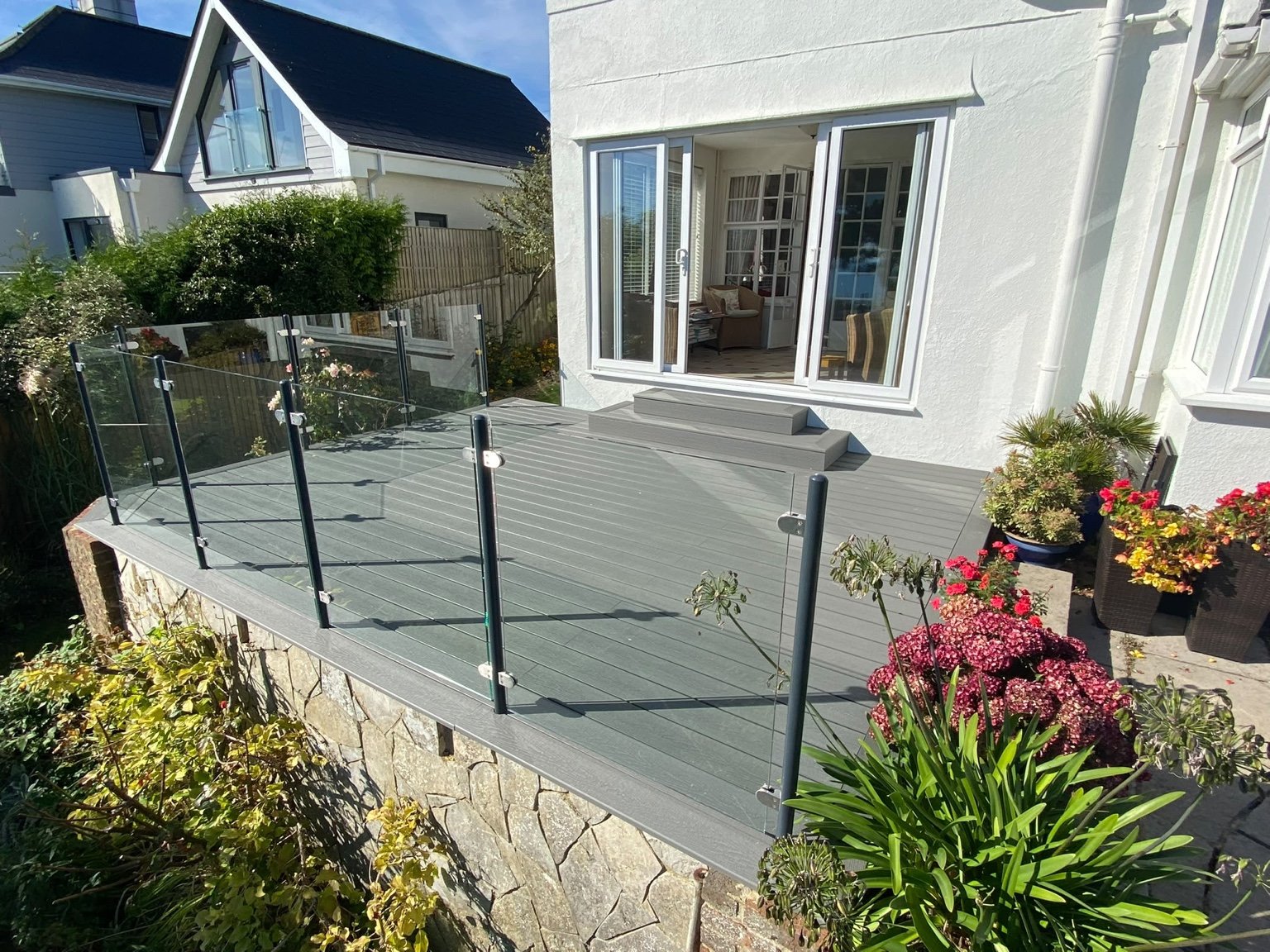
Grey composite decking, glass panels, powder-coated steel posts and matching steps.
View St Margaret’s Bay projectFolkestone
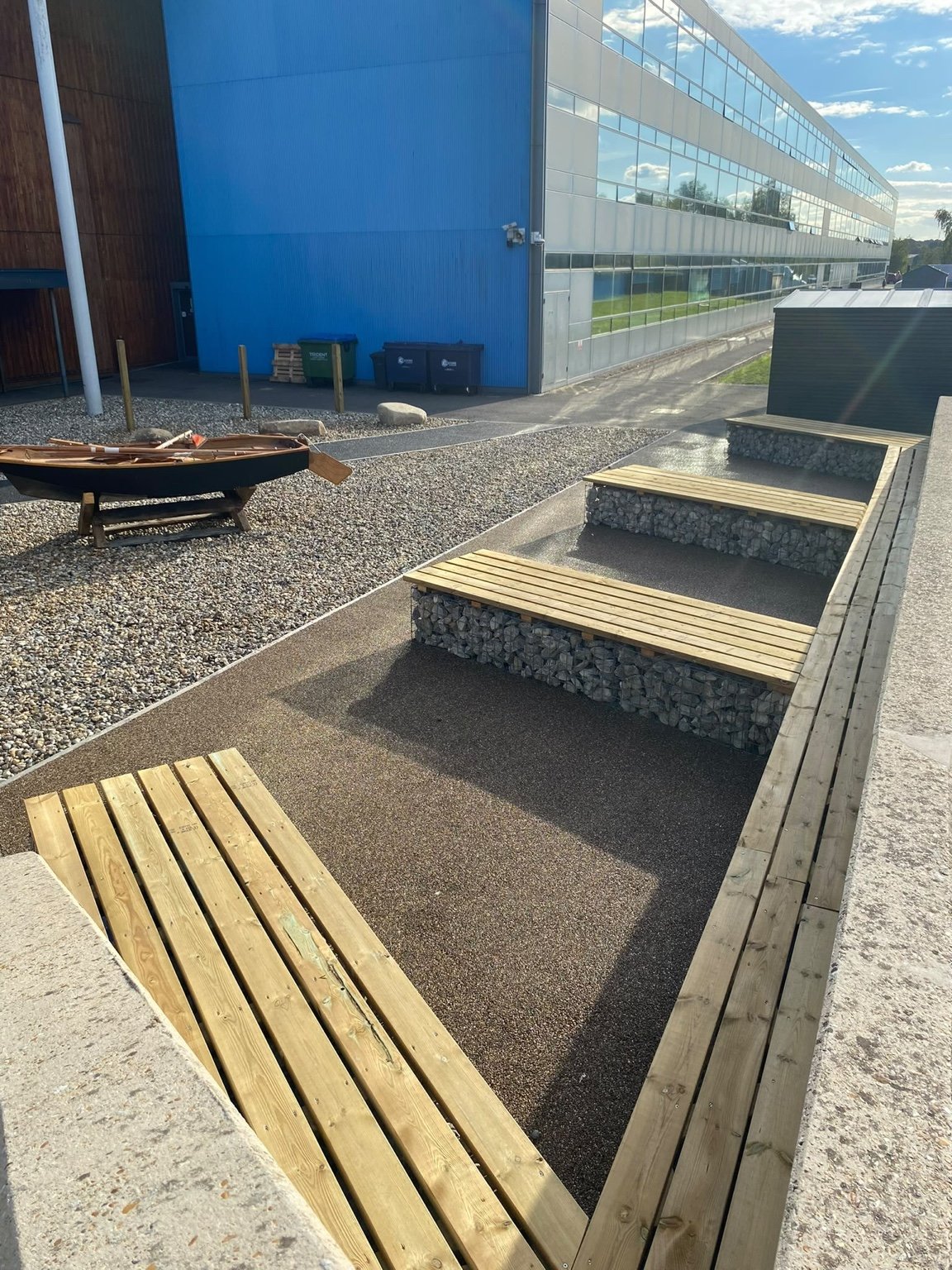
Timber-topped gabion benches, resin-bonded surfacing, shingle and a boat feature at the academy entrance.
View Folkestone projectCanterbury
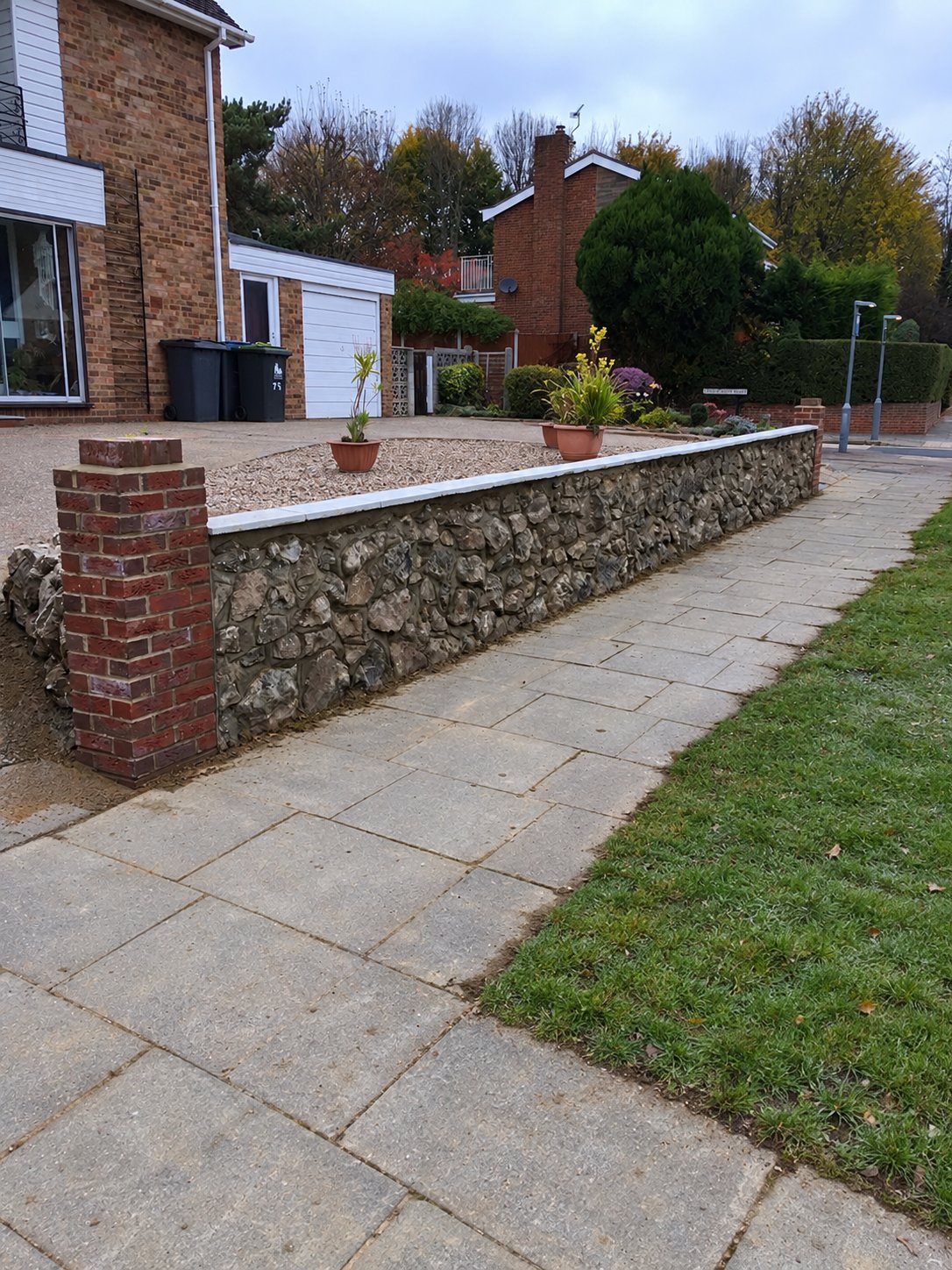
The stones from a customer’s late husband’s rockery kept and reused in a new front wall.
View Canterbury projectCanterbury
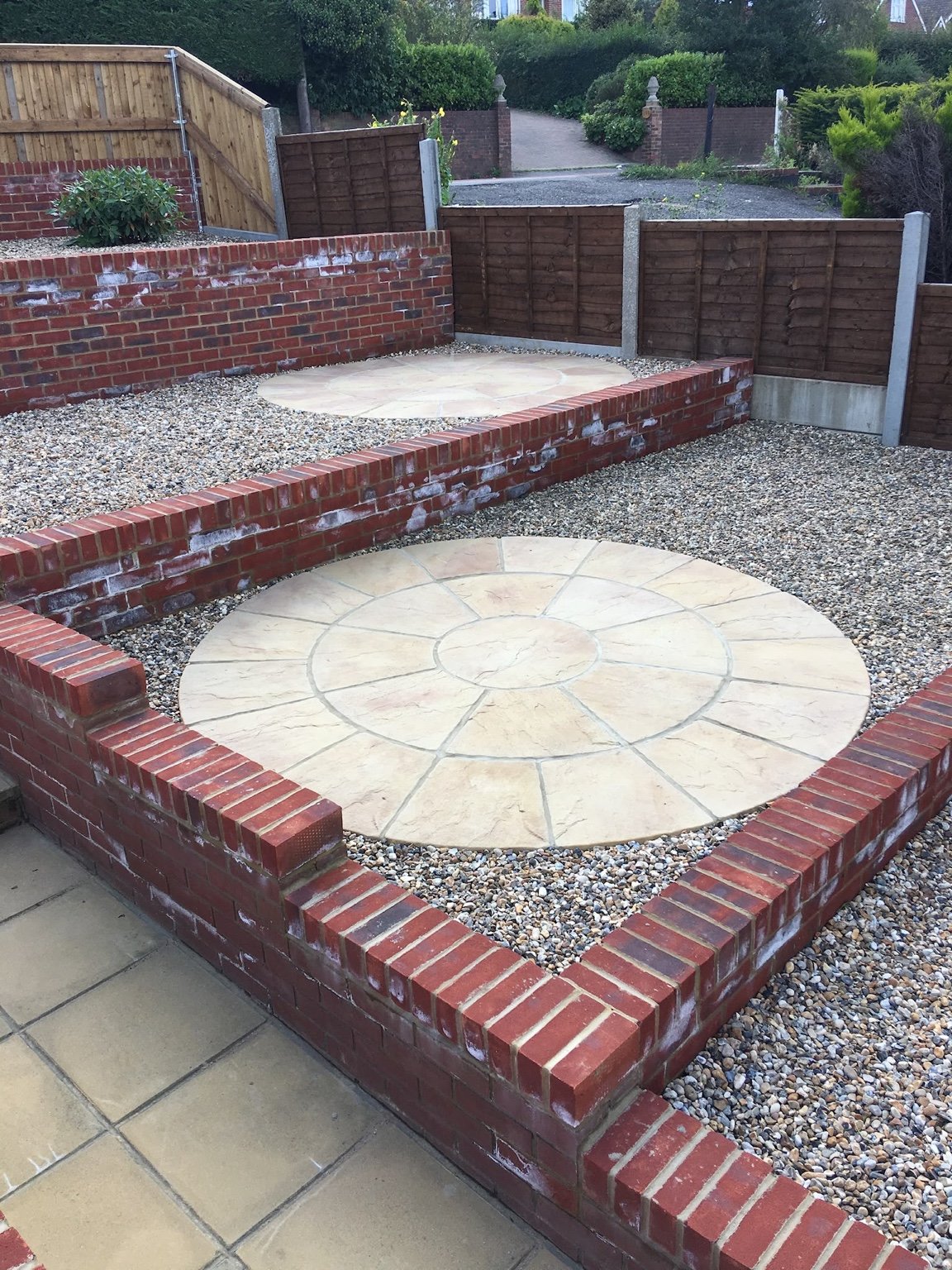
Retaining walls, shingle infill and riven buff slab circles across connected garden levels.
View Canterbury projectAshford
Before, during and after a timber decking replacement, from the old deck to the finished terrace.
View Ashford projectBorough Green
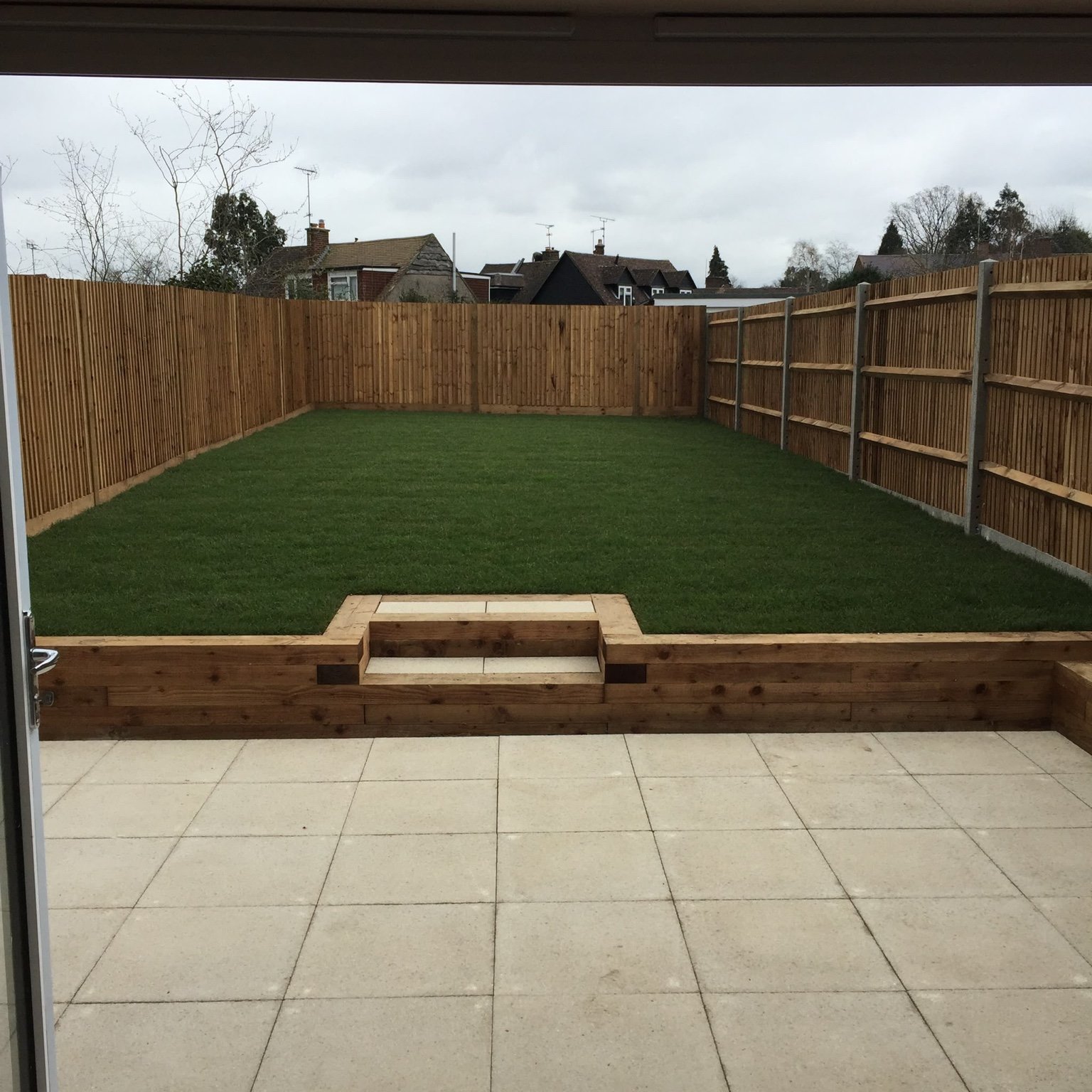
1800mm closeboard fencing, softwood sleeper planters, a 450mm buff slab patio and new turf.
View Borough Green projectCanterbury
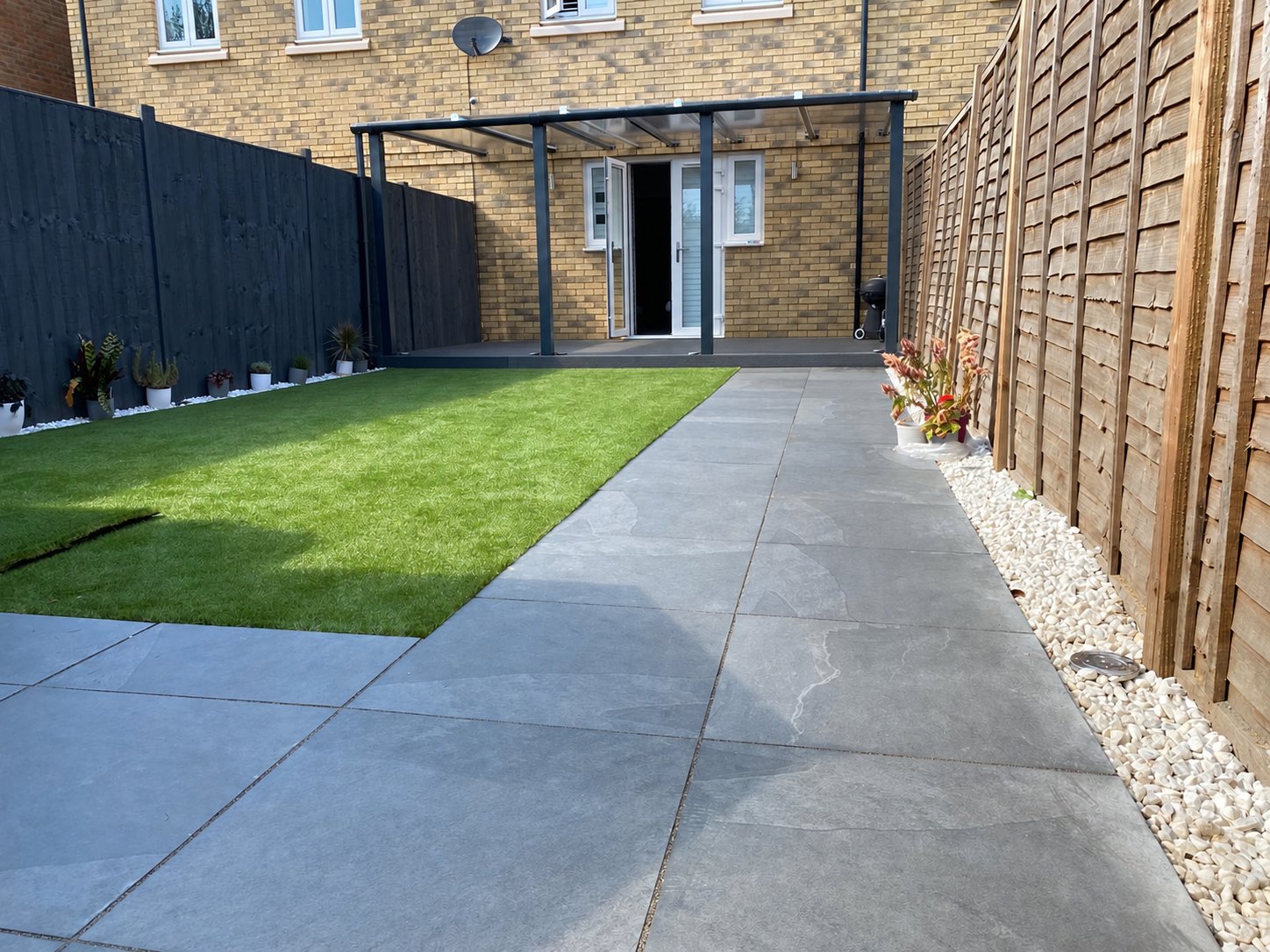
Porcelain paving, artificial grass and a custom steel-frame pergola with polycarbonate roof.
View Canterbury projectStrood
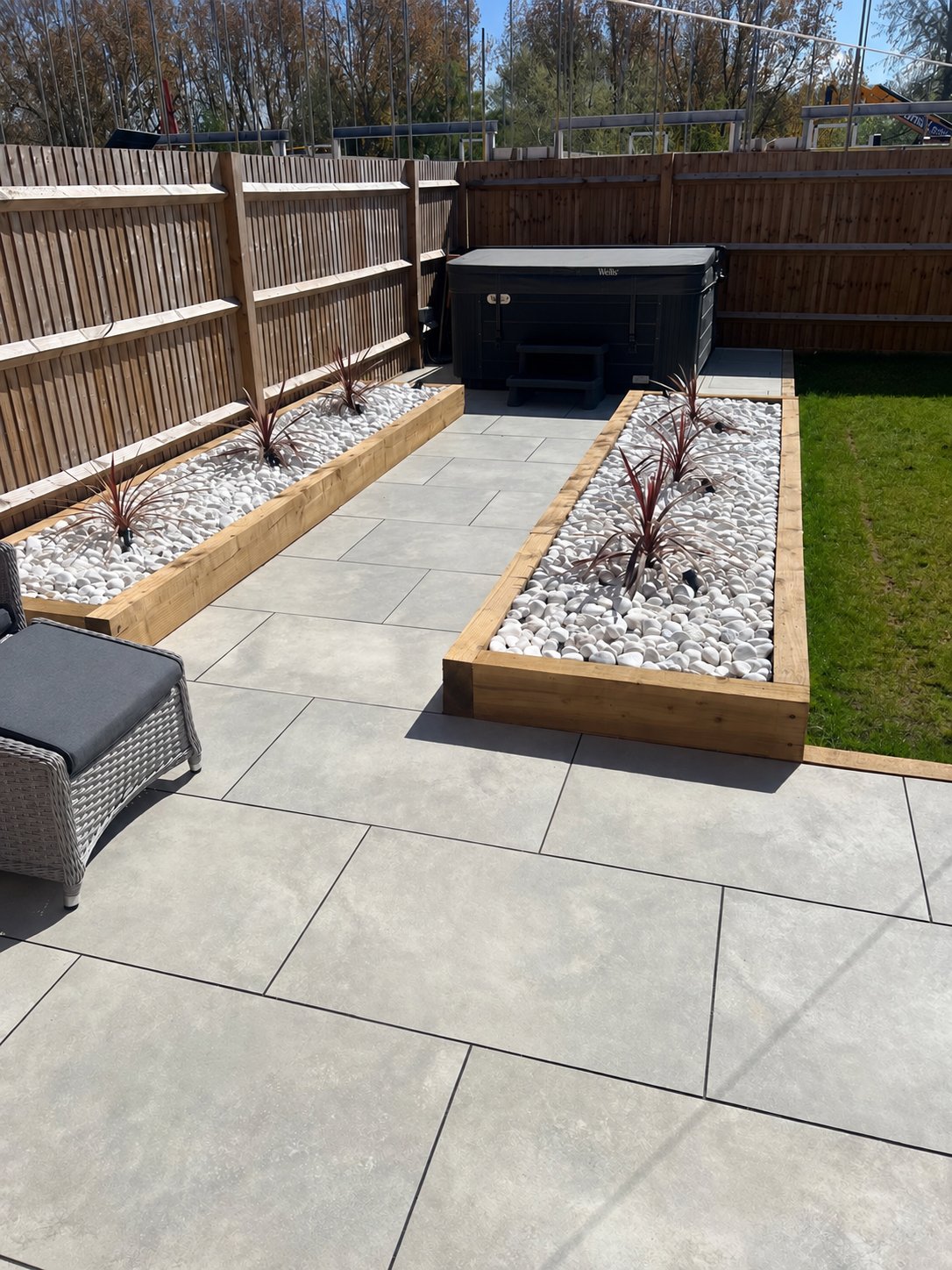
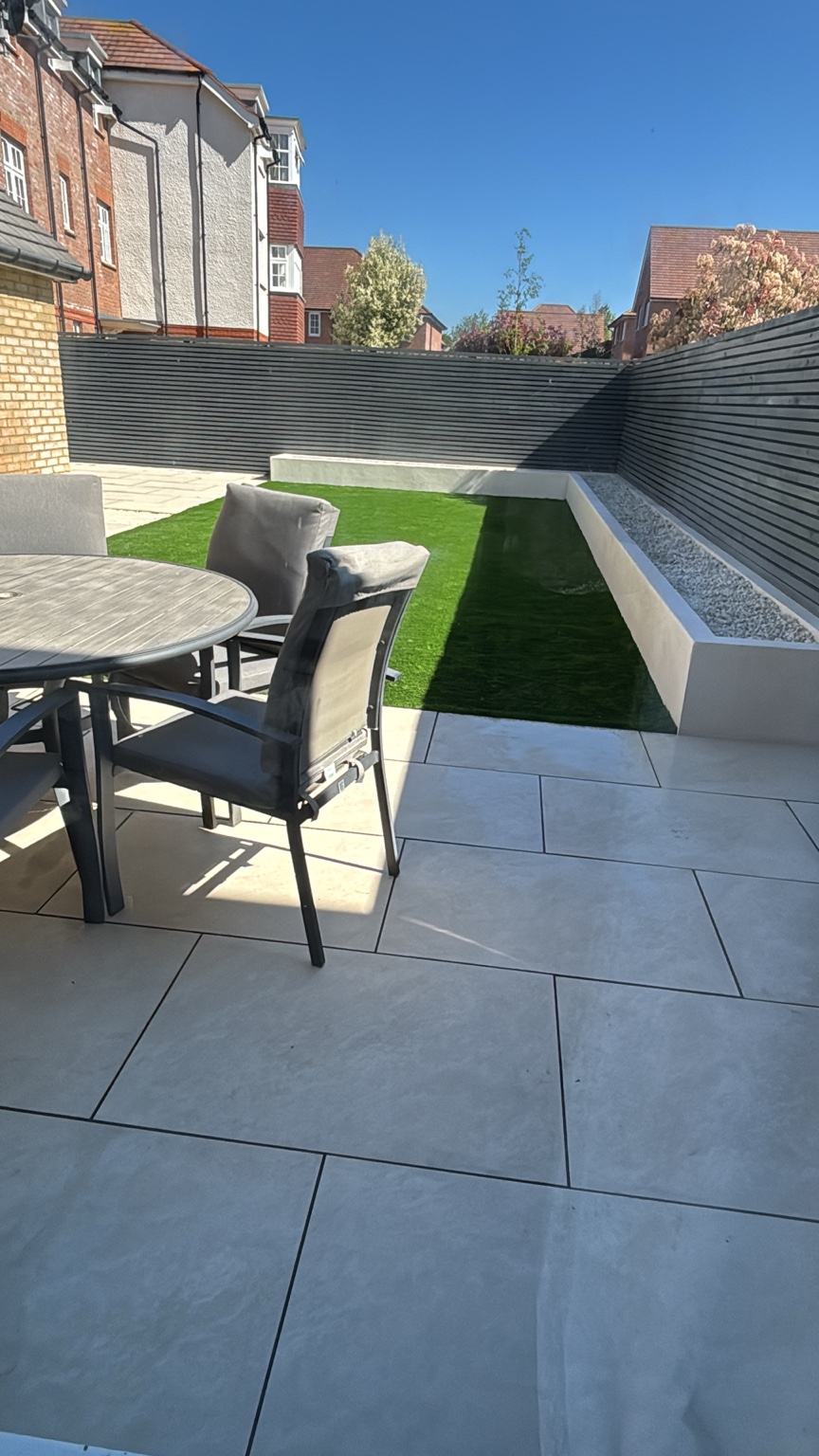
Grey porcelain paving framed by timber sleeper planters, white decorative stones and planting.
View Strood projectWest Malling
Block paving, porcelain patio, brick retaining walls and two styles of timber fencing.
View West Malling projectAshford
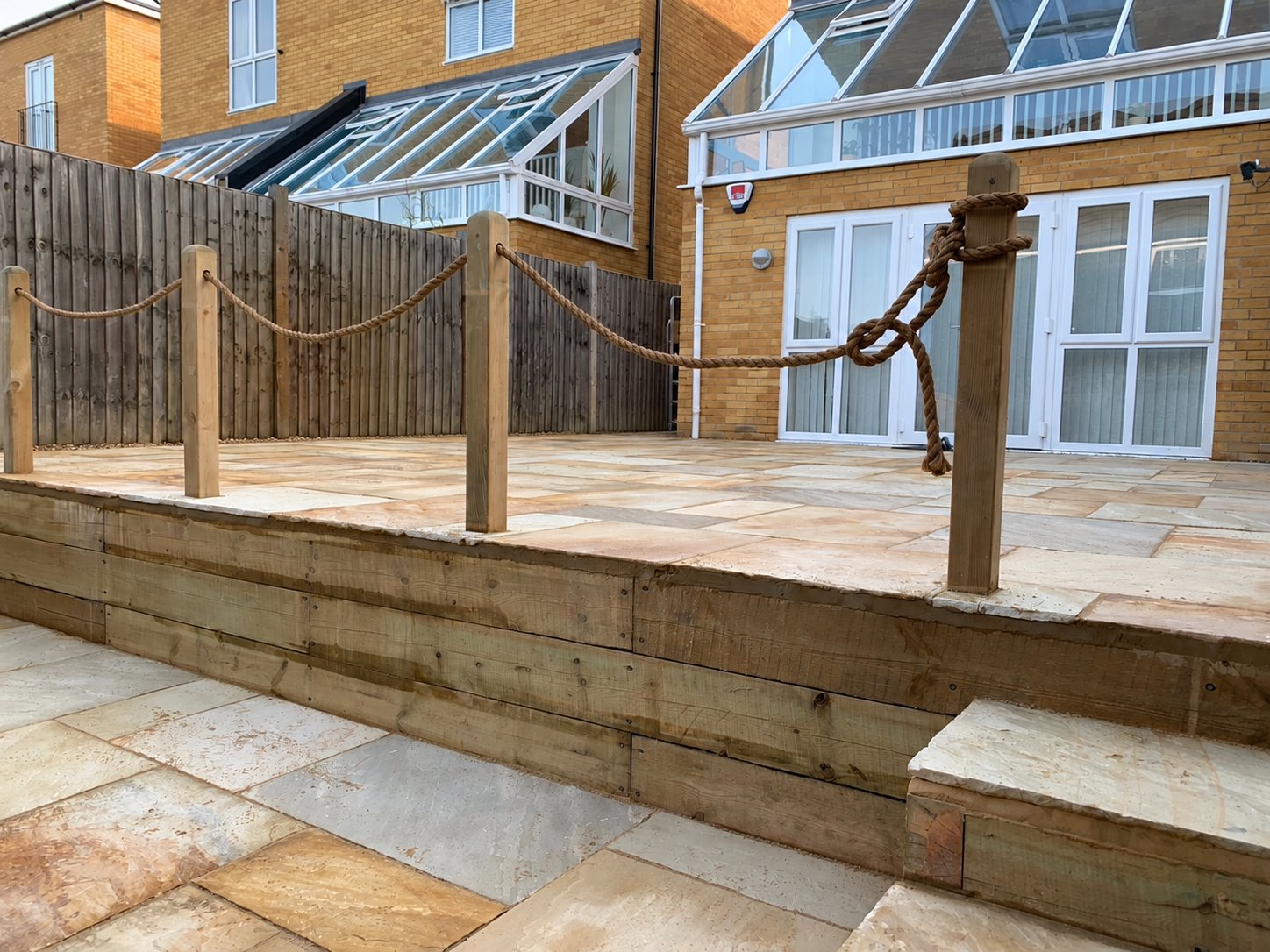
Sandstone paving across two levels, with timber sleeper retaining walls.
View Ashford projectDeal
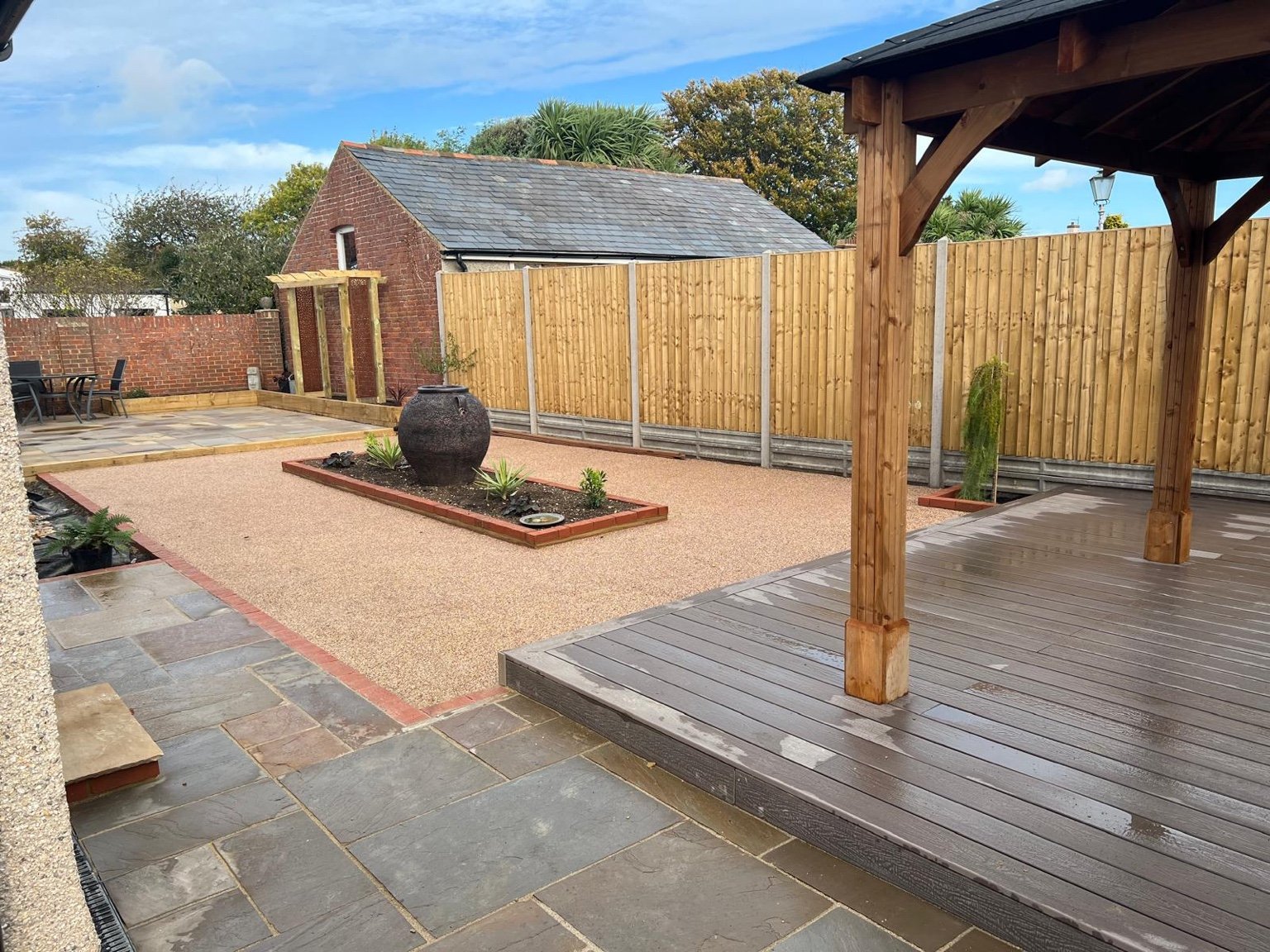
A sandstone patio, ash-coloured composite decking, pitched-roof pergola and sleeper planters.
View Deal projectSevenoaks
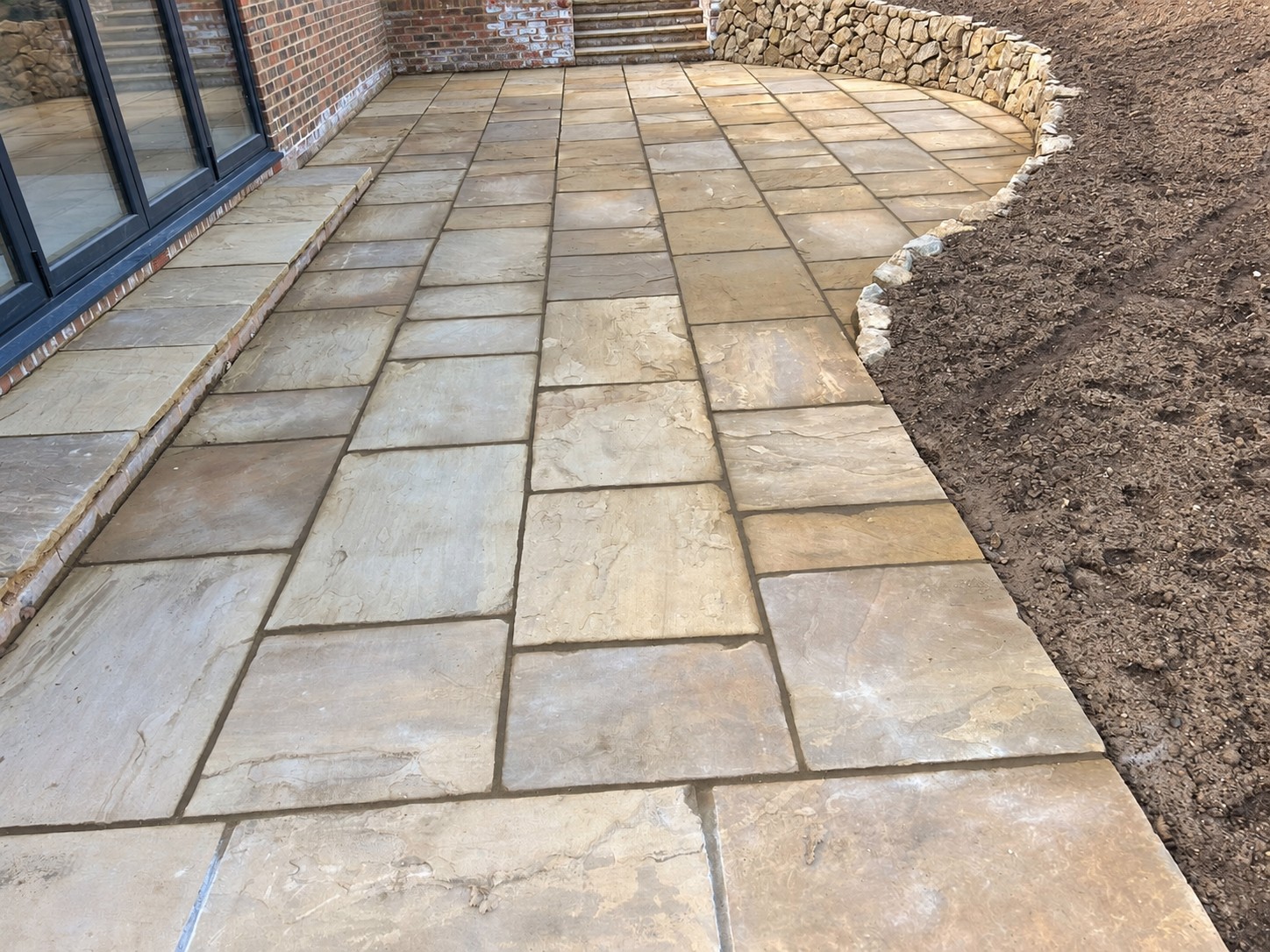
75mm thick York stone paving, curved paths, brick walls and Kentish ragstone walls.
View Sevenoaks projectHerne Bay
Porcelain patio, raised bed, artificial grass and slatted fencing. See the garden before and after.
View Herne Bay projectSittingbourne
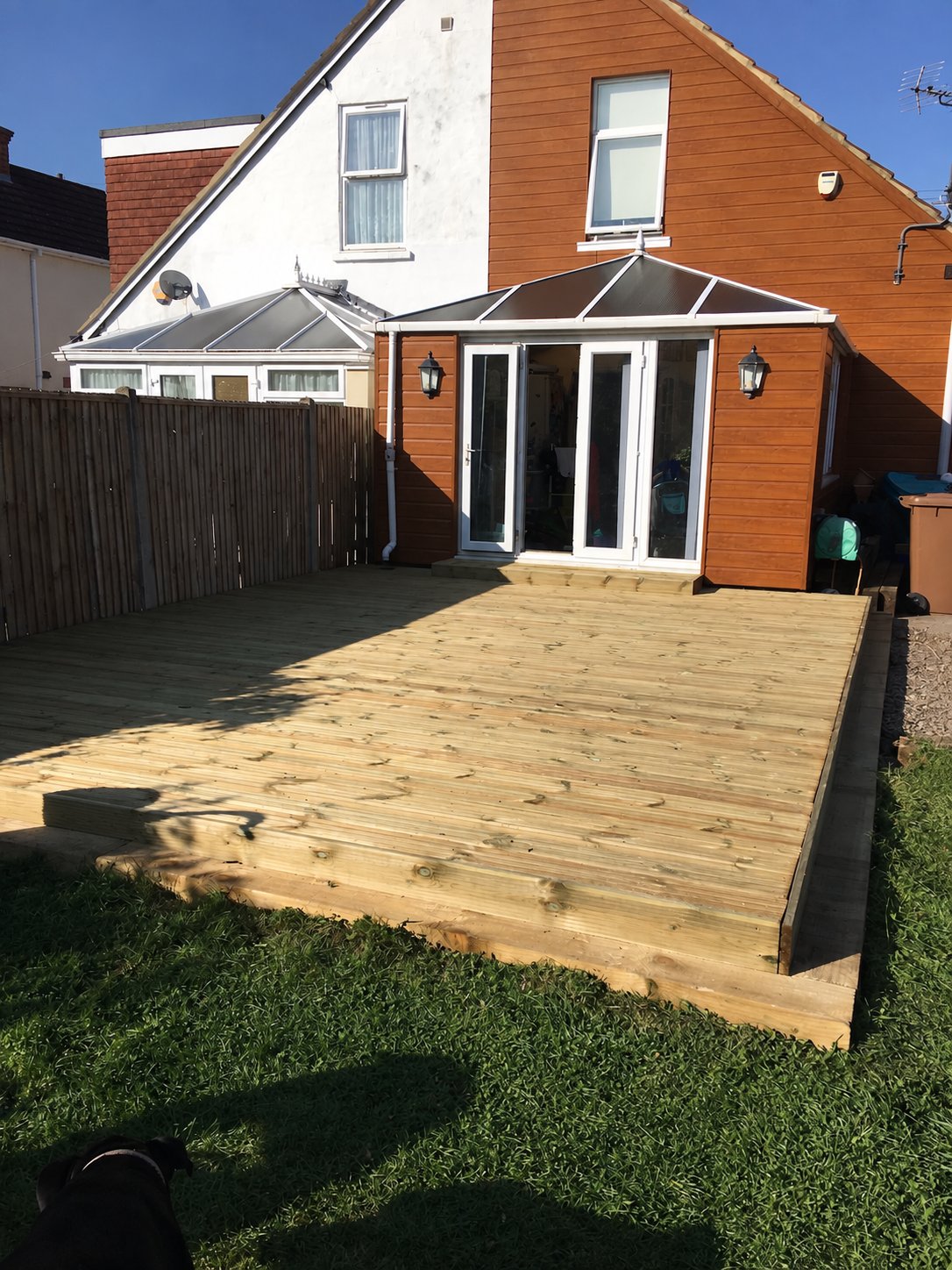
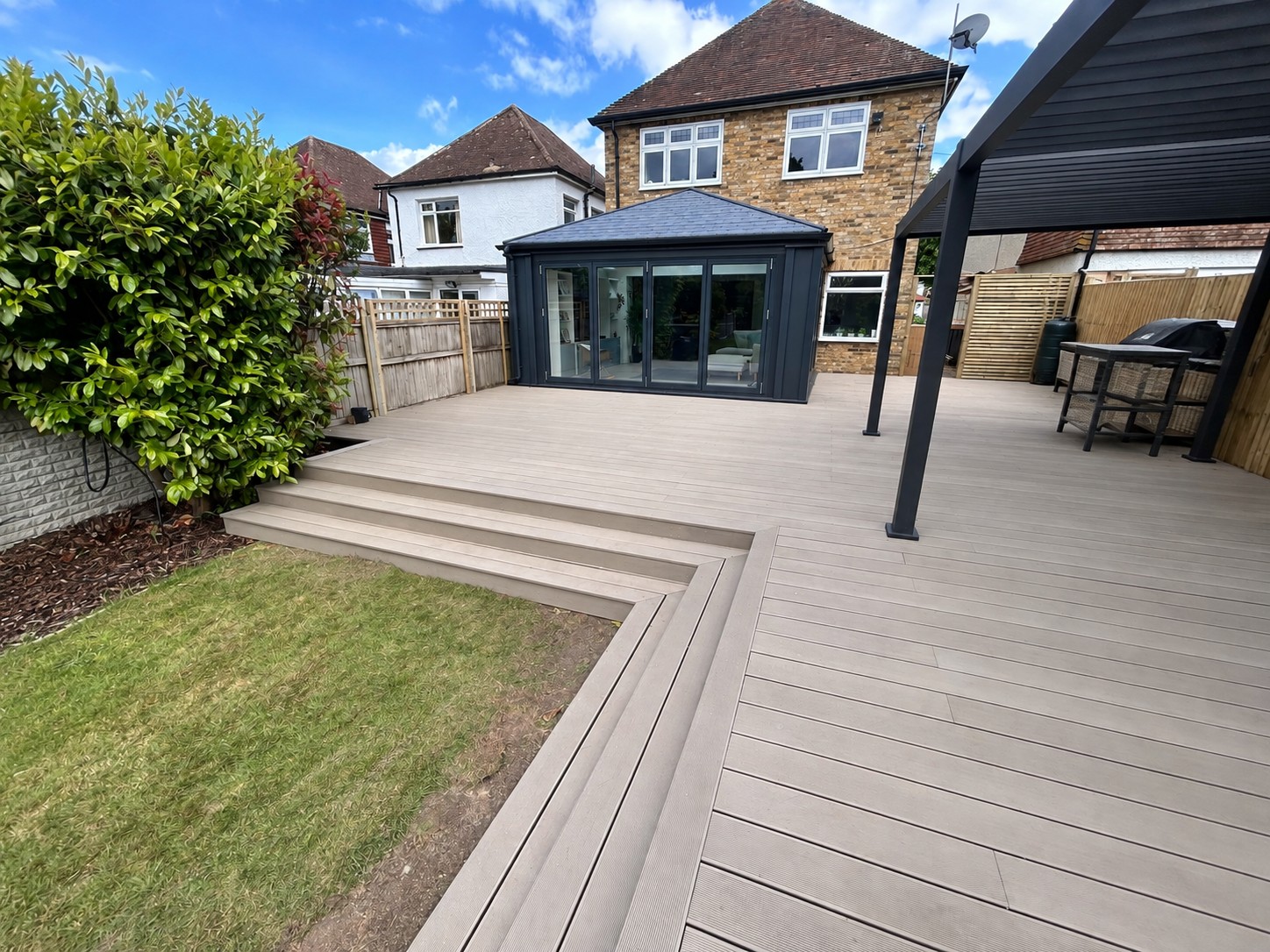
A broad decking terrace with defined board lines and steps connecting the house to the lawn.
View Sittingbourne projectDeal
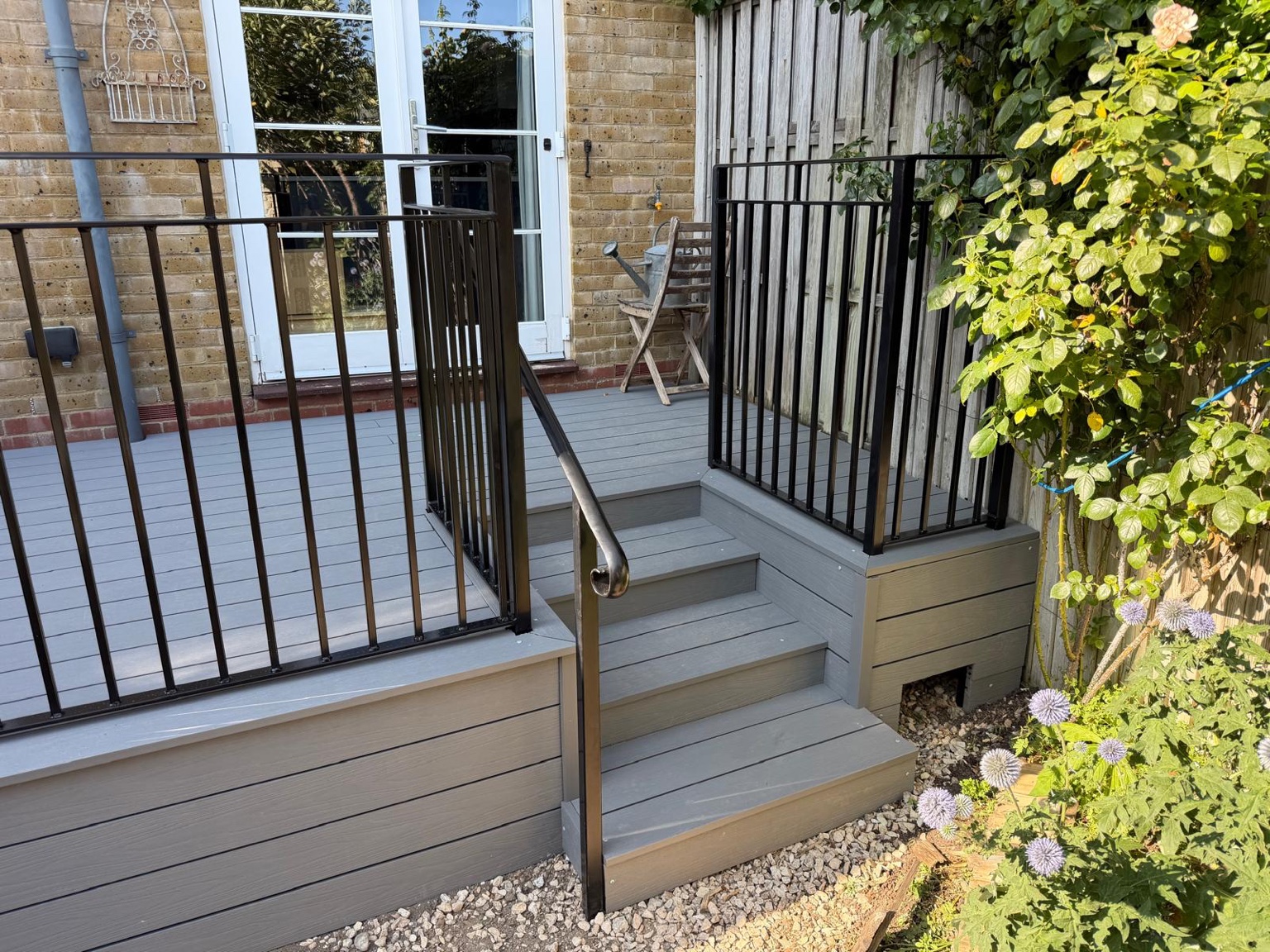
Raised grey decking with black railings, inset steps and a matching handrail.
View Deal projectYOUR NEW ROMNEY PROJECT
Send your postcode, photographs, measurements and access details for a free, no-obligation quotation.