Chislehurst
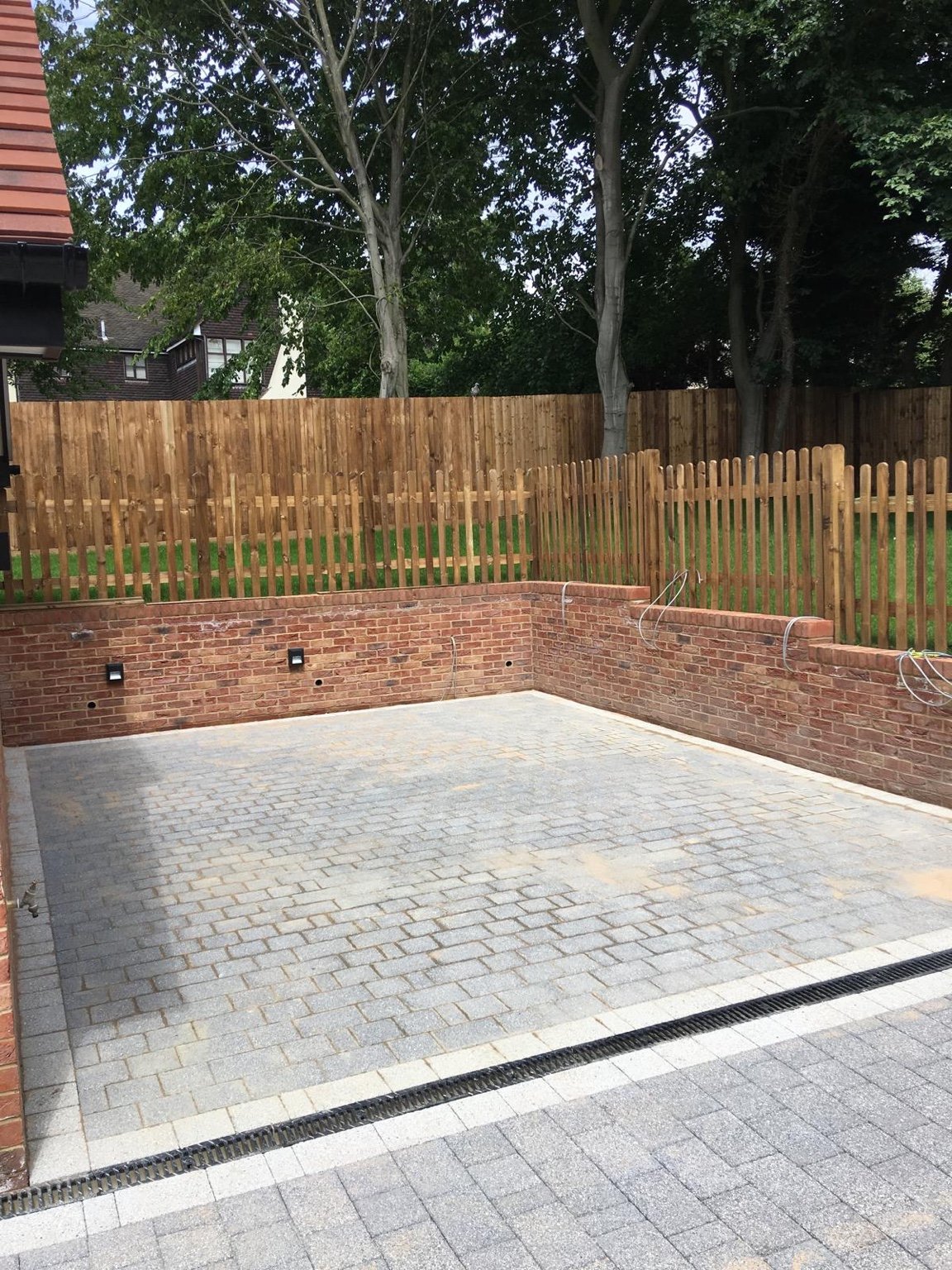
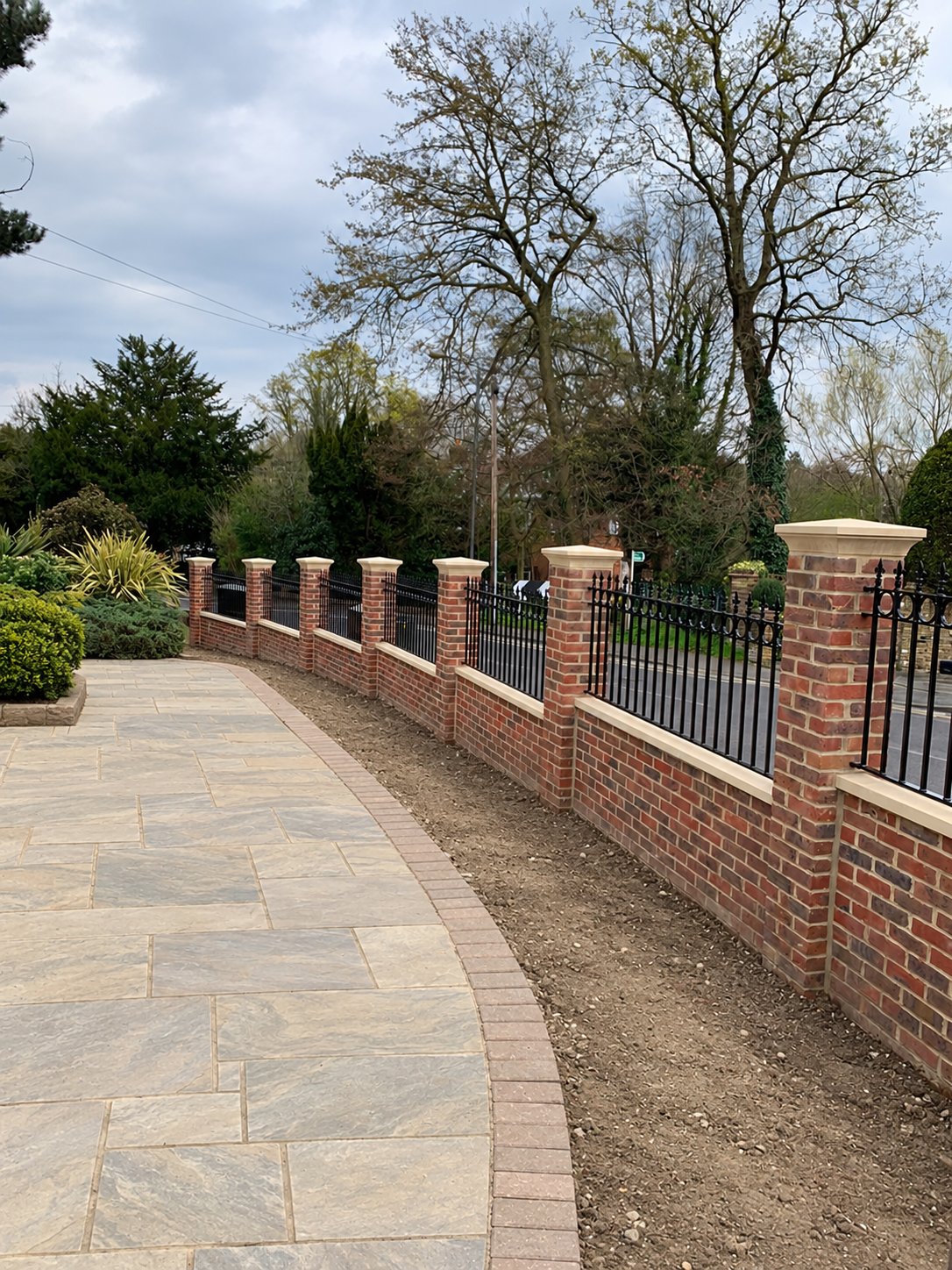
Brick piers, stone coping and railings
A brick boundary with pale stone coping and pier caps, finished with decorative railing panels.
View Chislehurst projectFOLKESTONE · EAST KENT
Plan a loose-stone driveway with the support, containment and upkeep it needs. For Folkestone gravel driveway enquiries, we discuss aggregate choice, slope, vehicle movements and whether you need a new construction or a top-up on an existing surface.
Loose aggregate changes under steering, braking and walking. A frequently used route may benefit from firmer paving alongside the parking area, particularly for mobility aids or pushchairs.
Sloping sites need assessment of stone migration. Stabilisation grids may be suitable within a particular design, but do not make every gradient suitable for loose gravel. Compare a continuous finish if movement would be inconvenient.
Ask about size, shape, durability and suitability for traffic. Nominal 20mm angular stone is often considered for drives, but product choice depends on the layout and any grid requirements. A very small stone can be displaced or carried by tyres.
View enough of a sample to understand how it looks near the house. Wet and dry appearance can differ, while the chosen size also affects comfort underfoot.
Decorative gravel over untreated soil is not a driveway foundation. Remove unsuitable ground and specify support for the expected loading. Agree the decorative depth and quantity using the selected aggregate’s data.
A geotextile may have a separation function where the build requires it. Ask where it goes and why. It is not a guarantee that weeds can never establish in debris on the surface.
Borders help prevent stone spreading into beds, paths and the highway. Pay particular attention to the turning area and entrance junction. The edge needs to work with surrounding levels and the driveway construction.
Loose stone lets water pass between particles, but the support and ground must also accommodate that water. Do not assume gravel removes every drainage problem or means no further water-management design is needed.
Gravel may cost less than a block-paved build on a suitable site, but base preparation, borders, access and disposal still affect the total. A tonne of aggregate is a supply purchase, not a complete driveway installation.
Specify whether the existing surface is being removed or replenished. Compare the scope and quantities, including delivery and VAT. Allow for redistribution and occasional top-ups in your longer-term decision.
There is no fixed expiry date for every gravel drive. Support, drainage, use and maintenance influence how it performs. Decorative stone may be topped up while the underlying construction remains serviceable.
Rake displaced aggregate, remove debris and address persistent soft spots or hollows. Repeatedly filling a sinking patch does not repair the support below. Send measurements and photographs for a quotation matched to the actual problem.
Discuss driveway installers in Folkestone, resin driveways in Folkestone, tarmac driveways in Folkestone. Agree levels, access and the order of work together where the project includes several improvements.
Planning Portal: paving your front garden explains the English planning requirements. Check the proposal and any property restrictions before work.
Stone movement, raking, weeds, top-ups and walking comfort need considering, especially on slopes or frequently turned areas.
A suitable supporting construction, any specified separation fabric and contained edges. Stone on soil alone is not a driveway base.
It can be on a suitable site. Compare complete installation and ongoing care rather than aggregate price alone.
There is no universal lifespan. The support, drainage, traffic and maintenance determine performance, with stone replenished as needed.
Assess migration and containment; a suitable grid or another surface may be preferable.
Not necessarily. Supporting layers, soil conditions and runoff from other surfaces also matter.
Where the support and drainage remain suitable. Recurring hollows or soft areas need assessment.
Area, postcode, photographs, gradient, access and whether you want a full build or replenishment.
OUR WORK · KENT
Chislehurst
A brick boundary with pale stone coping and pier caps, finished with decorative railing panels.
View Chislehurst projectSt Margaret’s Bay
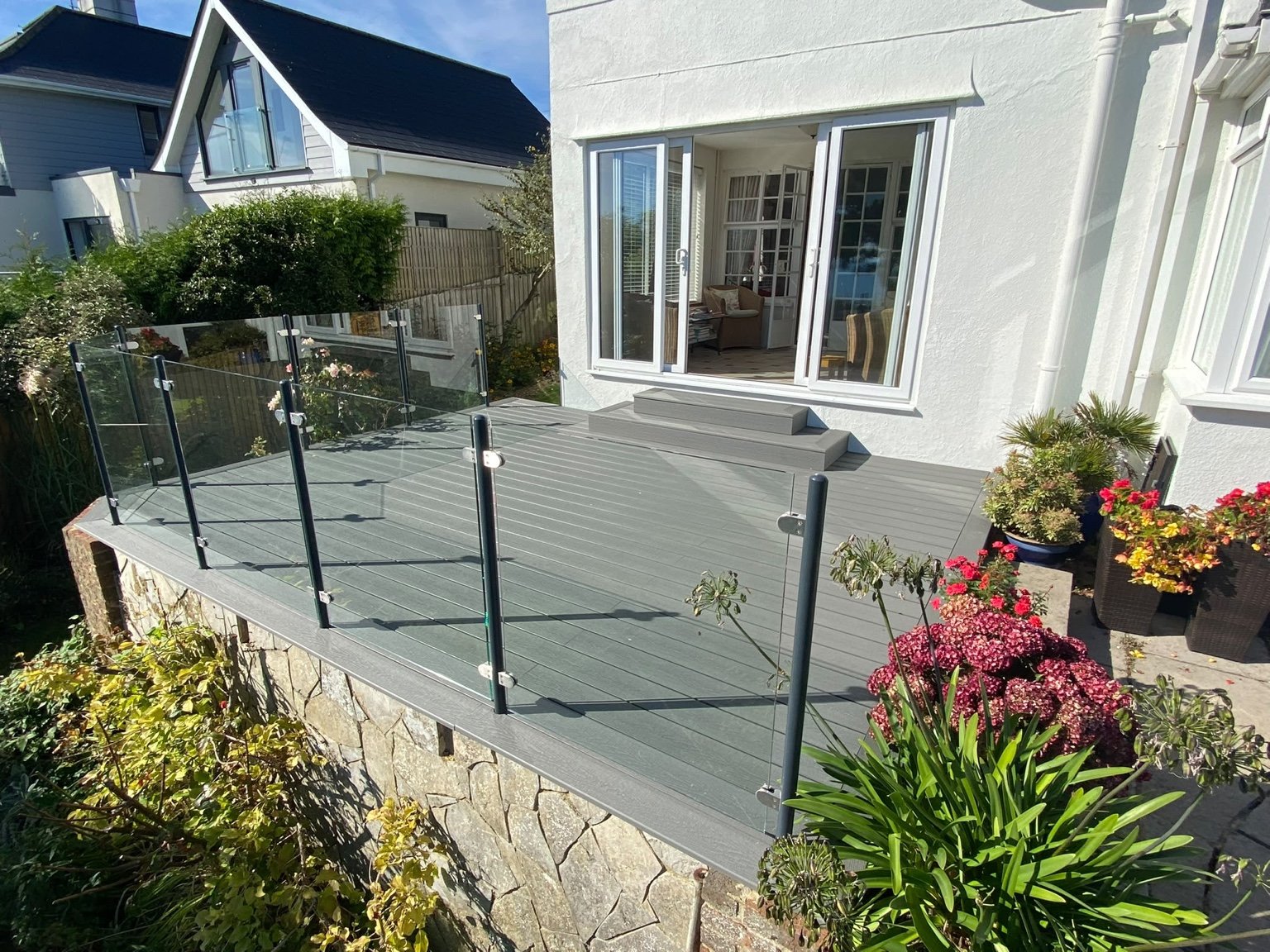
Grey composite decking, glass panels, powder-coated steel posts and matching steps.
View St Margaret’s Bay projectFolkestone
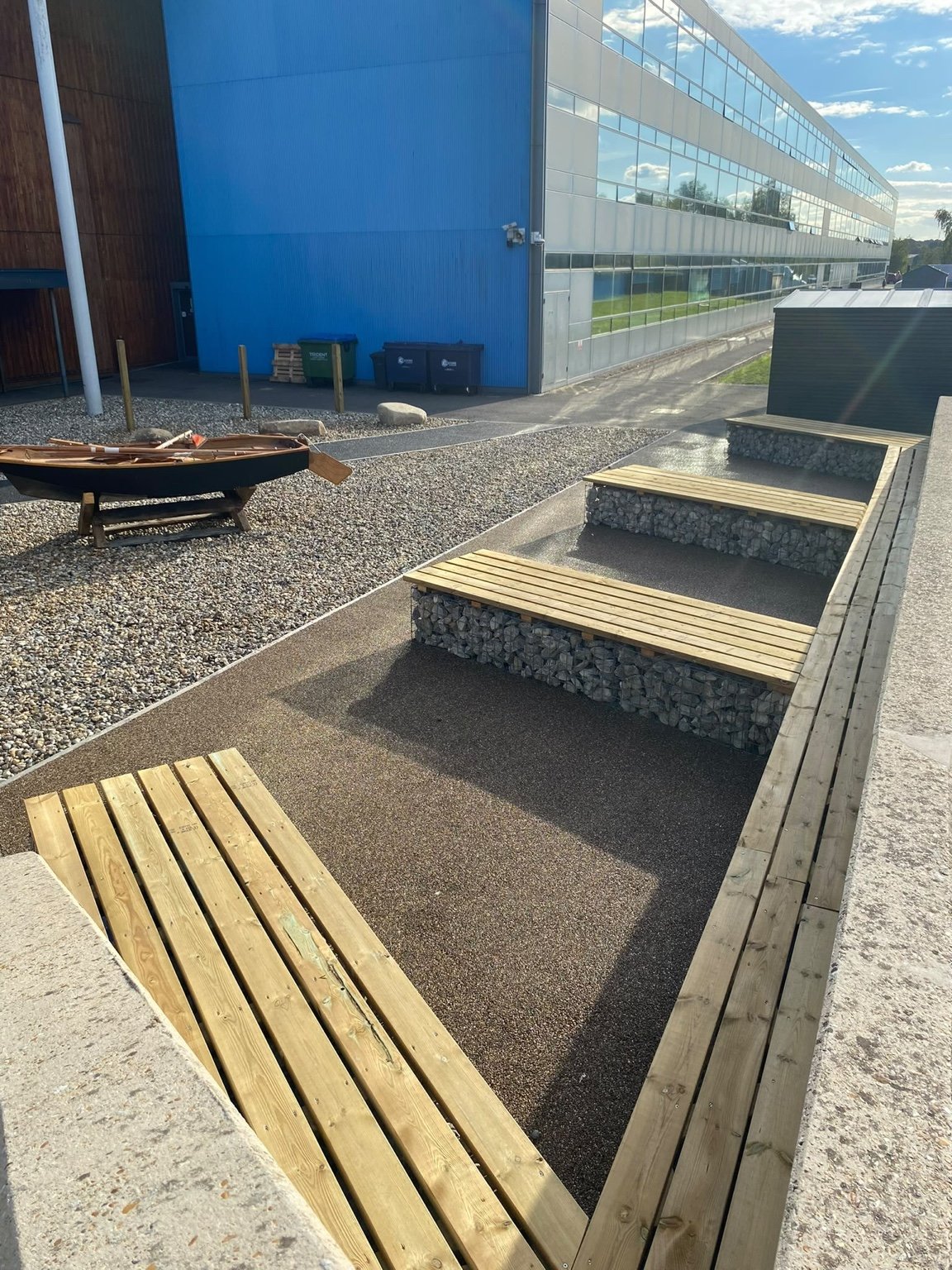
Timber-topped gabion benches, resin-bonded surfacing, shingle and a boat feature at the academy entrance.
View Folkestone projectCanterbury
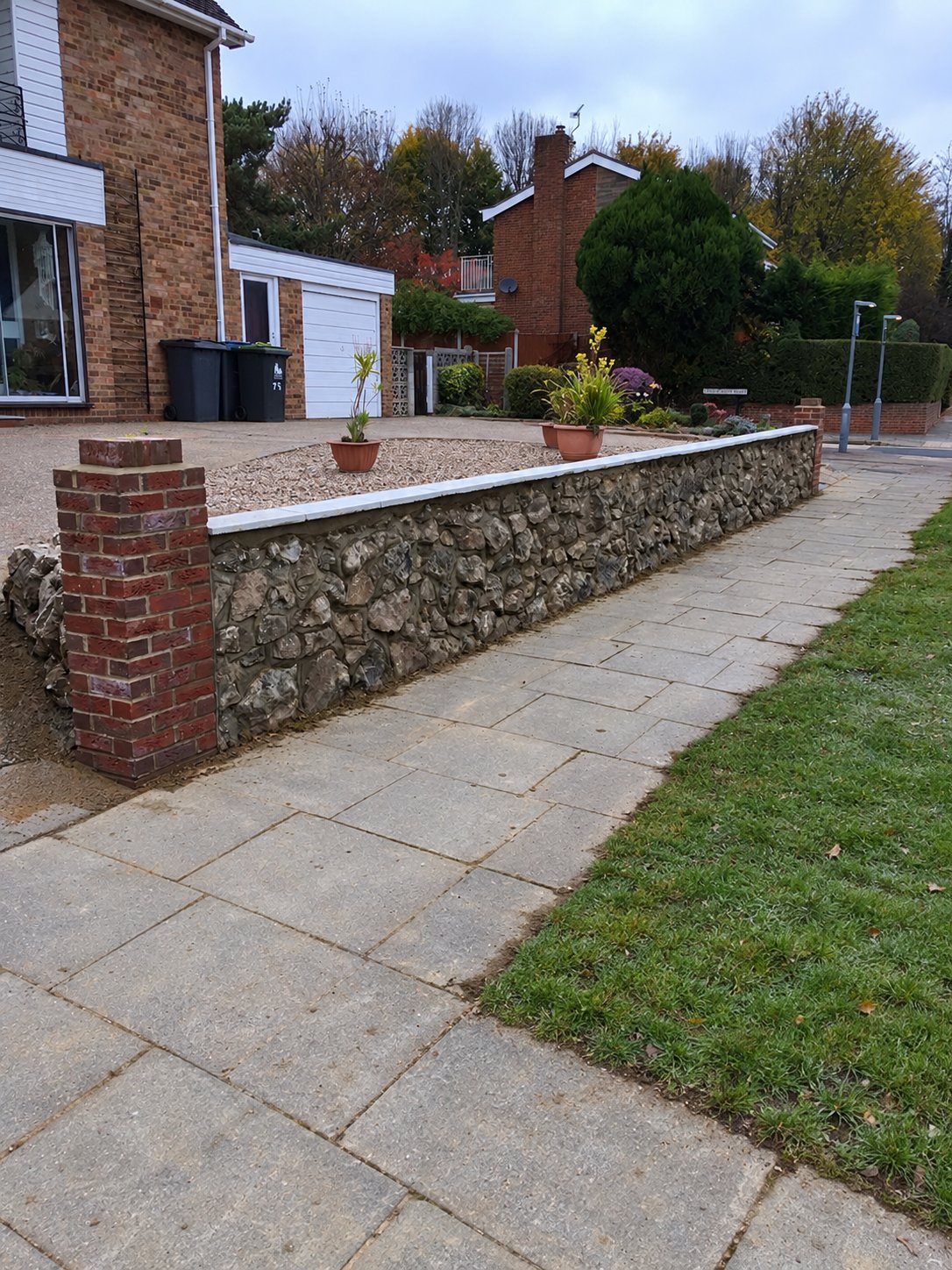
The stones from a customer’s late husband’s rockery kept and reused in a new front wall.
View Canterbury projectCanterbury
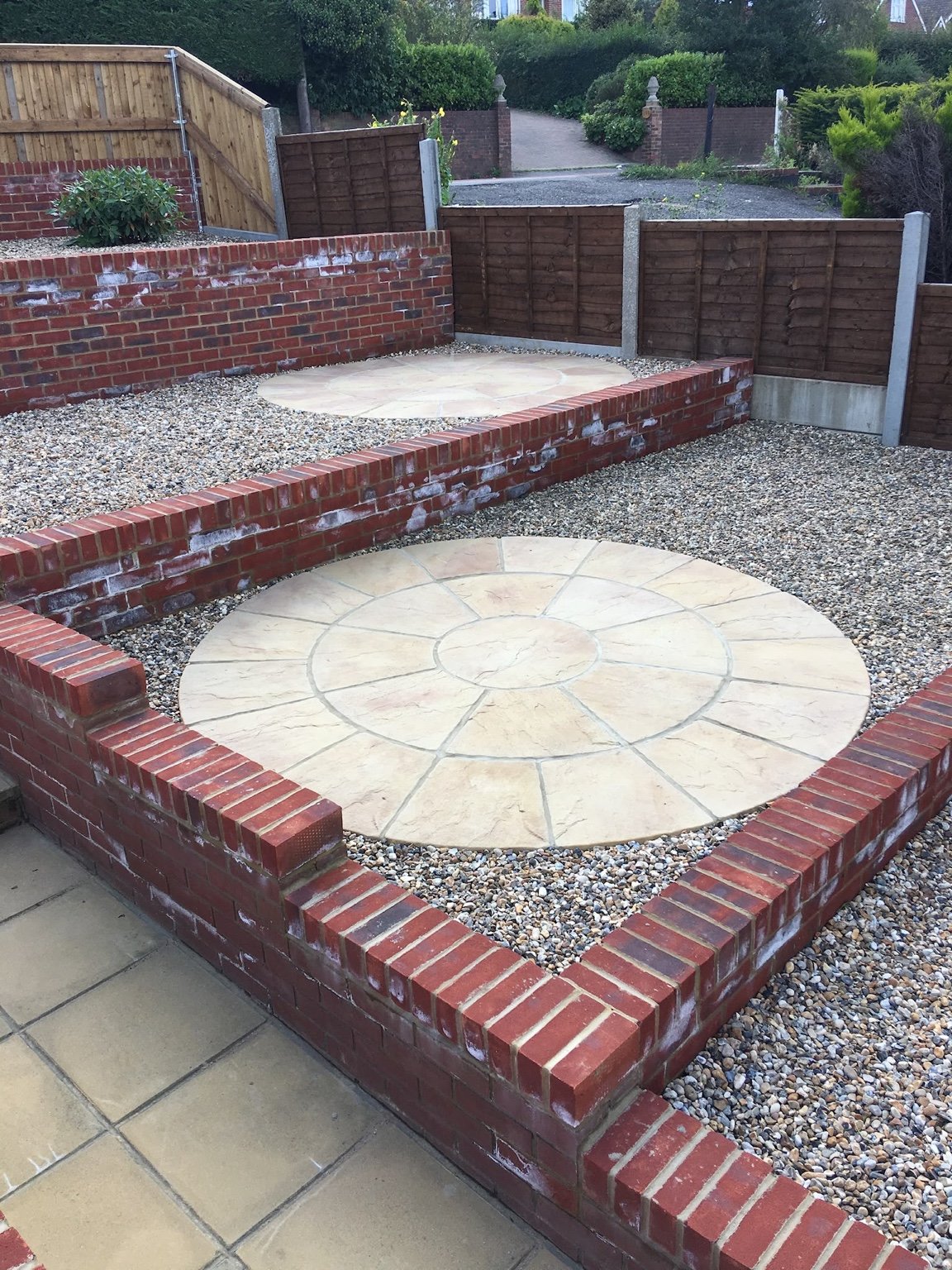
Retaining walls, shingle infill and riven buff slab circles across connected garden levels.
View Canterbury projectAshford
Before, during and after a timber decking replacement, from the old deck to the finished terrace.
View Ashford projectBorough Green
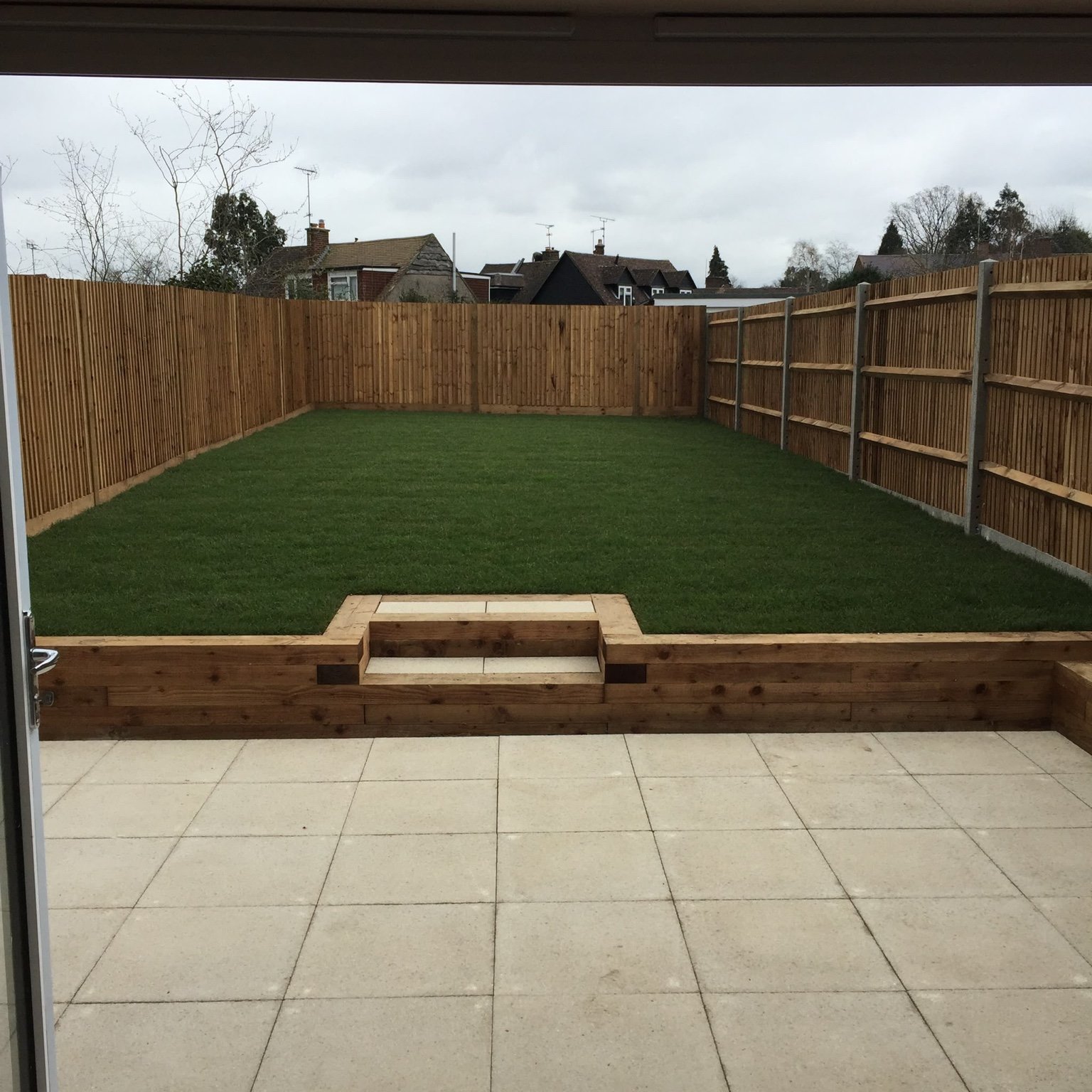
1800mm closeboard fencing, softwood sleeper planters, a 450mm buff slab patio and new turf.
View Borough Green projectCanterbury
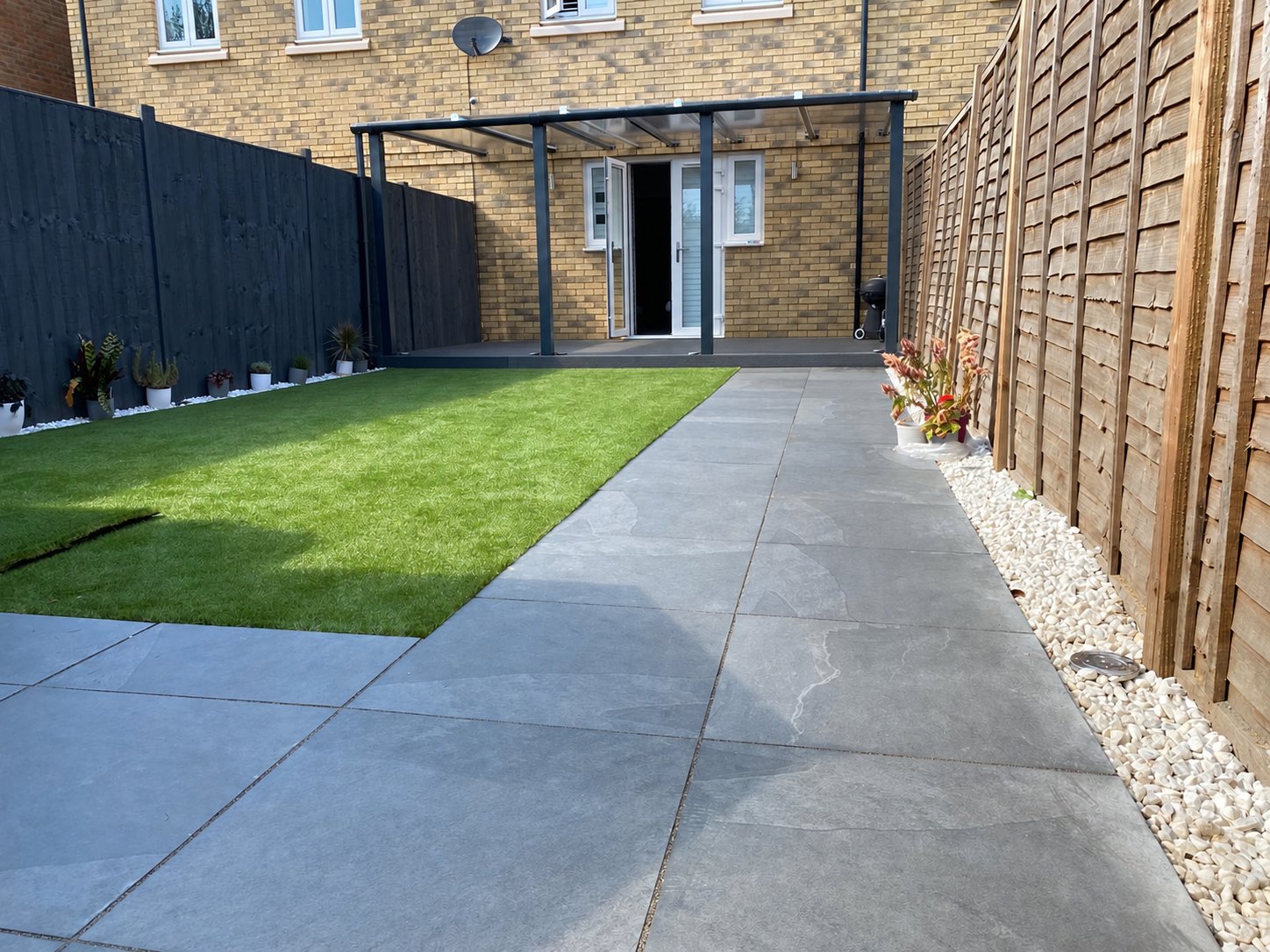
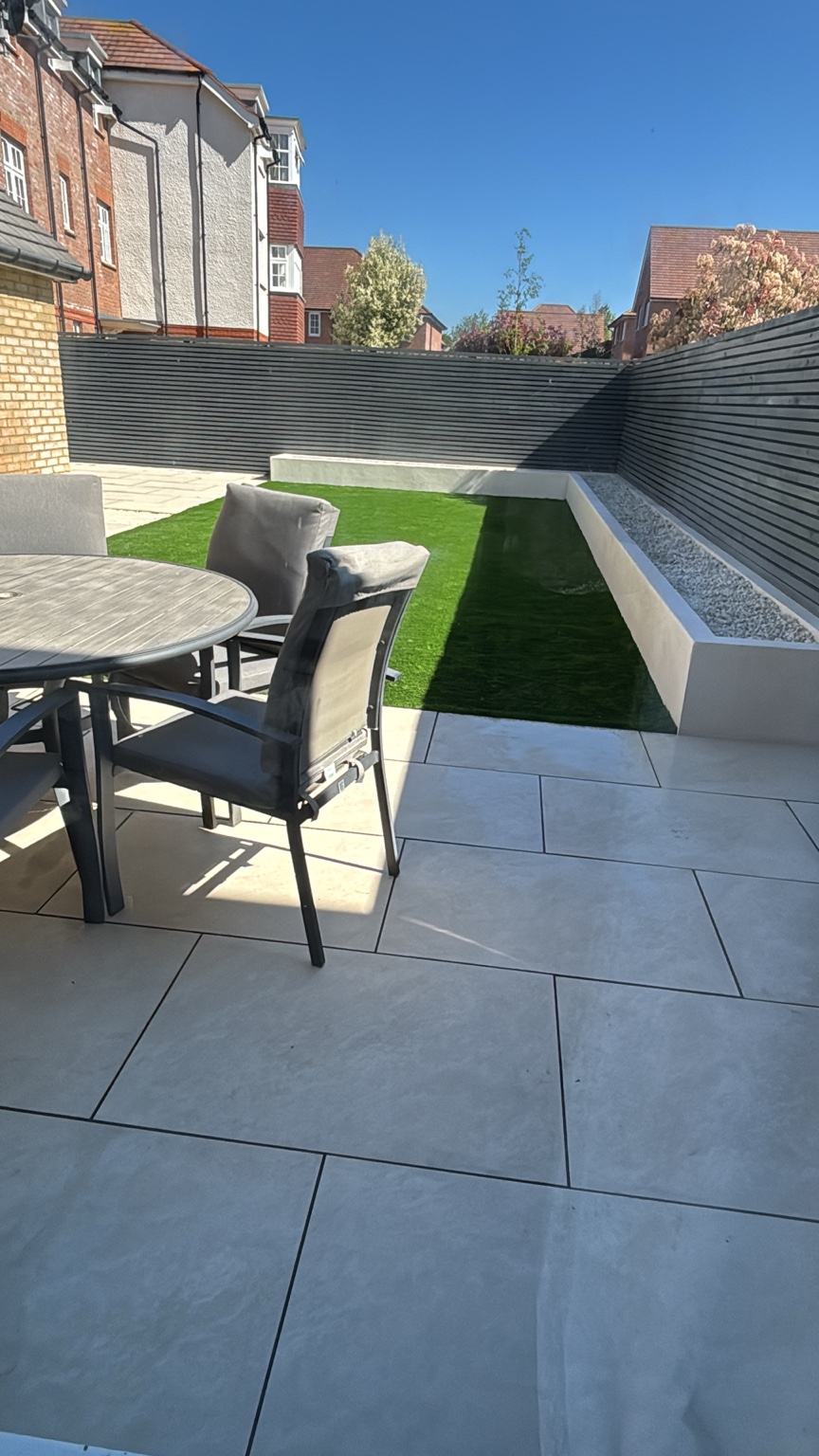
Porcelain paving, artificial grass and a custom steel-frame pergola with polycarbonate roof.
View Canterbury projectStrood
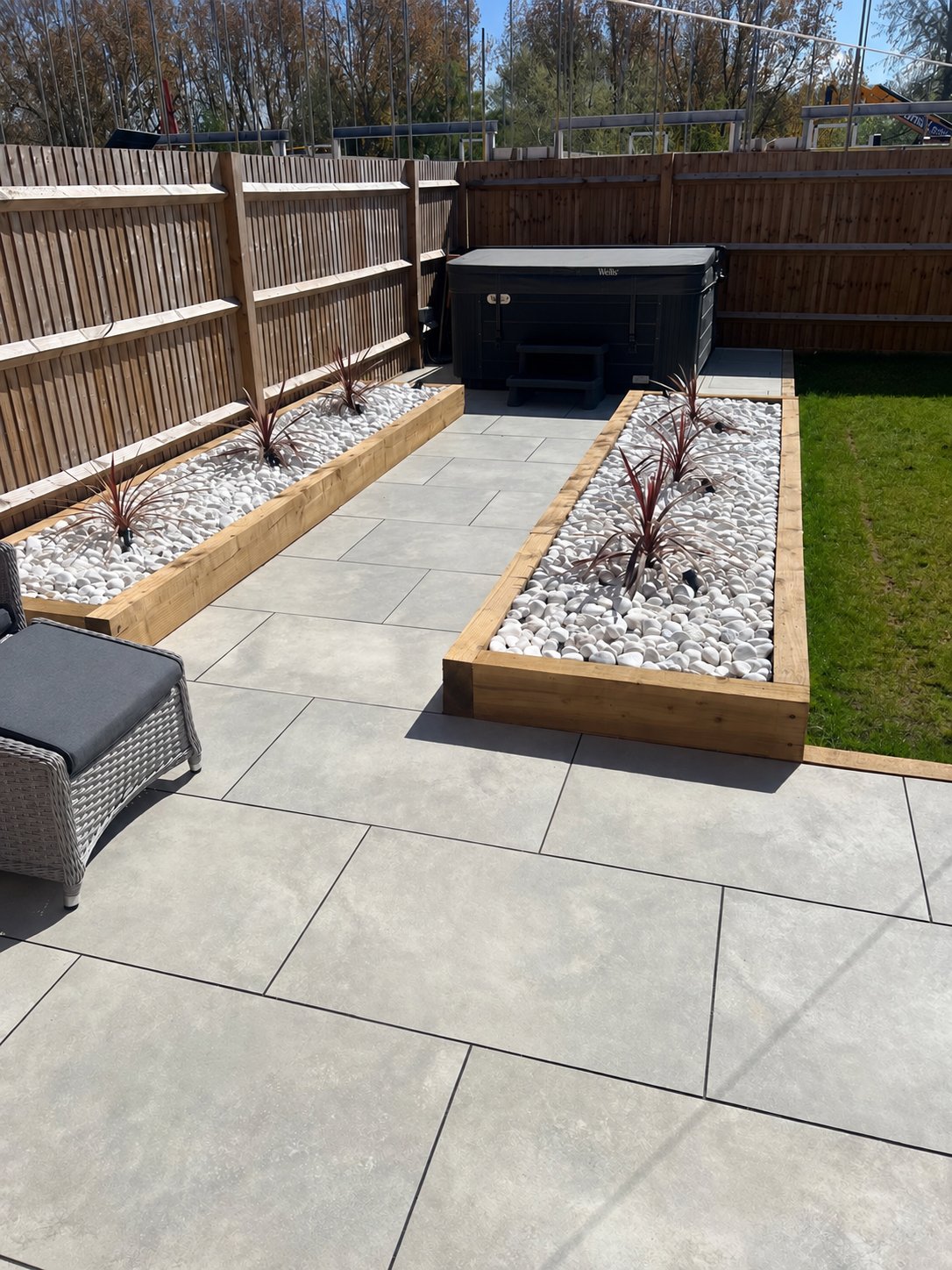
Grey porcelain paving framed by timber sleeper planters, white decorative stones and planting.
View Strood projectWest Malling
Block paving, porcelain patio, brick retaining walls and two styles of timber fencing.
View West Malling projectAshford
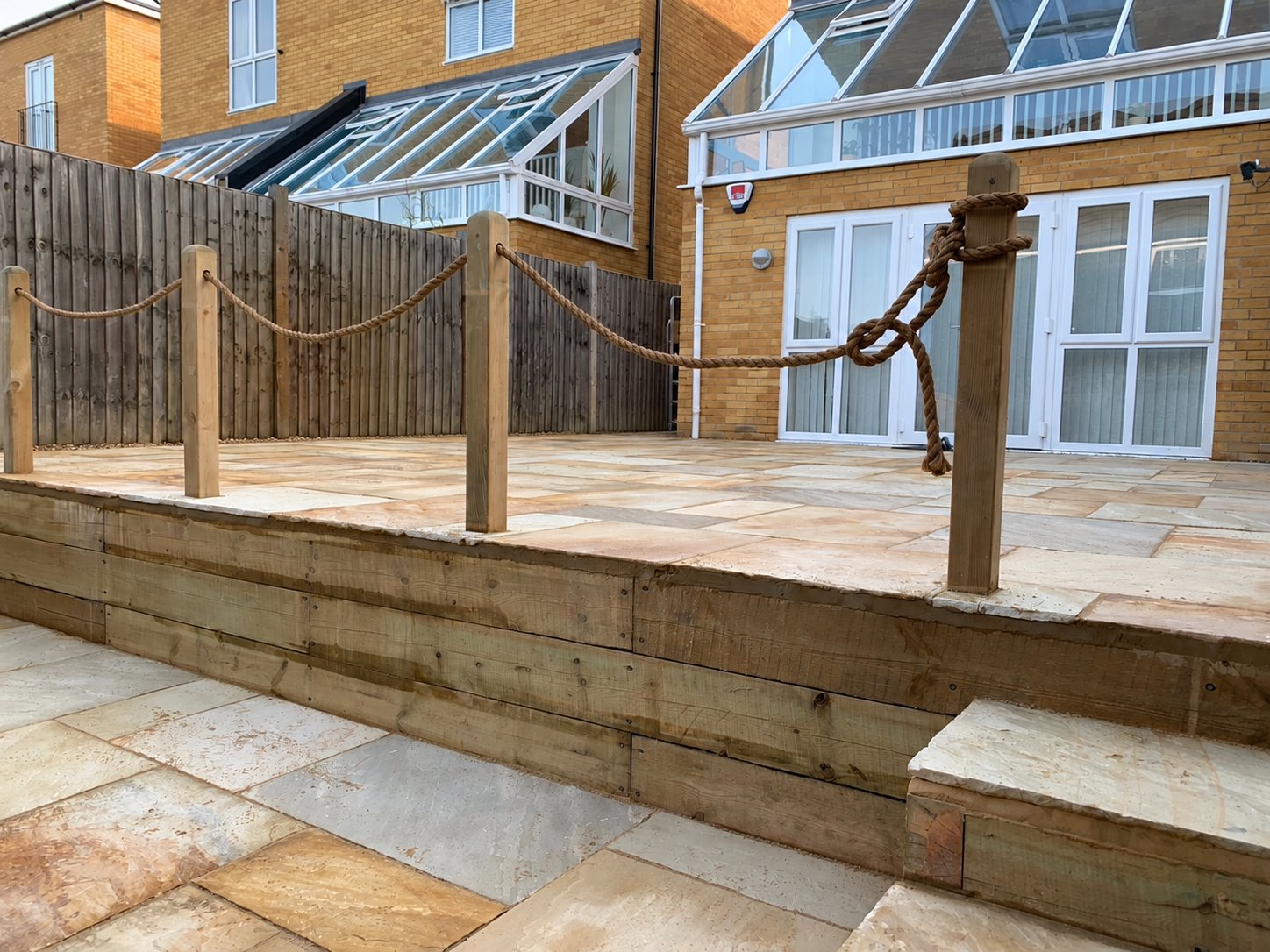
Sandstone paving across two levels, with timber sleeper retaining walls.
View Ashford projectDeal
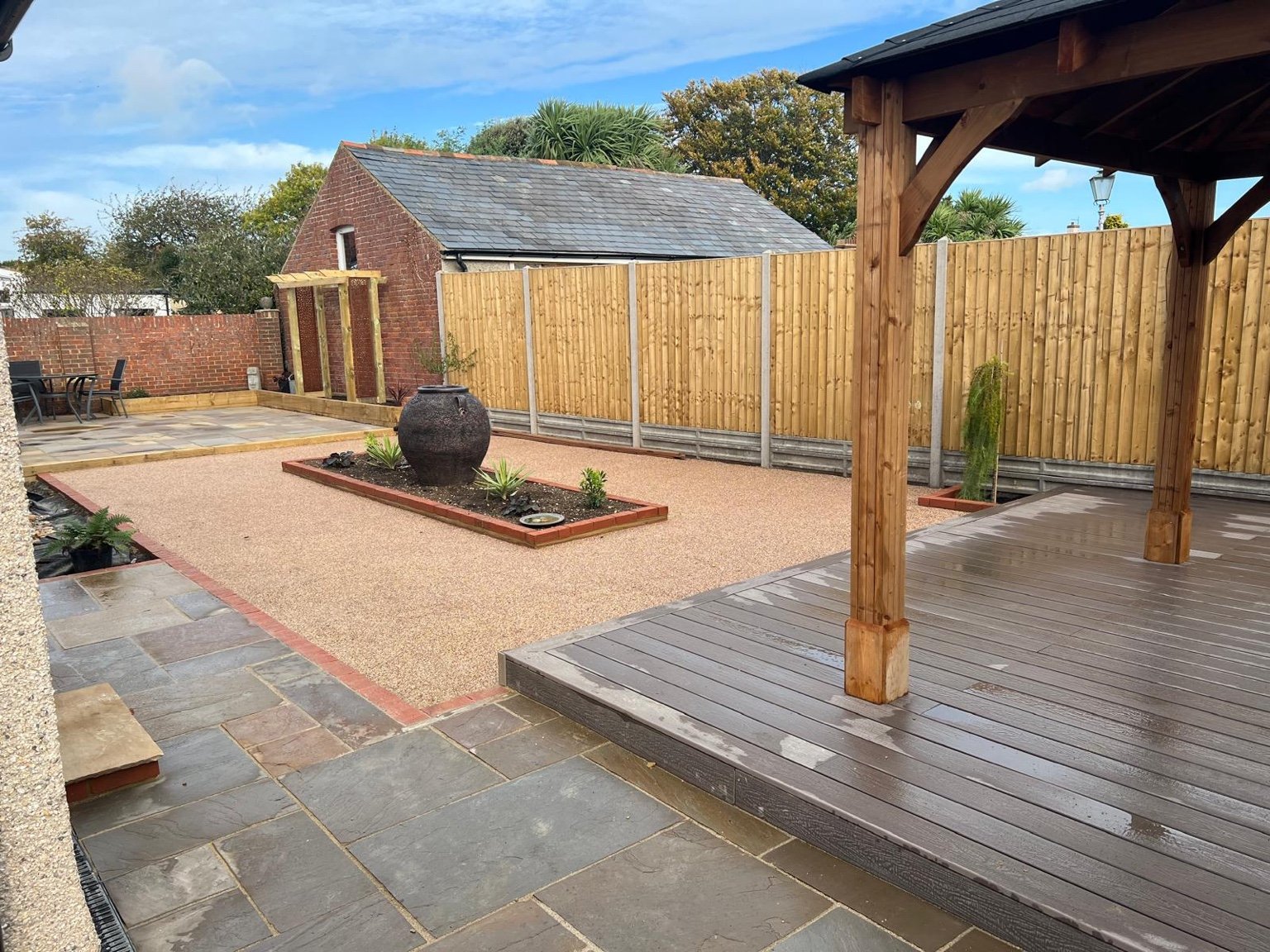
A sandstone patio, ash-coloured composite decking, pitched-roof pergola and sleeper planters.
View Deal projectSevenoaks
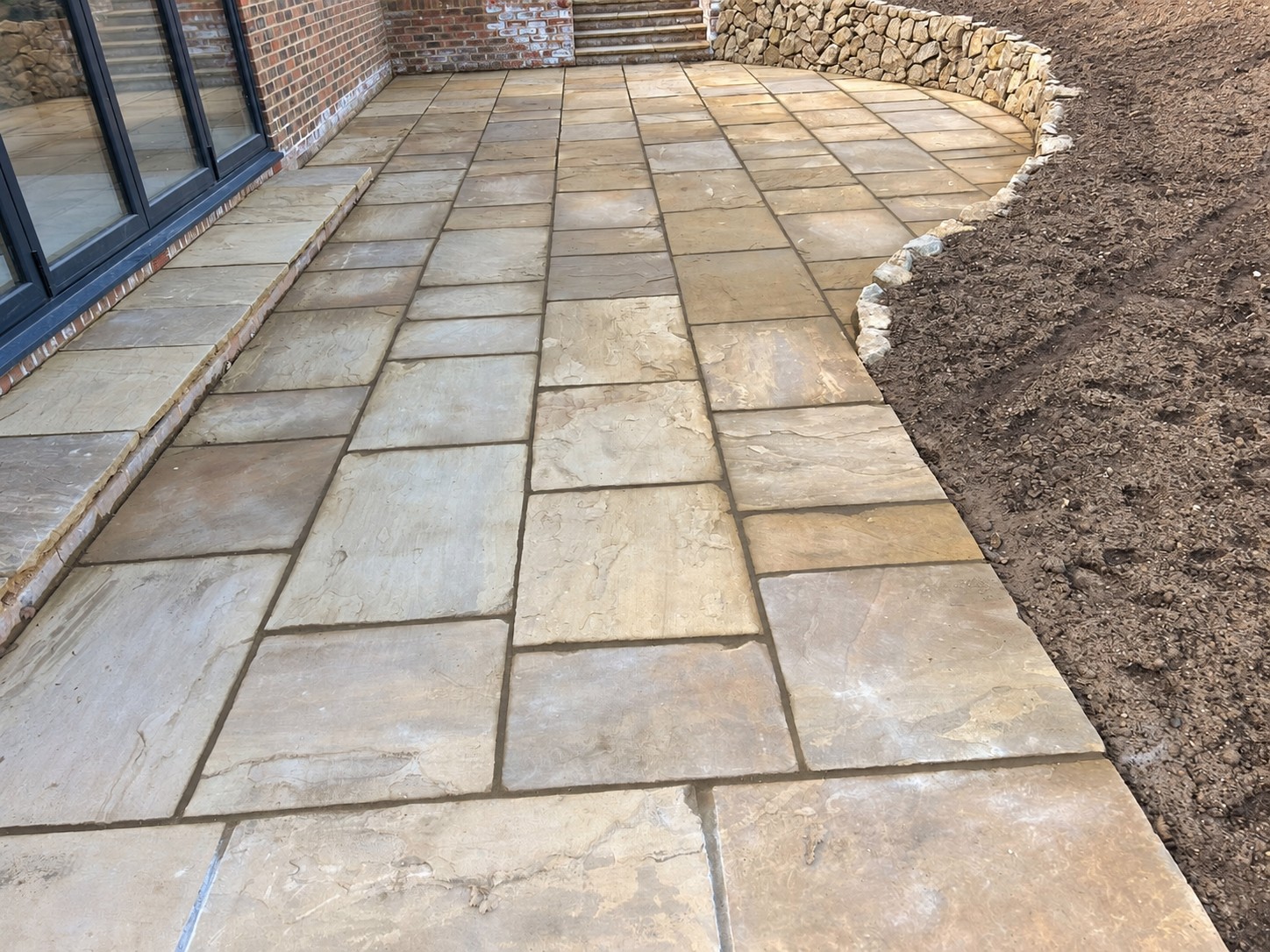
75mm thick York stone paving, curved paths, brick walls and Kentish ragstone walls.
View Sevenoaks projectHerne Bay
Porcelain patio, raised bed, artificial grass and slatted fencing. See the garden before and after.
View Herne Bay projectSittingbourne
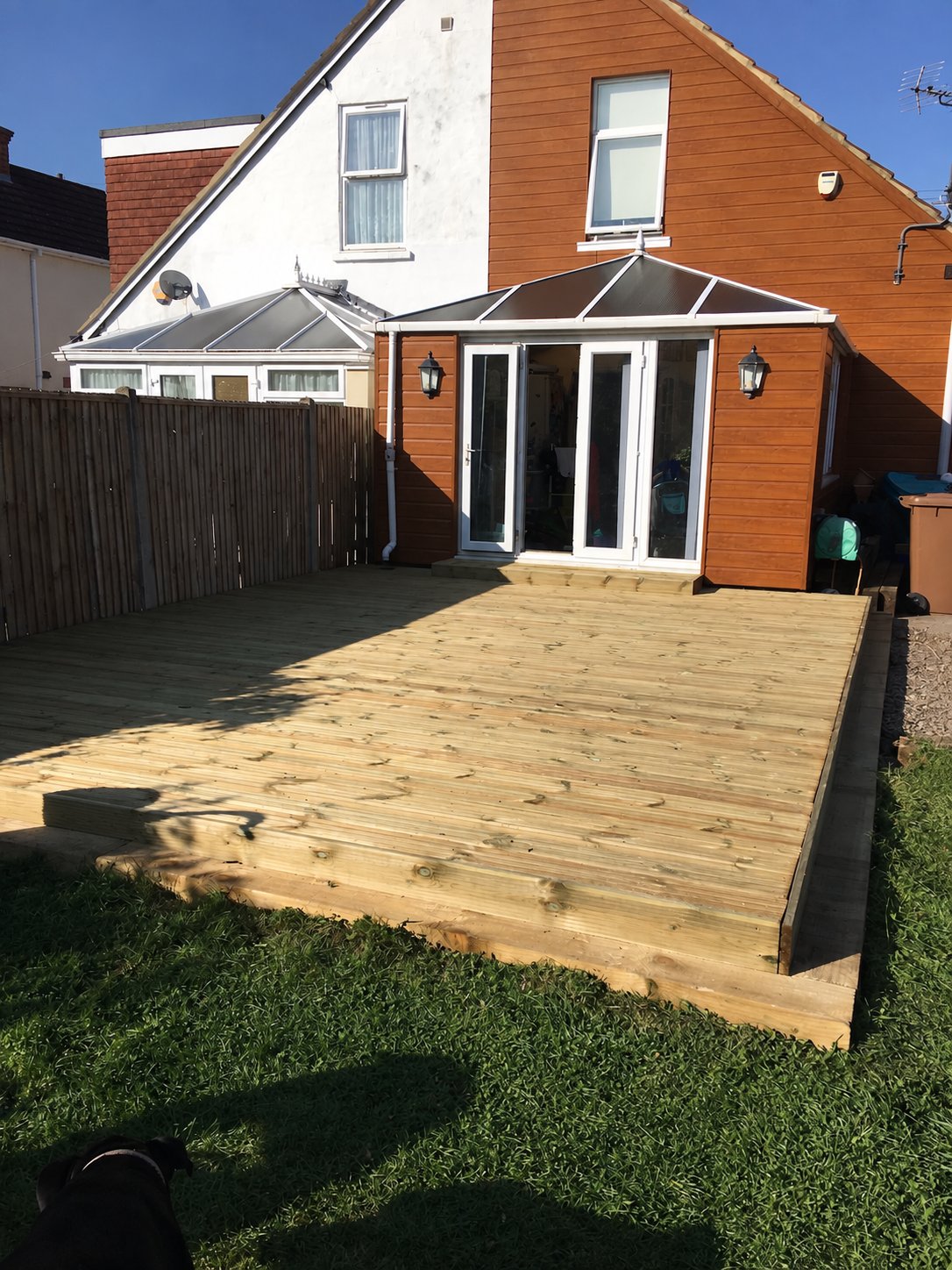
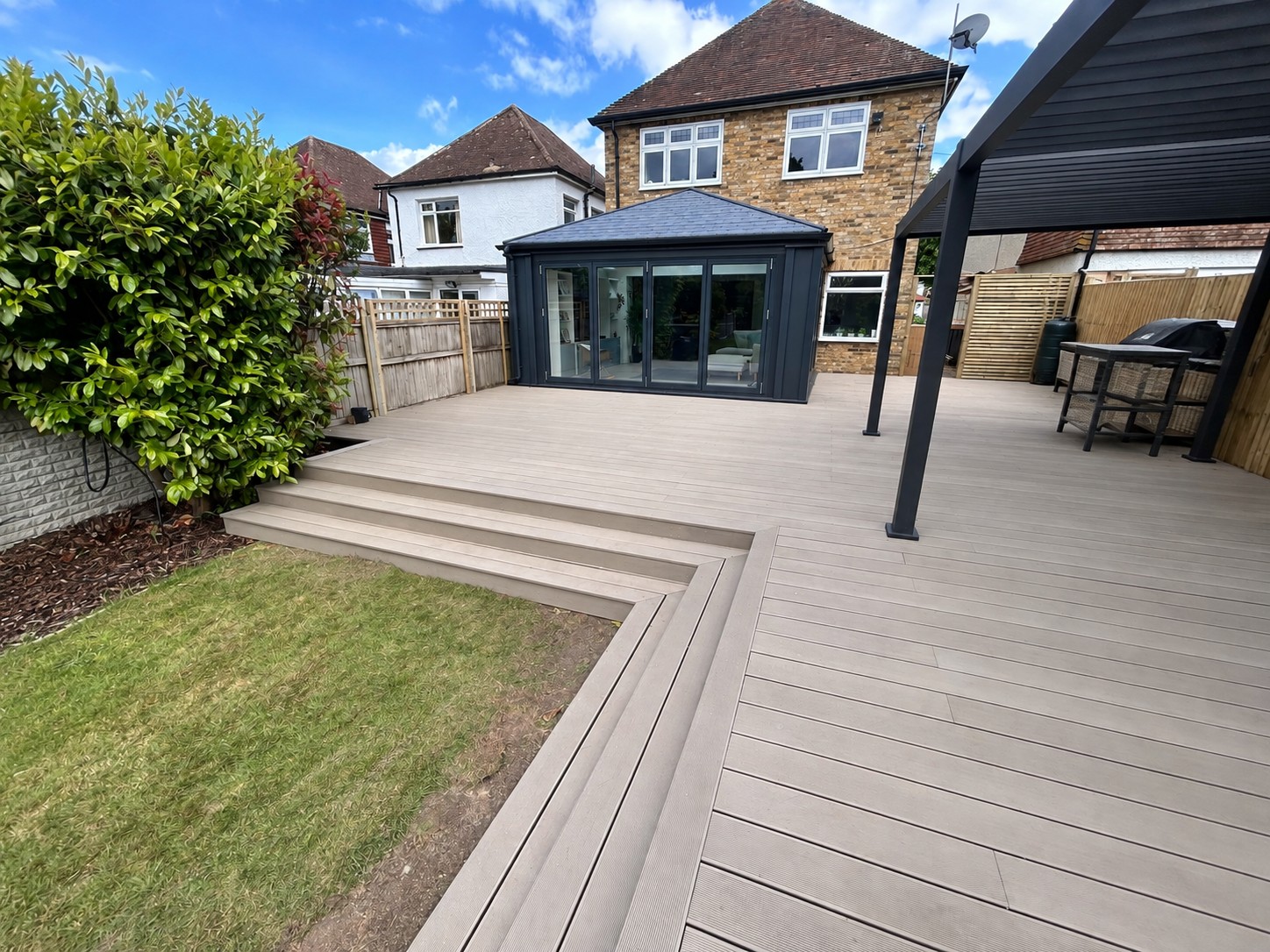
A broad decking terrace with defined board lines and steps connecting the house to the lawn.
View Sittingbourne projectDeal
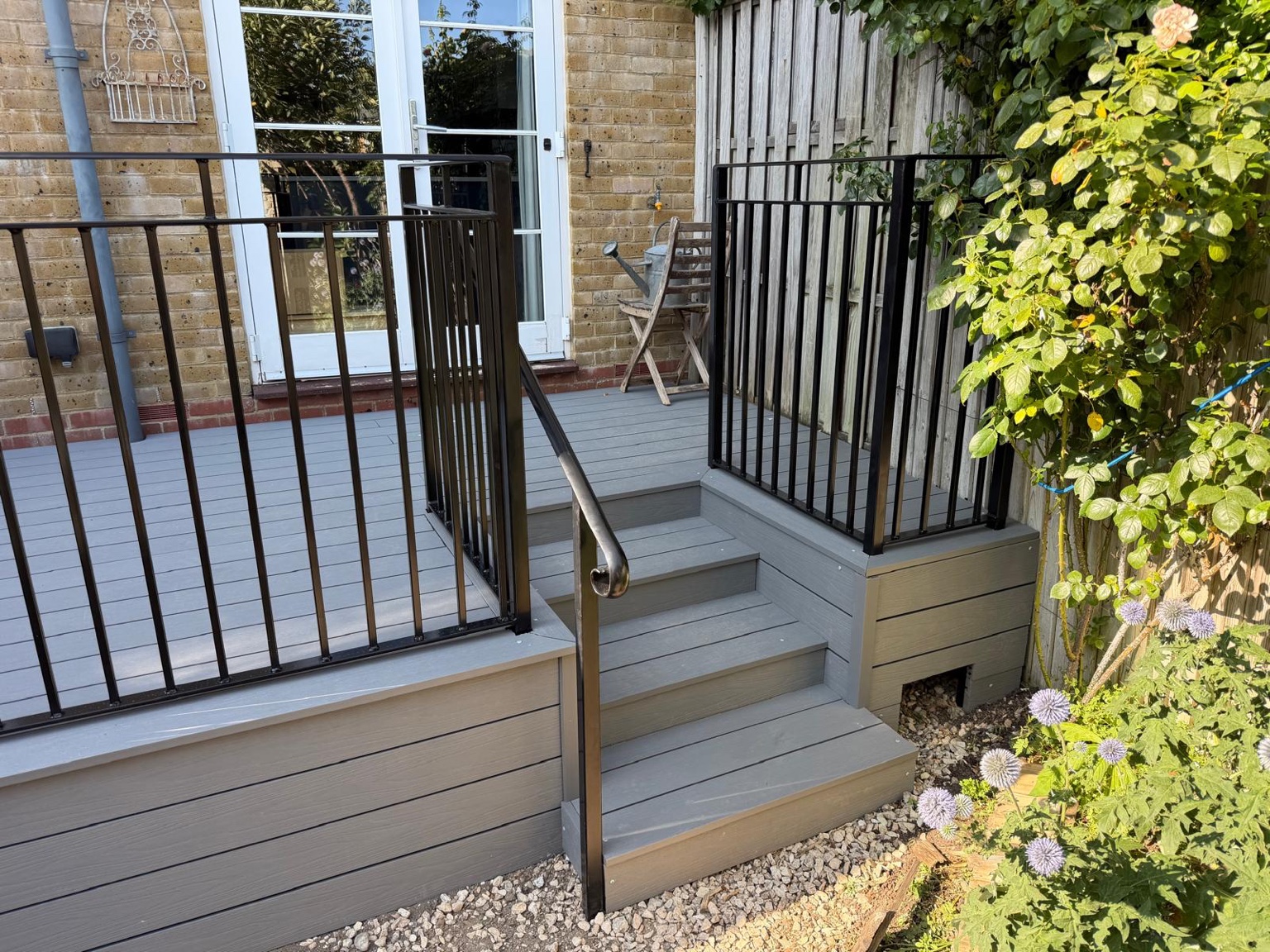
Raised grey decking with black railings, inset steps and a matching handrail.
View Deal projectCalculate the decorative quantity from the measured area and the agreed depth for the selected stone or grid. Convert volume to weight using supplier data for that material. Check the stated weight of bags and whether delivery is included; a bulk bag is not automatically one tonne.
The supporting aggregate and decorative stone perform different roles and need separate quantities in the proposal. Record the stone name and grading for future top-ups. Where an existing drive is being refreshed, clarify whether old stone is redistributed, supplemented or removed, and which base or edge repairs are included.
Use the same agreed scope when comparing proposals. Confirm the materials and work below the visible finish, together with any retained construction. Ask how exclusions or provisional work will be handled and keep the written specification with the quotation.
Photographs, dimensions and access details help define the work. They can start the discussion, with a visit or further assessment where needed. A quoted total is useful when it is clear what the finished result includes.
Agree the programme after the scope and materials are confirmed. Include delivery arrangements, protection of retained features and any periods when the area cannot be used. At handover, confirm how the completed work should be used and cared for, and retain the relevant product details.
YOUR FOLKESTONE PROJECT
Include your postcode, approximate dimensions and access details for a free, no-obligation quotation.